
















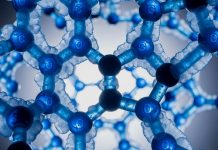



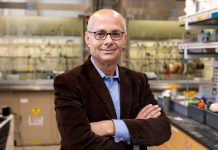

 Publishers Page: Metal-Organic Frameworks – A Breakthrough in Chemistry and Sustainability – Vinoo Mathews
The article highlights the 2025 Nobel Prize in Chemistry awarded for the development of Metal-Organic Frameworks (MOFs), revolutionary materials with vast surface areas and tunable porosity. MOFs enable breakthroughs in gas storage, carbon capture, pollution control, drug delivery and water purification, offering scalable solutions for sustainability and climate challenges.
From Bench to Bulk: Navigating the Scale-Up
Challenge in Chemical Manufacturing – Akhil R. Nair, Dhruvit R. Parmar, Manishkumar D. Yadav – ICT, Mumbai
Exploring the challenges of scaling chemical processes from lab to industrial production, highlighting the shift from traditional empirical methods to modern, data-driven approaches. It emphasizes the role of CFD, AI, Flow Chemistry, Modular Design and Digital Twins in achieving safer, efficient and sustainable scaleup.
Energy Recovery from Distillation Operations – an Initiative for Sustainability and Reducing Carbon Footprint– Syamal Kumar De, Atul Ltd
Presenting an innovative energy recovery system in distillation operations that converts hot top vapour into low-pressure steam. This initiative reduces natural gas and water consumption, lowers carbon emissions, minimises condenser fouling and enhances energy efficiency.
Energy Transition in Drying Technology: From Fossil Fuels to Renewable Energy
– Prof. Arun S. Mujumdar
Drying, one of the most energy-intensive industrial processes, is undergoing a major energy transition from fossil fuels to renewables such as solar, biomass, heat pumps and hydrogen. Coupled with digitalisation and smart controls, these technologies enhance efficiency, cut emissions and make drying a model for sustainable industrial practice.
Recent Advances in Tools and Techniques for Crystallisation Process Development
– Ankita A. Kanhere, Vishwesh K. Panday, Shreerang V. Joshi, Dr. Nitin D. Arote, ICT, Mumbai
Crystallisation is evolving from trial-and-error methods to data-driven, automated and sustainable approaches. Advances in high-throughput screening, process analytical tools, continuous crystallisation, green solvents and AI-driven digital control are enabling faster, more precise and eco-friendly production.
Mechanical Versus Thermal Separation of Solid Particles from Liquids
– Dr. -Ing. Harald Anlauf
The article compares mechanical and thermal solid–liquid separation methods, emphasising energy efficiency and process optimisation. Mechanical separation efficiently removes bulk liquid and enables particle washing, while thermal methods complete drying.
Turning Waste into Fertilizer: SSP’s Breakthrough Potash Recovery Technologies for a Sustainable Agro-Energy Future
– Tapas Chatterjee, SSP
SSP Private Limited’s Potash Recovery Technologies convert distillery waste—boiler ash, spent wash and bio-methanated effluent—into high-purity potassium sulfate, charcoal and organic carbon. These innovations reduce pollution, recover valuable nutrients, recycle water and support fertilizer self-reliance, creating a sustainable circular economy for India’s agro-energy and fertilizer sectors.