



















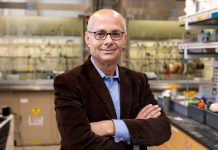


Union minister for chemicals and fertilisers Jagat Prakash Nadda said the budgetary provision of ₹13,000 crore for Bio-Pharma SHAKTI and three dedicated chemical parks represents a decisive investment in India’s long-term economic future. Addressing the post-budget webinar on the theme “Sustaining and Strengthening Economic Growth,” he emphasised that Free Trade Agreements (FTAs) serve as gateways to Viksit Bharat and create new global expansion opportunities for Indian industries.
From ‘Pharmacy of the World’ to Global Biologics Leader
Highlighting India’s success as the “Pharmacy of the World” through its strong generics manufacturing base, the Minister underlined the urgent need to pivot toward biologics. By 2035, nearly 40% of global medicines are expected to be biologics, while patents worth $300 billion will expire by 2030.
The government has allocated ₹10,000 crore over the next five years for the BioPharma Mission. According to Shri Nadda, even a 1% share in the global biosimilars market could unlock an annual opportunity of ₹2 lakh crore for India. He stressed that this is the right time for India to scale up biologics production and strengthen its global competitiveness in advanced pharmaceutical segments.
Strengthening Institutions and Regulatory Framework
To support the BioPharma SHAKTI initiative, the Minister called for deeper integration of premier institutions such as National Institute of Pharmaceutical Education and Research (NIPER) with talent and skill development ecosystems. Furthermore, the government plans to develop 1,000 clinical trial sites across the country to boost research capacity and accelerate innovation. He also underscored the need to strengthen the Central Drugs Standard Control Organization (CDSCO) to ensure faster regulatory approvals, particularly for biosimilars and fermentation-based drugs. These reforms, he noted, will create a more agile regulatory environment and improve India’s standing in the global pharmaceutical value chain.
₹3,300 Crore for Three World-Class Chemical Parks
Turning to the chemicals sector, Shri Nadda pointed out that India’s chemical industry currently generates output worth ₹19.4 lakh crore and maintains strong capabilities in segments such as dyes and agrochemicals. However, despite this strength, India’s global market share stands at just 3%.
To bridge this gap, the government has allocated ₹3,300 crore to establish three dedicated, world-class chemical parks. These parks will feature plug-and-play utilities, advanced effluent treatment systems, integrated logistics infrastructure, and built-in safety mechanisms. Importantly, the parks are expected to reduce production costs by 20–40% through industrial symbiosis while promoting a circular economy by design. The Minister outlined an ambitious target to increase India’s global chemical sector share to 5–6% by 2030 and achieve a $1 trillion turnover by 2040.
Collaborative Growth for Budget 2026–27 Goals
Emphasising collective ownership, Nadda stated that sustained economic growth requires shared responsibility among policymakers, industry leaders, financial institutions, and state governments. He described the post-Budget webinar as a practical demonstration of coordinated efforts across sectors. Progress, he stressed, cannot happen in silos. Instead, deeper collaboration between ministries, states, and industry will be essential to realise the announcements made in Budget 2026–27. As reported by projectsmonitor.com, the webinar—second in the post-Budget series—brought together policymakers, industry stakeholders, and domain experts to deliberate on accelerating India’s growth trajectory and ensuring effective implementation of key reforms.