
















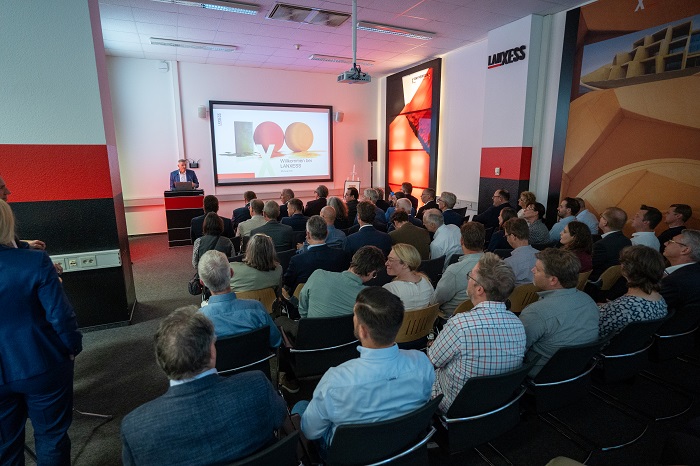
Specialty chemicals company LANXESS is marking a significant milestone—100 years of iron oxide pigment production at its Krefeld-Uerdingen site in Germany. Since production began in 1926, the company has manufactured more than 15 million tons of iron oxide pigments, underscoring its long-standing leadership in the global pigments industry.
To put this achievement into perspective, this volume of pigments could be used to produce more than 200 billion liters of paint—enough to coat an area equivalent to the size of Germany five times over. Today, with an annual production capacity of approximately 300,000 tons, LANXESS remains the world’s leading producer of synthetic iron oxide pigments. Its flagship Bayferrox brand has become a benchmark for quality and performance across the industry.
Iron Oxide Pigments Power Everyday Applications
LANXESS iron oxide pigments are widely recognized for their exceptional durability and color stability. As a result, they are extensively used in paving stones, roof tiles, architectural coatings, and plastics. The pigments have colored some of the world’s most recognizable landmarks and infrastructure projects, including the iconic red asphalt outside Buckingham Palace in London and the striking facade of Soccer City Stadium in Johannesburg.
“People encounter our pigments every day—on streets, roofs, and facades,” said Michael Ertl, Head of the Inorganic Pigments Business Unit at LANXESS, during the anniversary celebrations. “Thanks to the pioneering spirit of our employees in Krefeld, our pigments have become indispensable in many other applications as well.”
Beyond construction and infrastructure, iron oxide pigments are used in artificial turf for sports facilities, airbags and brake pads in the automotive sector, and catalysts for chemical manufacturing processes. Moreover, LANXESS is exploring new opportunities in electromobility, where iron oxide pigments can serve as precursor materials for electric vehicle batteries.
A Century of Innovation and Industrial Excellence
The significance of the Krefeld-Uerdingen site extends far beyond pigment production. According to Frank Meyer, Mayor of Krefeld, the facility represents an important chapter in Germany’s industrial heritage while continuing to play a vital role in modern manufacturing.
“What has been created at LANXESS in Krefeld-Uerdingen over the past 100 years is a piece of industrial history of inestimable value—and, at the same time, a living part of the present,” Meyer said. He emphasized that the pigments produced at the Chempark Krefeld-Uerdingen enjoy strong global demand and highlighted the company’s ability to embrace transformation through continuous innovation. He further noted that thriving industrial enterprises not only strengthen local economies but also create long-term benefits for communities and residents.
The Laux Process: Foundation of a Global Success Story
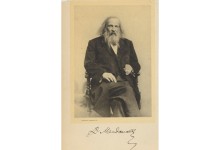
The origins of LANXESS’ iron oxide pigment business can be traced back to 1926, when chemist Julius Laux developed an innovative process while working on aniline production. Through this breakthrough, a byproduct generated during aniline manufacturing was transformed into high-quality synthetic iron oxide pigments. As per the press release, the pioneering technology, now known as the Laux process, laid the groundwork for the company’s future success. Following World War II, Europe’s reconstruction drove a sharp increase in demand for pigments, leading to rapid growth in production volumes and helping establish LANXESS as a global market leader.
Over the decades, the company expanded its portfolio to include more than 100 pigment shades while building a worldwide manufacturing network. Despite this global expansion, Krefeld-Uerdingen continues to serve as the heart of LANXESS’ iron oxide pigment operations under the renowned Bayferrox and Colortherm brands.
Leading the Way in Sustainability and Circular Economy
In addition to its technological achievements, LANXESS has positioned itself as a pioneer in sustainability and circular economy practices. Its iron oxide pigments are recognized for having one of the industry’s lowest carbon footprints.
A key factor behind this achievement is the Laux process itself, which exemplifies circular economy principles. Rather than treating the iron oxide generated during aniline production as waste, the process converts it into a valuable standalone product—high-quality synthetic iron oxide pigments. This resource-efficient approach has enabled LANXESS to reduce waste while maximizing the value extracted from raw materials.
Driving Emission Reductions Across the Value Chain
Building on its sustainability commitment, LANXESS is actively working to lower greenhouse gas emissions throughout its entire value chain. The company is implementing measures to improve production efficiency, optimize energy consumption, and enhance logistics operations to further reduce its environmental impact.
By combining innovative manufacturing technologies, circular economy principles, and ongoing decarbonization efforts, LANXESS aims to strengthen its position as a sustainable leader in the global pigments industry. As the company celebrates a century of iron oxide pigment production, it continues to demonstrate how innovation, industrial expertise, and environmental responsibility can work together to shape the future of specialty chemicals.