

























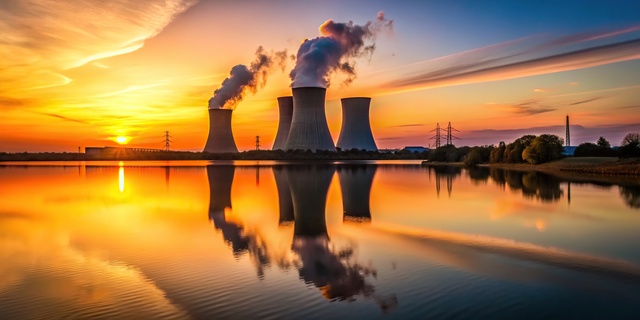
As artificial intelligence (AI) rapidly reshapes industries and increases electricity demand, India must significantly expand its nuclear power capacity to support the digital infrastructure required for the AI era. According to Infosys co-founder Kris Gopalakrishnan, nuclear energy will need to grow nearly twelvefold—from 1.7 percent to about 20 percent of India’s energy mix—to meet the rising power requirements driven by AI technologies.
Speaking at the 2026 Karnataka State Annual Meeting of the Confederation of Indian Industry in Bengaluru, Gopalakrishnan highlighted the scale of opportunity AI presents for India’s economy. However, he also emphasized that the country must act quickly to build the energy and digital infrastructure needed to sustain this technological shift.
AI Applications Expected to Grow Rapidly
Gopalakrishnan noted that the economic potential of AI goes far beyond the development of models and computing infrastructure. According to him, the AI application economy could grow to nearly ten times the size of the underlying AI models and infrastructure within the next five to ten years.
This expansion will create new digital services and platforms across industries. For example, applications such as digital shopping assistants, AI-driven healthcare advisors, and personalised information services are expected to become more common as AI systems are widely adopted. As a result, the demand for large-scale computing power—and the electricity needed to support it—will continue to increase.
AI Could Boost Industrial Productivity
Meanwhile, Rabindra Srikantan, who also serves as Managing Director of ASM Technologies Ltd, highlighted the transformative impact AI could have on industrial productivity. According to Srikantan, AI adoption could increase industrial productivity by around 30 percent. The technology can automate repetitive processes, enhance operational efficiency, and improve decision-making across sectors. However, he pointed out that industries dealing with sensitive or classified data, such as defence, may adopt AI more cautiously due to security and regulatory concerns.
AI to Influence Every Sector of the Economy
Gopalakrishnan also stressed that AI will reshape nearly every part of the economy. From consumer services and agriculture to banking and healthcare, the technology will increasingly influence how businesses operate and how services are delivered. As AI capabilities improve, companies are expected to integrate intelligent systems into everyday operations. Consequently, businesses will rely more heavily on digital platforms, advanced analytics, and automated decision-support systems.
Large-Scale Workforce Retraining Needed
While the opportunities are significant, Gopalakrishnan warned that the workforce must adapt quickly to keep pace with technological change. India currently has around 5.5 million IT professionals, many of whom will need to retrain and develop new AI-related skills. According to him, these professionals must become proficient in AI tools, data analysis, and machine learning applications to remain competitive in the evolving digital economy. Moreover, the transformation will not be limited to the technology sector. Students from a wide range of disciplines—including engineering, liberal arts, and management—will need to learn how to work effectively with AI systems.
Stronger Domestic R&D Needed
Another major priority, Gopalakrishnan said, is strengthening India’s domestic technology capabilities. Increasing investment in research and development will be critical if the country hopes to build its own AI technologies instead of relying heavily on imported systems. He also highlighted several challenges, including the pace of investment and the urgency required to build advanced technological infrastructure. Without faster progress, India risks falling behind global leaders in AI innovation.
Policy Support Could Strengthen the AI Ecosystem
Srikantan noted that recent government initiatives could help accelerate the development of India’s AI ecosystem. In particular, higher budget allocations for deep technology and research in recent years may encourage innovation and strengthen the country’s technological base. As reported by thehindubusinessline.com, with sustained policy support, industry collaboration, and increased investment, India could position itself as a major player in the global AI economy.