Home Blog Page 13

Nissan Chemical plans dedicated rice herbicide facility in Gujarat

0

Japanese agrochemical maker, Nissan Chemical will set up a dedicated facility in Saykha, Gujarat through Nissan Bharat Rasayan Pvt. Ltd for the manufacture of Ryzonic, a next-gen rice herbicide. Production is expected to commence in FY2028.

As per Agrospectrum, the agrochemical makers plans to launch the herbicide initially in Japan and India before introducing it globally.

The project will boost India’s position in Nissan Chemical’s global crop protection supply chain and increase the joint venture’s current production operations. Nissan Chemical and Bharat Rasayan Ltd. founded the joint venture in 2020, and with the completion of its first production unit in 2023, the alliance had an established manufacturing footprint to expand upon.

Since rice is a mainstay in Asia and other key producing regions, Ryzonic is being positioned as a proprietary rice herbicide for paddy farming, a market that is still strategically significant.

 India has one of the world’s largest rice acreage bases and a manufacturing infrastructure that can support export-oriented production, while Japan launches the product in its home market.

Establishing production in India will also help the company manage inventory and logistics more efficiently while reducing dependence on overseas manufacturing facilities.

Local production should strengthen Nissan Chemical’s supply chain and enable it to react to regional variations in demand more quickly.

Linde Expands Supply of Industrial Gases to Tata Steel in India

0

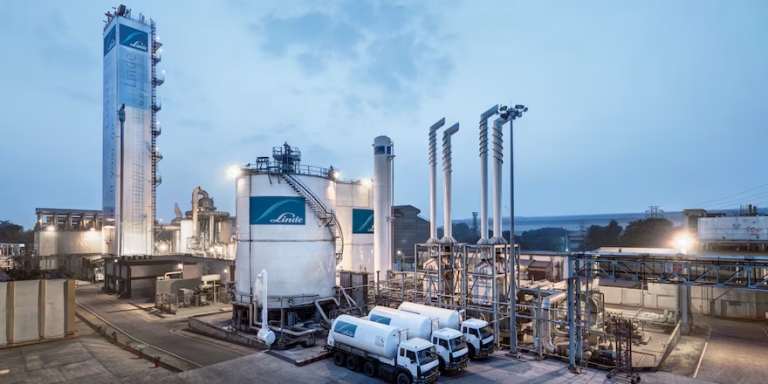
Global industrial gases and engineering company, Linde has announced the expansion of its supply of industrial gases to Tata Steel Limited at its Kalinganagar Industrial Complex in Odisha, India.

Under a long-term supply agreement, Linde has doubled its on-site capacity for Tata Steel through the de-captivation of two air separation units (ASUs) at Kalinganagar. The newly acquired units are now providing oxygen, nitrogen and argon for Tata Steel’s iron and steelmaking operations. The additional capacity will enable Tata Steel increase it’s annual steel production at Kalinganagar from three million to eight million tons per year.

In addition to supporting Tata Steel’s growth, the additional ASUs will help Linde meet increasing demand for industrial gases across the regional merchant market.

“This expansion with Tata Steel underscores the strength of our long-standing relationship and highlights the critical role of industrial gases in steelmaking,” said Moloy Banerjee, President ASEAN & South Asia, Linde, as per a company press release.

Hindustan Zinc Planning 10-MTPA Tailings Facility to Recover Zinc and Critical Minerals

0

Hindustan Zinc planning to establish a 10-million-ton-per-annum (MTPA) tailings recycling facility to recover zinc and critical minerals, including germanium, from mining waste. According to CEO Amarendu Prakash, the project could become operational in approximately two years. The initiative aims to extract valuable metals from mineral-rich tailings while improving resource utilisation and supporting the recovery of critical minerals.

Project Enters Implementation Phase

Hindustan Zinc has completed the conceptual designs and engineering work for the proposed recycling facility and has moved into the implementation phase. However, the company has yet to finalise the investment outlay. It is currently evaluating suitable technologies to process mining waste and recover metals through metallurgical and chemical methods. The final investment decision will depend on the technologies selected for the project.

Two Key Components of Tailings Recycling

Amarendu Prakash outlined two major components of the proposed project:

Tailings Handling and Processing: The company plans to handle and process mining waste, potentially using hydro-mining techniques to recover and transport mineral-rich material for further treatment.

Metal Recovery: The second component will focus on extracting zinc and other valuable minerals from the processed tailings through appropriate metallurgical and chemical processes.

By integrating these operations, Hindustan Zinc aims to unlock the value of previously generated mining waste and improve the recovery of useful resources.

Recovering Critical Minerals from Mining Waste

The proposed facility reflects Hindustan Zinc’s efforts to explore alternative sources of valuable metals and critical minerals. Recovering materials such as germanium from tailings could help diversify mineral supply sources while supporting more efficient resource utilisation. As reported by thehindubusinessline.com, once operational, the plant is expected to strengthen the company’s tailings recycling capabilities and contribute to the broader adoption of resource recovery in the mining industry.

GAIL Bags Two Awards for LNG Excellence and Environmental Sustainability

0

GAIL (India) Limited has won two awards at the 10th edition of the LNG India Summit, recognising its achievements in liquefied natural gas (LNG) operations and environmental sustainability. The awards highlight the company’s contribution to India’s natural gas sector, particularly its efforts to strengthen energy security, improve operational efficiency, and support the country’s decarbonisation goals.

Recognition in Two LNG India Award Categories

GAIL secured awards in the following categories under the LNG India Awards:

LNG Sourcing, Regasification & Marketing: Recognises the company’s contribution to LNG procurement, regasification, and marketing operations.

Environmental Sustainability, Energy Efficiency and Emission Reduction: Highlights its efforts to promote sustainable business practices, improve energy efficiency, and reduce emissions.

These awards acknowledge GAIL’s work in strengthening LNG operations while advancing environmental responsibility across its business activities.

Strengthening India’s Natural Gas Sector

LNG plays an important role in diversifying India’s energy mix and meeting its growing energy requirements. Through its LNG sourcing, regasification, and marketing activities, GAIL contributes to the development of the country’s natural gas value chain. Furthermore, efficient LNG infrastructure and effective energy management help strengthen supply reliability and support the wider adoption of natural gas across industrial and other applications.

Advancing Environmental Sustainability and Energy Efficiency

Alongside its LNG operations, GAIL continues to focus on environmental sustainability, energy efficiency, and emission reduction. These priorities align with India’s broader efforts to improve energy security while progressing towards its decarbonisation objectives. As reported by indianmasterminds.com, the recognition at the LNG India Summit underscores the importance of combining operational excellence with responsible energy management. As India’s energy demand evolves, GAIL’s achievements highlight the role of efficient LNG operations and sustainable practices in supporting the country’s energy transition.

ISMA Welcomes Ethanol Policy to Strengthen Sugar Supply Management

0

The Indian Sugar & Bio-Energy Manufacturers’ Association (ISMA) welcomed the government’s decision to exclude ethanol produced from sugarcane juice, sugar syrup, and B-heavy molasses from the latest ethanol procurement tender for the 2026–27 supply year. The industry body believes this measure will help protect domestic sugar availability while allowing the country to continue its petrol-ethanol blending programme.

Oil Marketing Companies Announce Ethanol Procurement Policy

Bharat Petroleum Corporation Ltd (BPCL), on behalf of state-run oil marketing companies (OMCs), issued a tender seeking bids for approximately 11 billion litres of ethanol for the supply year beginning in November 2026. Under the tender, OMCs have excluded ethanol produced from sugarcane juice, sugar syrup, and B-heavy molasses. However, they continue to allow ethanol produced from C-heavy molasses. The policy aims to balance domestic sugar requirements with the country’s target of blending 20% ethanol into petrol. ISMA welcomed the government’s calibrated approach to managing sugar availability and ethanol production.

Domestic Sugar Consumption Remains a Priority

ISMA emphasised that domestic sugar consumption must remain the industry’s foremost priority, particularly amid concerns over emerging El Niño conditions and weather variability in key sugarcane-growing regions. These climatic factors could affect sugarcane yields and overall sugar production. Therefore, restricting the diversion of sugar-producing feedstocks towards ethanol could help safeguard domestic supplies and support market stability.

C-Heavy Molasses Offers an Alternative for Ethanol Production

Although the latest tender excludes ethanol derived from sugarcane juice, sugar syrup, and B-heavy molasses, C-heavy molasses-based ethanol remains eligible for procurement. According to ISMA, this route allows sugar mills to continue supplying ethanol without diverting recoverable sugar from the domestic market. Consequently, the policy supports ethanol production while helping preserve sugar availability.

ISMA Raises Concerns Over Preferential Allocation

Despite welcoming the policy, ISMA has expressed concern over the preferential allocation granted to dedicated ethanol plants holding long-term offtake agreements under the Ethanol Supply Year (ESY) 2026–27 tender. The association cautioned that extending this provision to subsequent supply years could disadvantage sugar mills and adversely affect the industry’s competitiveness. Therefore, ISMA has urged the government to review the preferential allocation framework for future ethanol procurement cycles to ensure fair treatment of sugar mills and dedicated ethanol producers.

Balancing Sugar Availability and Ethanol Blending

In recent months, the government has introduced several measures to strengthen domestic sugar supplies and control rising prices. The latest ethanol procurement policy represents another effort to balance food-related priorities with the country’s renewable fuel objectives. As reported by money.rediff.com, the industry will need a predictable procurement framework that safeguards domestic sugar availability while supporting ethanol production and India’s broader energy diversification goals.

Toyo Ink India Bags IFCA Star Award 2026 for Sustainable Packaging Ink Innovations

0

Toyo Ink India Pvt. Ltd., a member of Japan’s artience Group, bagged the IFCA Star Award 2026 in the “Innovations in Ink” category. Presented by the Indian Flexible Packaging & Folding Carton Association (IFCA), the award recognises innovation and excellence across the packaging value chain. The company received the award at a ceremony held in Mumbai on 24 September 2026.

Sustainable Ink Innovations Earn Industry Recognition

The award recognises Toyo Ink India’s development of eco-friendly, high-performance inks designed to meet the evolving needs of the packaging industry. Its two winning products, JW252 Gravure Water-Based Ink and HW870 CI Flexo Water-Based Ink, demonstrate the company’s focus on sustainable ink technologies that combine performance with reduced environmental impact.

JW252 Gravure Water-Based Ink

JW252 is a water-based gravure ink developed for retort packaging applications. Its formulation eliminates the need for traditional hazardous solvents, helping reduce volatile organic compound (VOC) emissions. In addition, the ink delivers high lamination strength and withstands the high temperatures associated with packaging sterilisation. These properties make it suitable for demanding flexible packaging applications.

HW870 CI Flexo Water-Based Ink

HW870 is a water-based ink designed for high-efficiency printing on Central Impression (CI) flexographic presses. Its fast-drying properties support efficient production, while its low residual-solvent formulation helps meet stringent packaging safety and hygiene requirements. Furthermore, the ink delivers high colour concentration on flexible films, combining print performance with a focus on more sustainable packaging production.

Advancing Sustainable Packaging Solutions

The recognition marks an important milestone in Toyo Ink India’s efforts to promote sustainable growth across the packaging sector. As environmental requirements and supply chain expectations continue to evolve, the company is investing in research and development to deliver ink solutions that address these challenges. Shekhar Barua, Director of Toyo Ink India, said, “This recognition by IFCA celebrates our core spirit of innovation, sustainability, and manufacturing excellence.” He added that the company’s strategic focus remains on delivering advanced, sustainable solutions that help brands and packaging converters reduce their environmental footprint. As per the press relase, with the support of the global artience Group, Toyo Ink India aims to strengthen its portfolio of innovative packaging inks while contributing to the industry’s transition towards more environmentally responsible printing and packaging technologies.

OIL Expands Energy Portfolio with New Coal Bed Methane Blocks

0

Oil India Limited (OIL) signed a Revenue Sharing Contract (RSC) for Special Coal Bed Methane (CBM) Block SR-ONHP-(CBM)-2026/1. The agreement marks an important step in the company’s energy diversification strategy and its return to coal bed methane exploration.

New CBM Block Covers 272.14 Sq. Km

The newly awarded block covers 272.14 sq. km in the Singrauli Coalfield region, which offers promising geological prospects for coal bed methane exploration. Through this agreement, Oil India aims to expand its exploration activities and strengthen its energy portfolio beyond conventional oil and natural gas resources. The contract signing ceremony was attended by Union Minister of Petroleum and Natural Gas Hardeep Singh Puri and Petroleum and Natural Gas Secretary Dr. Neeraj Mittal. Oil India was represented by Director (Operations) Trailukya Borgohain and his team.

Supporting India’s Domestic Natural Gas Production

Coal bed methane is a form of natural gas extracted from coal seams. As an alternative source of natural gas, CBM can contribute to domestic energy production and help diversify the country’s energy supply. As reported by projectstoday.ai, Oil India’s return to CBM exploration supports its broader efforts to identify additional energy resources and strengthen India’s domestic hydrocarbon production capabilities.

Greenzo Energy to Expand Green Hydrogen Manufacturing

0

Greenzo Energy India has raised approximately Rs 251 crore across three investment rounds to expand its green hydrogen technology and manufacturing operations. The funding will help the company increase electrolyser manufacturing capacity, strengthen domestic supply chains, and accelerate project execution in India and international markets.

Latest Funding Round Values Company at Rs 1,030 Crore

The company’s latest funding round raised Rs 130 crore and was led by investor Ashish Kacholia and his associates. The investment valued Greenzo Energy at approximately Rs 1,030 crore post-money. Other participants included Alchemy Longterm Venture Fund Series 3 and Lashit Sanghvi. Meanwhile, PARV And Co. served as the exclusive financial advisor for the transaction.

Funding to Strengthen Electrolyser Manufacturing

Greenzo Energy plans to deploy the fresh capital towards expanding its domestic electrolyser manufacturing capacity and strengthening backward integration. In addition, the company aims to accelerate project execution across domestic and international markets. These investments will support its efforts to scale manufacturing operations and meet growing demand for green hydrogen technologies.

250 MW Electrolyser Facility Supports Expansion

Greenzo Energy’s growth strategy centres on its electrolyser manufacturing facility at Sanand GIDC in Ahmedabad, Gujarat, which has an annual production capacity of 250 MW. The company has also executed megawatt-scale green hydrogen installations for Engineers India, Oswal Energies, and Jindal Stainless. These projects strengthen its experience in delivering green hydrogen solutions and support its expansion in India’s clean energy sector. As reported by projectstoday.ai, with fresh capital and established manufacturing capabilities, Greenzo Energy aims to strengthen its position in the green hydrogen market while supporting the development of India’s clean energy ecosystem.

Asahi Kasei Secures Third-Party Verification for Acrylonitrile Carbon Footprint

0

Tongsuh Petrochemical, a wholly owned South Korean subsidiary of global diversified company Asahi Kasei, secured “Reasonable Assurance” verification for the Product Carbon Footprint (PCF) of acrylonitrile (AN) produced at its Ulsan manufacturing site. This independent verification strengthens the credibility of its carbon footprint data and addresses growing customer demand for reliable environmental information.

Independent Verification of Carbon Footprint Data

Socotec Certification Japan conducted a rigorous audit covering the plant’s operations, data, processes, and documentation. The assessment examined the methodology, source data, and reporting procedures used to calculate the fiscal 2025 carbon footprint of acrylonitrile, from raw material procurement through production. The “Reasonable Assurance” verification provides a high level of confidence in the reported carbon footprint information, exceeding the assurance level offered by “Limited Assurance.” Consequently, customers can access independently verified data to support their sustainability assessments and decarbonisation strategies.

Acrylonitrile Supports Multiple Industrial Applications

Acrylonitrile serves as an important chemical intermediate across several industries. Manufacturers use it to produce acrylonitrile butadiene styrene (ABS) resins, acrylamide, acrylic fibres, and precursor materials for carbon fibre. As industries increasingly focus on reducing supply chain emissions, verified product carbon footprint data helps businesses evaluate the environmental impact of materials and make more informed procurement decisions.

Advancing Lower-Carbon Acrylonitrile Production

Tongsuh Petrochemical has pursued lower-carbon production initiatives for several years. In 2021, the company obtained ISCC PLUS certification, an internationally recognised sustainability certification scheme that supports the traceability of bio-based and circular feedstocks. Furthermore, since 2022, the company has produced and marketed acrylonitrile using biomass-derived propylene through a mass-balance approach. This initiative supports the integration of alternative feedstocks into chemical manufacturing while maintaining established production processes.

Strengthening Decarbonisation Through Technology

Asahi Kasei plans to continue reducing greenhouse gas emissions associated with acrylonitrile production. To achieve this goal, the company is improving its proprietary catalyst and manufacturing technologies while expanding the use of biomass-based feedstocks. As per the press release, by combining lower-carbon materials with independently verified environmental data, Asahi Kasei aims to deliver greater value to customers and strengthen its role as a sustainability partner for industries pursuing supply chain decarbonisation.

Flaretot 2.0 Enhances Flare System Design with Advanced Thermodynamics

0

KBC, a Yokogawa company, launched Flaretot® 2.0, an integrated flare system modelling platform for the refining, petrochemical, and oil and gas industries. The latest version helps engineering teams improve flare system design, pressure relief analysis, and blowdown studies while strengthening process safety, streamlining workflows, and supporting emissions reduction.

Improving Flare System Safety and Design

Flare systems play a critical role in safely releasing excess pressure during normal operations, startup, shutdown, and emergency conditions. As highlighted in research published in Process Safety and Environmental Protection, rigorous engineering analysis remains essential for reliable pressure relief and flare system design.

Flaretot 2.0 addresses these requirements by integrating flare analysis, advanced thermodynamics, and process simulation within a connected engineering environment. Consequently, engineers can improve data consistency, reduce manual work, and make better-informed safety decisions.

“Today’s flare system analysis extends beyond standalone calculations,” said Behnam Salimi, Product Manager for Flaretot at KBC. He explained that Flaretot 2.0 combines flare analysis with Multiflash® thermodynamics and Petro-SIM® process simulation, thereby improving thermodynamic accuracy and reducing manual data transfer.

Key Features of Flaretot 2.0

The updated platform introduces several capabilities to improve flare system engineering and operational reliability:

Advanced Thermodynamic Modelling: Integrates Multiflash to accurately model complex fluids and phase behaviour, supporting more reliable engineering calculations.

Automated Process Simulation Integration: Connects with Petro-SIM to transfer process data automatically, eliminating manual data entry between process simulation and flare analysis.

Enhanced Flare and Blowdown Analysis: Supports pressure relief and blowdown studies to strengthen system safety, improve engineering consistency, and support regulatory compliance.

Improved Engineering Workflows: Introduces modernised workflows, automation, and customer-driven enhancements to improve usability and engineering efficiency.

Supporting Safer and More Reliable Operations

Accurate engineering analysis helps organisations address increasingly complex operating conditions and evolving regulatory requirements. By connecting thermodynamic modelling with process simulation, Flaretot 2.0 enables engineers to evaluate critical flare system scenarios with greater consistency and confidence. “Safety decisions are only as good as the engineering behind them,” said Simon Rogers, Chief Technology Officer at KBC. He emphasised that engineers need accurate and transparent solutions to address critical safety challenges while improving operational reliability.

Advancing Decarbonisation Through Engineering

The launch of Flaretot 2.0 reinforces KBC’s commitment to Bringing Decarbonization to Life®. As per the press release, by improving flare system modelling, engineering workflows, and thermodynamic accuracy, the platform supports safer process design and contributes to industry efforts to reduce emissions.

Advertisement

Newsletter

Subscribe to our FREE Newsletter & Stay Updated

Advertisement