Home Blog Page 475

Transitioning Towards Sustainability: Journey of the Chemical Sector Toward Decarbonization Using Alternative Resources

0

Abstract
The chemical industry is currently at the point of needing to reduce its carbon footprint to meet its sustainable goals. The article examines how this sector is moving to more ecologically friendly resources, driven by the pursuit of lessening environmental harm, increasing energy efficiency, and more vigorously addressing climate change. The article investigates using biomass, waste gases CO2, and other feedstocks, emphasizing the tremendous growth in industry and recognizing the technical and economic challenges of adopting them. The article investigates market trends, technological advances, and the investment implications of making the change to cleaner resources. This analysis shows how the chemical industry can reduce its carbon emissions by a great deal and stimulate innovation within a circular economic model. However, the problem is whether this shift will be obstructed in such areas as ensuring a supply of resources, advancing conversion technologies, or integrating new materials into established systems. The paper underscores the need for policy offers such as forming alliances among policymakers, industry stakeholders and scientists investing in research and development initiatives and creating supportive regulatory frameworks. This joint effort will build efficiency and a more robust chemical industry to adhere to global climate goals and create a zero-carbon future.

Introduction
In today’s world, the chemical sector, which plays a significant role in manufacturing, is facing increasing pressure to reduce its environmental impact. Traditional raw materials sourced from oil contribute to greenhouse gas emissions and the exhaustion of natural resources. In response to these challenges, the industry is exploring sources such as biomass, waste materials and carbon dioxide to address these issues. This paper examines the opportunities, obstacles and strategies associated with transitioning to sustainable materials in the chemical sector.

Current Scenario
The chemical industry heavily relies on oil and gas as resources-accounting for 12% of primary crude oil demand and 8% of natural gas demand. Annually emitting an estimated 1.0 gigatons of greenhouse gases, it is the largest emitter after the iron/steel and cement industries. The abundance of hydrocarbons in oil makes it a preferred choice for producing chemical products like olefins, aromatics, and polymers. Despite the cost and availability benefits, relying heavily on oil impacts the environment and the economy. Extracting, refining, and burning oil and its derivatives releases CO₂ and other greenhouse gases into the atmosphere, worsening global warming and climate change.

Using Alternative Feedstock to Decarbonize
The chemical sector confronts a watershed moment as it strives to lower carbon dioxide emissions. Embracing alternative feedstocks is the way to get there. The industry can utilize the following feed materials sustainably to make valuable chemicals.

Turning Greenhouse Gases into Assets
Carbon dioxide, which is not to be discarded as a waste product of the production process, is finding its use as a valuable resource in the chemical industry. CO2 can be captured and converted from power plants, steel mills, cement factories, or the air. Methods such as electrolysis, methanation, and photosynthesis can convert captured CO2 into chemicals and polymers. CO2 can produce methanol, formic acid, ethylene, and polycarbonates.

Harnessing Biomass
Biomass is an all-encompassing term for material from plant and animal sources, including microorganisms. Biochemical or hybrid processors can convert it into energy, fuels, and chemicals. This process is of carbon neutrality or even of carbon deficit since CO2 is captured during plant growth stages. Biomass is an all-encompassing term for material from plant and animal sources, including microorganisms. Biochemical or hybrid processors can convert it into energy, fuels, and chemicals. This process is of carbon neutrality or even of carbon deficit since CO2 is captured during plant growth stages. We could produce chemicals and polymers from this versatile resource using methods like fermentation and gasification. This range of products made from biomass includes biofuels, bioplastics, bio-based solvents and so on, indicating biomass’s diverse applications and bio-based content.

Recycling and Reuse of Plastics
Reusing and recycling materials, such as plastics and fibres, can reduce reliance on resources, conserve natural resources, and decrease greenhouse gas emissions and waste generation.

Renewable Natural Gas
Renewable natural gas, such as biogas and landfill gas, acts as a green feedstock to the chemical industry. It’s a source of hydrogen needed for making chemicals like ammonia and Methanol.

Wastes
Waste materials like tyres and other rubber products can be turned into chemicals and polymers. They can undergo mechanical, chemical, or biological processes (e.g. depolymerization, pyrosis, or enzymatic digestion). Many examples of waste-to-product possibilities like monomers, olefins, and artificial fibres present broad applications. This emphasizes the potential to reuse waste as a raw material in the production of chemical products. A significant group of chemicals can be produced using sustainable resources.

Methanol
Methanol can be used as a fuel, a solvent, or a raw material for producing formaldehyde, acetic acid, and olefins. Methanol is produced traditionally from coal and natural gas through gasification or steam reforming. The traditional methods have a high carbon footprint. Biomass-based or carbon-capture-focused methods of methanol production have been seen as potential means to reduce greenhouse gas emissions. For example, BioMCN in the Netherlands produces Methanol from biomass through gasification. A second way to make Methanol from CO2 is through hydrogenation, in which CO2 and hydrogen (obtained from water electrolysis) reacts. The first large facility capable of converting waste CO2 and hydrogen into Methanol operates in Anyang, Henan province in China.

Olefins
Hydrocarbons like ethylene and propylene are essential precursors to plastics, synthetic rubber, and fibres. These basic materials are obtained from naphtha, ethane, propane, and coal through steam cracking, fluid catalytic cracking or methanol to olefins (MTO) conversion. These conventional methods are associated with high carbon footprints. However, in contrast, biomass-derived olefins could increase diversity and sustainability in raw materials. Olefins can be derived from biomass by gasification or pyrolysis. In the gasification process, biomass is converted into syngas for olefin manufacture, while pyrolysis produces bio-oil that can be refined into olefins. The Karlsruhe Institute of Technology (KIT) and its research partners have achieved a catalyst that converts CO2 and hydrogen into olefins.

Aromatics
Aromatic hydrocarbons, which are utilized as solvents, intermediates, or precursors for chemicals like benzene, toluene, and xylene, can be derived from sources such as naphtha, reformate, pyrolysis gasoline, coal, biomass, or CO2 through processes like reforming, steam cracking or aromatization. However, conventional methods often result in carbon emissions. Shifting towards using biomass or CO2 as feedstocks could help reduce these emissions. Biomass can be converted into compounds through pyrolysis, gasification, catalytic fast pyrolysis (CFP) or hydrothermal liquefaction (HTL), generating intermediates that can be further processed into chemicals. Successful demonstrations of biomass to aromatics conversion include projects like Anellotech’s Bio-TCatTM process. Despite the challenges in ongoing research in electrochemical reduction techniques, photocatalytic conversions and biotechnological approaches are unlocking the potential of using CO2 as a feedstock for producing aromatics. Recent advancements indicate a move towards adopting methods for chemical manufacturing utilizing innovations in chemistry, catalysis, and sustainable energy to tackle the urgent need to reduce carbon emissions in the chemical sector.

Market Dynamics of Decarbonization
The chemicals industry is being transformed as sustainability becomes a common goal. 66% of leading chemical consumers, like the automotive, food, and personal care sectors in the European Union, have committed to slashing their greenhouse gas emissions by more than half by 2030. Additionally, 37% are striving toward zero emissions by 2050. The industry is already looking at alternate feedstock and energy supply replacements like biogas, hydrogen, or electrical heating units.

This transition to feedstocks is expected to create a new era in manufacturing that sources, prepares, and converts these materials. Moreover, this transformation would revitalize unproductive plants and stimulate local economies. This will result in job creation and an increase in tax revenue.

Large companies are investing strategically in sustainable agricultural practices, which will help to provide the raw materials. A framework of regulations and policies plays a big part in advancing such practices. For example, Germany, which has Europe’s largest economy, is aiming for a cut in CO2 emissions of around 65% by 2030. In addition, businesses are securing supply chains and meeting market demand through long-term supply contracts designed to mitigate the challenges inherent to this transition.

Barriers to Decarbonizing the Chemical Industry : The path toward creating a chemical industry is filled with complex challenges and trade-offs requiring creative solutions and forward-thinking strategies. These obstacles range from sourcing eco-feedstocks to transforming and incorporating them into the chemical production processes.

Overcoming Challenges in Feedstock Availability: Exploring biomass or CO2 as alternative feedstocks face competition for resources from sectors like foodand agricultural sectors. Factors such as sustainability standards, which consider land use, water consumption, biodiversity conservation and socio-economic effects further limit their accessibility.

Tackling Complexities in Feedstock Conversion: Using materials like biomass or CO2 to create chemical materials and substances requires advanced and sophisticated technologies. Techniques such as gasification, fermentation, electrocatalysis and photocatalysis face challenges like output, higher costs and more energy needs compared to crude oil methods. According to research from the European Commission, the production expenses for Methanol derived from biomass or CO2 could be up to four times those from fuels by 2030.

Incorporating alternative feedstocks: Introducing alternative feedstocks into the current chemical production setup involves significant changes and investments. This involves creating reactors, pipelines, storage facilities and distribution networks, bringing economic and regulatory obstacles. The International Council of Chemical Associations estimates that transitioning the chemical industry to biomass or CO2 feedstocks may require investments ranging from $1.5 trillion to $4.5 trillion by 2050.

Strategies for Overcoming Challenges

Establishing Long-Term Agreements: Setting up agreements for a supply of materials can help manage uncertainties.

Focusing on Investments: Investing in areas with promising opportunities, such as technologies and infrastructure, is crucial.

Encouraging sustainable agricultural practices: Improving the sustainability of plant-based materials through environmentally friendly farming methods is essential.

Utilizing Carbon Capture and Storage (CCS): CCS technology does not only aid in cutting emissions. It also offers a fresh carbon source for use as raw material.

A Vision for the Future
Policymakers, stakeholders, and researchers need to work to advance the chemical industry.

For Policymakers: Creating regulations and incentives promoting collaboration across sectors and nations supporting research and innovation and ensuring the sustainability and availability of materials.

For Industry Stakeholders: Assessing opportunities and challenges investing in materials and technologies involving stakeholders and implementing principles of economy.

For Researchers: Researchers conduct research and practical studies, create assessment tools, collaborate across industries, and share findings to educate an audience. By addressing these obstacles through partnerships and cooperation efforts, the chemical sector can progress towards achieving its decarbonization objectives, contributing to a more sustainable future that is kinder to the environment.

Conclusion
In conclusion, the chemical industry is on the verge of transforming its production methods and resource usage toward practices with reduced carbon impact.
This significant step seeks to reduce the industry’s impact, improve energy efficiency, and support efforts to address climate change. However, managing this shift requires an approach from everyone involved supported by innovation, well-thought-out policies, and a solid dedication to sustainability. As the sector progresses in this direction, it does not aim to lessen its footprint but also discover fresh opportunities for development and creativity, leading towards a more sustainable tomorrow.

Disclaimer: The conclusions presented in this article are solely those of the authors and cannot be ascribed to Fluor Corporation and/or any of its subsidiaries.

Biofuels: A Sustainable Solution for India’s Energy Needs and Developing Rural Economy

0

Abstract

As we celebrate World Biofuel’s Day on 10th August 2024, we recognize bioenergy’s potential to drive social progress, economic development, and environmental stewardship. By adopting a comprehensive approach and addressing challenges, we can build a sustainable future. Let’s embrace bioenergy as a catalyst for societal empowerment, economic growth, and environmental conservation

Introduction

As the world faces a climate crisis, excessive fossil fuel use exacerbates the problem. Burning these fuels has led to a rise in greenhouse gases, particularly CO2, causing global temperature increases and erratic weather patterns. The transportation and power sectors, heavily reliant on petroleum and coal, are major contributors to this issue.

India, the third-largest oil importer and consumer, heavily depends on oil imports for power and transportation. In the fiscal year 2023-24, India imported 232.5 million metric tonnes (MMT) of crude oil, spending $132.4 billion. This dependency significantly impacts India’s greenhouse gas (GHG) emissions, which rose by 190 million tonnes in 2023, reaching 2.8 gigatonnes, mainly from burning imported oil.

This oil import dependency affects India’s economy and environment by increasing air pollution and climate change. As energy needs grow with development and urbanization, GHG emissions are likely to rise. To address this, India must explore sustainable energy sources like biofuels, renewable technologies, and improved energy efficiency to reduce oil dependency and mitigate environmental impact.

Biofuels

“Biofuels, as renewable and carbon-neutral energy sources, can reduce India’s fossil fuel dependency. They offer a climate-friendly solution by balancing the CO2 emitted during combustion with the amount absorbed by plants. Biofuels emit fewer pollutants, improving air quality and public health, and stimulate rural economies by creating jobs and supporting local industries.”

This article explores the challenges and impacts of climate change and how biofuels can mitigate its adverse effects. Investing in biofuels can reduce greenhouse gas emissions, promote economic growth, and support environmental conservation.

Bioethanol

Bioethanol is a high-octane biofuel made from fermenting biomass like corn, potatoes, damaged grains, sugar beet, sugar cane, and vegetable residues. It is a renewable energy source, chemically identical to ethanol, with a high Research Octane Number (RON) that enhances engine power and performance. Ethanol blends well with petrol and significantly reduces pollutants like Carbon Monoxide, Sulphur Oxides, Nitrogen Oxides, Hydrocarbons, and Particulate Matter compared to fossil fuels. Lifecycle analysis shows ethanol from agricultural feedstocks significantly lowers GHG emissions compared to conventional fossil fuels.

Ethanol Blended Petrol (EBP) program

The Government of India (GoI) has launched a scheme called EBP to encourage the use of domestically generated bioethanol as transportation fuel along with Gasoline (Motor Spirit or Petrol) in an effort to cut down on CO2 emissions and fossil fuel imports.

  • During 2021-22, revenue of about INR 20,500 crore has been generated by sugar mills/distilleries from the sale of ethanol to OMCs which has enabled them to clear cane dues of farmers.
  • Cumulative foreign exchange impact due to EBP Programme is estimated over 53,894 crores during 2014 to November 2022.
  • Greenhouse gas emissions due to the EBP Programme were reduced by 2 lac tons during 2014 to November 20221which is equivalent to avoiding 12.49 million passenger cars4.

As per the Roadmap prepared by NITI Aayog which is based on the projected sale of Motor Spirit (MS), the estimated requirement of ethanol for blending with petrol is 988 crore litres for ESY 2024-25 and 1016 crore litres for ESY 2025-26.

Compressed Biogas (CBG)

Diesel-powered vehicles dominate India’s road freight, accounting for 71% of the country’s freight movement and 92% of transportation emissions, which are 12% of India’s energy-related CO2 emissions. Freight CO2 emissions are projected to rise by 451%, from 220 million tonnes in 2020 to 1,214 million tonnes by 2050.

CBG, a biofuel produced through the anaerobic digestion of organic feedstocks, is categorized into organized feedstocks (industrial byproducts like press mud and spent wash) and unorganized feedstocks (agricultural sources like rice straw, cotton stalks, and cow dung).

“Replacing diesel with CBG in road transport can reduce CO2 emissions and lower logistics costs, making it a compelling low-carbon fuel. Additionally, CBG can substitute conventional natural gas in industries for heating, cooling, and electricity generation.”

A typical 20 TPD CBG plant brings significant environmental and economic advantages:

  • Reduced Emissions: Slashes greenhouse gas emissions by a remarkable 70%, saving an impressive 16,400 MT annually.

Delhi’s CNG policy signifies importance of the shift from the diesel to CNG. Delhi’s annual average PM 2.5 concentration in 2021–22 was improved to 100 μg/m³ compared to the pre-CNG-conversion era (130 μg/m³).

This signifies the GHG reduction potential of the CBG.

  • Clean Transportation: Enables 300-420 trucks to operate daily on CBG, a cleaner-burning fuel source, potentially covering a massive 5.3 crore kilometres each year.
  • Diesel Displacement: Effectively replaces up to 880 diesel trucks per year, promoting cleaner transportation solutions.

In essence, CBG offers a sustainable solution for both transportation and industrial sectors, promoting a cleaner and more cost-effective future.

Sustainable Aviation Fuel

In 2019, India’s civil aviation sector consumed about 8 million tons of Aviation Turbine Fuel (ATF), emitting roughly 20 million tons of GHGs. Globally, civil aviation uses around 250 million tons of fossil-based ATF, producing approximately 1 billion tons of GHG emissions, accounting for 2-3% of total emissions and 10-12% of transportation emissions. Research shows that additional non-CO2 pollutants from aircraft engines also impact climate change.

The International Civil Aviation Organisation (ICAO) has set a goal to achieve net-zero emissions by 2050. Sustainable Aviation Fuel (SAF) is seen as the key solution for decarbonizing aviation. The International Air Transport Association (IATA) estimates that SAF can reduce emissions by 65% to meet net-zero targets, requiring about 449 billion liters (350 million tons) per year. Policies and market drivers, like the Carbon Offsetting & Reduction Scheme for International Aviation (CORSIA), support SAF production and demand in the US and EU.

SAF is a renewable or waste-derived fuel similar in composition to ATF and meets ICAO’s sustainability criteria under CORSIA guidelines. Some SAF types, with low aromatic content, burn cleaner and emit less SOx and particulate matter than conventional ATF.

India is an agrarian country as it is blessed with agri-based feedstock, such as agricultural residues, cane molasses, cane syrup, and surplus/damaged grains. These can be utilized to produce biofuels like low carbon ethanol, sustainable aviation fuel. This will help in huge GHG reduction. For example, biofuels produced from such biomasssuch as bioethanol and SAF have lower carbon intensity (CI) values than their fossil fuel-based counterparts.

*ICAO document – CORSIA Default Life Cycle Emissions Values For CORSIA Eligible Fuels

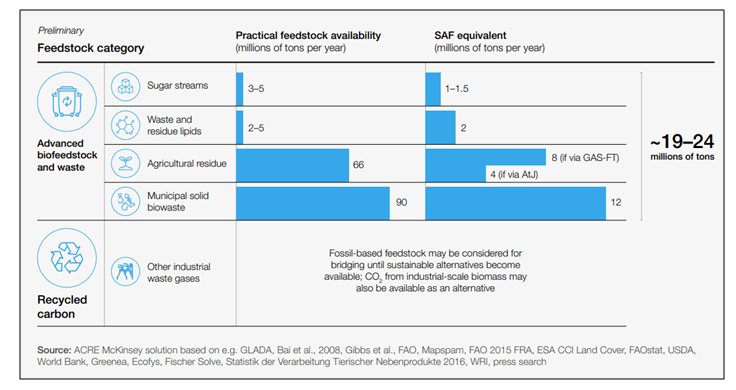
With such amount of feedstock available, the India has potential to produce 19 to 24 million tons of SAF per year, according to the Clean Skies for Tomorrow India Insight Report 2021 by the World Economic Forum3.

Producing and using SAF in India will also yield significant social and economic benefits, including a positive impact of around USD 2.8 billion on GDP from producing and using 360,000 tons of SAF annually3. This would provide additional income to farmers, enhance energy security, create jobs in the rural economy, improve waste management, and result in cleaner skies with less open-air burning.

Socioeconomic and Environmental Benefits

Biofuels are a powerful sustainable energy source offering numerous benefits to various stakeholders. They enhance social well-being, promotes economic growth, provides renewable energy solutions for governments, and supports farmers’ livelihoods.

  • Job Creation: The biofuels industry generates employment across agriculture, biomass production, processing, and distribution, particularly benefiting rural areas.
  • Rural Development: Establishing biofuel production facilities in rural areas can stimulate local economies by attracting investments and supporting infrastructure development, such as roads and storage facilities.
  • Sustainable Development: Biofuels align with the UN’s Sustainable Development Goals (SDGs), including affordable clean energy (SDG 7), sustainable cities (SDG 11), and good health (SDG 3).
  • Waste Management: Biofuel production often uses agricultural residues and waste, helping farmers manage crop residues and reducing the need for burning, which can improve air quality and soil health.
  • Income for Farmers: Farmers can diversify their income sources by growing energy crops specifically for biofuel production. This additional revenue stream can help stabilize their incomes and minimize dependency on traditional crops.
  • Utilization of Marginal Lands: Biofuel crops can be grown on marginal lands that are not suitable for food crops, making productive use of otherwise underutilized areas and increasing overall land productivity.
  • Reduced Emissions: Biofuels reduce carbon dioxide emissions and local pollution, leading to cleaner air in cities. India’s Ministry of Petroleum and Natural Gas (MoPNG) reported that the EBP program reduced greenhouse gas emissions by 318.2 million tonnes between 2014 and November 2022.
  • Biodiversity: Cultivating energy crops can restore degraded lands, promote agroforestry, and create wildlife habitats, fostering biodiversity and ecological balance.
  • Energy Security: Domestic biofuel production reduces dependency on imported fossil fuels, enhancing energy independence and mitigating supply risks and geopolitical vulnerabilities.
  • Foreign Exchange Savings: The MoPNG estimated that the EBP program saved over INR 53,894 crores in foreign exchange from 2014 to November 2022 by reducing the need for costly foreign oil imports1.

Challenges and Path Forward

To realize the full potential of bioenergy, we must address key challenges. This includes focusing on non-food feedstocks, promoting waste-to-energy solutions, and protecting natural habitats. Collaboration between governments, industries, and institutes is crucial. Investing in research and supportive policies is essential, along with integrating social, economic, and environmental considerations into bioenergy planning.

Conclusion

As we celebrate World Biofuel Day, we recognize bioenergy’s potential to drive social progress, economic development, and environmental stewardship. By adopting a comprehensive approach and addressing challenges, we can build a sustainable future. Let’s embrace bioenergy as a catalyst for societal empowerment, economic growth, and environmental conservation. Happy World Biofuel Day!

References:

  1. https://mopng.gov.in/files/uploads/BPCL_Ethanol_Booklet_2023.pdf
  2. Sustainability | Free Full-Text | What Is Polluting Delhi’s Air? A Review from 1990 to 2022 (mdpi.com)
  3. https://www3.weforum.org/docs/WEF_Clean_Skies_for_Tomorrow_India_
  4. Report_2021.pdf
  5. https://theicct.org/sites/default/files/publications/India-PV-FC-workingpaper-FINAL.pdf

“Digital Solutions can provide immediate benefits in reduced operating costs, improved production uptime, reduced variability in product streams and better on time delivery:” – Ron Beck, Aspen Technology, Inc.

0

Aspen Technology, Inc. is a global leader helping Industries meet the challenges of several challenges on sustainability, energy transitions, resource efficient productions etc. AspenTech solutions address complex environments where it is cirtical to optimize the asset design, operation and maintenance lifecycle.

Excerpts from the interview

Q 1. Chemical Industry Digest (CID): As is well known by now, Industry 4.0 digital technologies are a game changer. How transformational is it going to be for chemical and allied industries?

Ron Beck (RB): For most chemical sites, the production environment, while being run safely and profitably today, is far from optimized. For instance, most chemical processes can achieve 15–30% incremental energy efficiency with corresponding reduction in carbon emissions.

The manufacturing executive of a major Southeast Asian chemical concern, agreed with me on that opportunity at a recent executive panel in Singapore. Almost all of this can be achieved through pervasive digitalization of both the supply and demand side of energy use. At the same time, many high value chemical processes still have challenges in terms of detailed understanding of the reasons for variability in their reactor processes.

These can be impacted significantly by Industrial AI. For example, Dow Chemical presented in a public forum regarding how they are solving production challenges in a complex reaction unit through hybrid models (combining first principles models with AI), increasing yields by 10% with immediate benefits in profitability. The company explained this exciting digitalization result in a public webinar we sponsored. The recording is available online. In both supply chain and production areas, digitalization is strategic in prioritizing actions that can be taken to both decarbonize and to reduce water use.

Finally, R&D is seeing renewed focus globally in chemical organizations, as companies race to develop and commercialize new materials based on bio – and renewable feedstocks. In R&D and early design, concurrent engineering workflows are enabling leaders to do techno-economic evaluations much faster and better, and then to scale up at an accelerated rate using concurrent, automated, and AI enabled workflows.

Q 2. CID: What are the AspenTech core software offerings or solutions for chemical and allied industries?
RB: AspenTech provides a broad and deep range of digital software solutions used strategically across the chemical industry. The company’s engineering simulation and digital twin models solution, based around the Aspen Plus system, is used in areas ranging from base chemicals, to petrochemicals, to polymers, and to performance chemicals. These are used by leading companies as an end-to-end digital thread, from R&D through production to maintenance.

In production, the multivariate control solution Aspen DMC 3 is a standard solution in both conti-nuous and batch processes, with well-established ability to drive production to higher margins, higher yield, better quality, and lower waste.

AspenTech’s supply chain solutions (Aspen Collaborative Demand Manager and Aspen Supply Chain Management Insights) are used for both demand-driven and operational excellence driven business lines. The company’s asset performance management solutions apply data science, root cause analysis, and AI to improving asset uptime. AspenTech’s digital grid and microgrid solutions are helping companies to electrify and decarbonize operations.

The company has multiple ongoing projects and is embedding industrial AI across this broad portfolio, including areas, such as the Dow example (provided earlier), as well as providing guidance to operators in production optimization, supply chain, and prescriptive maintenance.

Q 3. CID: What are the key benefits that your digital solutions provide to chemical companies embarking on digitalization? And what should chemical companies do to accelerate digitalization?

RB: AspenTech’s chemical customers are seeing several areas of key benefits. In today’s cost-constrained chemical environment, digital solutions can provide immediate benefits in reduced operating costs, improved production uptime, reduced variability in product streams, and better on time delivery. Strategically, a huge area of benefit is time-to-market for new chemical products, and another is agility in adjusting to global supply chain instabilities. A third crucial area that advanced digitalization creates benefits is training and upskilling the new generation of workers.

Many chemical companies have experienced brain drain with the most experienced operators, engineers, and R&D staff retiring – turning key roles over to a new generation. Digitalization and industrial AI are playing a key role in providing guidance to these newer work forces, in operating safely and in taking advantage of operating history to inform them of the best possible operating strategy today and going forward.

Q 4. CID: Sustainability as well as major transitions in energy feedstocks etc are major challenges and opportunities. To what extent can digitalization and software solutions enable these transitions in an overall context? What is the digital transformation needed in chemical companies?

RB: In simplest terms, here are some key areas where digitalization will strategically help chemical companies to excel in this new environment:

If you can’t measure it, you can’t improve!

Measuring carbon emissions, energy and water use, and greenness of the supply chain using digital modeling and visualization does and will have a huge impact. We have worked with one European downstream company who has implemented this, and two others who are in process. It gives immediate, companywide visibility to whether sustainability targets are on track, and where the areas for technical and management focus should be.

The key underlying concept is that real-time enterprise visibility turns operational and supply chain reporting into actionable decision support. Digitalization “mobilizes” the data to support operational and sustainability excellence. With the data available, as industrial AI becomes more and more impactful, solutions that create value for your situation can be adopted.

Also, many of the topics involving circularity, decarbonization and efficiency require adoption of new processes and technologies. To do that at scale, and with no interruption in business, a digital thread across the lifecycle of an innovation project is critical.

Q 5. CID: Now let’s take AspenTech’s solutions in specific areas: How does it contribute to sustainability and digitalization in chemical industries?

RB: Digital twins (based on engineering simulation) and advanced process control software are reducing energy consumption (and corresponding reduction in carbon emissions) by 5–15% (of the 30% I mentioned at the outset) depending on the type of chemical process.

Multivariate analysis and advance process control solutions are improving product quality by identifying the root causes in the process of product variability and improving operations to eliminate that variability.

Utilities and energy modeling software are enabling companies to plan and execute strategies to maximize use of renewable power, to maximize green content at lowest cost, and to track and manage water use.

Supply chain planning and execution software is able to track “green” content in the supply chain and trace it from source to end user.

Microgrid software is enabling chemical operators to incorporate renewable and low carbon electricity sources into operations, additionally improving the confidence in uninterrupted operations in the face of increasingly stressed regional power grids.

Asset performance management solutions provide advanced warning of equipment degradation, reducing the frequency of unplanned downtime that are emissions-emitter events.

Q 6. CID: How do your solutions enable energy transitions, shifts to renewables, use of biomass feedstocks etc.?

RB: Let us take the example of incorporating bio-feedstocks into chemical processes. One practical approach is to mix between 10–20% bio feedstocks with conventional hydrocarbon-based feedstocks. This involves new ground for most producers, in terms of ensuring the quality and operability of processes. Bio feedstocks are more variable and introduce chemical characteristics that can impact operating strategies and maintainability. A process that was run for years without advanced digital tools, such as digital twins and advanced process control, now needs to be modelled and managed with these digital technologies. The digital twin will provide insights into the behavior of the new mixed feedstocks, while the advanced process control will allow optimized operations based on the insights from the digital twin. The company is currently working with several European chemical companies to incorporate data analytics to understand behavior of the new feedstock regimes and hybrid models.

To support innovation and introduction of new processes in this area, we have added capabilities to support bio-feedstocks. For example, we have expanded our physical property libraries to incorporate characteristics of typical bio-feedstocks and we have developed sample models to get process engineers started in developing models of these systems for use in project work and in digital twins.

Q 7. CID: In what ways can your solutions accelerate the hydrogen economy?

RB: For the hydrogen economy, and many other similar areas, AspenTech has comprehensive digital solutions that cover the entire value chain as well as the entire capital project lifecycle. To communicate this, the company has developed a hydrogen sustainability pathway.
For example, AspenTech has a systems-level modeling software system (Aspen Fidelis) that models system alternatives at the frontend of planning, enabling the evaluation of alternative technologies, alternative processes, and electrical routes.
In another example, the company has developed detailed models of the range of hydrogen electrolysis approaches. These detailed models are seamlessly incorporated into models of the entire balance of plant as well as the renewable power supply.
AspenTech also provides a distributed energy resources management solution to manage the provision of renewable power – buffered by battery storage – to optimize the provision of power evenly to green hydrogen and ammonia units.
There is much more to this digitalization story, but those are a few examples. The ultimate goal of applying digital technology to hydrogen production and use is to drive the cost of hydrogen from about $6/kg to $1/kg over the next 10 years.

Q 8. CID: There is a lot of media highlight on AI as being revolutionary. To what extent is it hype or real in terms of implementation? What role does AI play in AspenTech’s solutions and in chemical industry specific areas?

RB: AI is definitely already beginning to disrupt some industries, and some applications are beginning to be adopted and create value in the chemical and energy industries.

The key challenge in the chemical and energy industry is to ensure that the AI that is adopted provides realistic and correct recommendations, that operators and engineers remain in charge to ensure the validity of the output of the AI, and that the AI is transparent and explainable.

It is also important to select the right technology for the right problem. AI is needed to solve some, but definitely not all problems, and is o

verkill for many business processes in the chemical industry.
AspenTech believes that we are in a unique position to provide these solutions, because we are well positioned to combine AI with models based on engineering fundamentals, putting crucial guardrails around the AI applications so that the results follow the laws of chemistry, physics, electricity, and geoscience, and so that the outcomes are safe.
We call that approach of domain-expertise guardrails, “Industrial AI,” and we believe it is fundamental to successful adoption of AI in the right places in the chemical industry.
We have released over 25 different industrial AI capabilities, deployed within our existing strategic systems that are widely used in industry. These solutions are creating value in areas, such as (a) business agility, (b) guidance to operations and technical workers, and (c) automation of time-consuming processes.

For example, Corteva Agriscience implemented AspenTech’s Industrial AI Hybrid Models in Aspen Plus within a day. These models enabled them to monitor their heat exchange columns, linked to crucial chemicals production columns. The company has calculated that the solution is already yielding cost-savings amounting to over USD 10 million per year in improved quality and yield and lower maintenance costs.

Nissan Chemicals is using similar hybrid models to provide accurate insights into their ammonia reformer units, which saves the company 2% in steam usage (and associated carbon emissions) per year. Another company, IOCL, is using hybrid models in one of their refining units, as a soft sensor to predict viscosities in the unit, enabling them to improve process performance and yields.

Q 9. CID: Do asset optimization, process optimization, plant and machinery reliability play significant roles in sustainability in addition to vastly improving manufacturing efficiencies and productivity?

RB: Absolutely, Process optimization is particularly important. Most chemical operations can gain significant energy efficiency, potentially up to 30% in total. Process optimization can provide about 5% of that total energy efficiency and carbon emissions reduction. Predictive maintenance solutions also play a significant role. Unplanned shutdowns, cost by unexpected equipment degradation or failure, are very significant sources of emissions over the typical year of a plant’s operations. Using prescriptive maintenance to turn unplanned downtime into scheduled maintenance can avoid those emissions events. Further, there is a spike in energy use any time equipment or units are restarted.

Q 10. CID: What are the key challenges you face in getting industry to incorporate high tech digital solutions such as yours? What changes do you expect/want from chemical industry companies so that there is ease of adopting such digital technologies?

CF: Digitalization is not simply a technology adoption activity. The organization needs to be ready to take full advantage of the digital solution. This means that organizational change and readiness is as important as digital technology itself.
One leading chemical company presented a fantastic success story of implementing digital twins using AspenTech’s Aspen HYSYS process simulation platform, explaining that the key breakthrough is the understanding that they needed to instill a “culture of modeling.” There are several key aspects of this.

The most fundamental is to understand the breadth of value that can be unlocked with digitalization and therefore, the value in fully training the spectrum of potential users, of encouraging these user communities to explore new value opportunities, to share best practices, and to also understand that the technology will increase the value of their work – help and augment the workers, not replace them. This is especially important as industrial AI solutions are introduced. In the complex and safety conscious world of a chemical manufacturing site, industrial AI is not going to replace workers. It is going to provide an expert co-pilot and advisor who is at the disposal of helping the worker to make better, more strategic decisions, faster. It is about instilling that culture.

CEO’s Forum : Views on Sustainability, Energy Transition and Innovation – Namitesh Roy Choudhury

In this interaction, Namitesh Roy Choudhury, Vice Chairman and Managing Director of LANXESS India showcases the company’s vision and achievements in sustainability.

Q 1. Chemical Industry Digest (CID): ‘Sustainability’ has become a dominant driving force today; however, purposeful action is needed. Has sustainability become a top management function? Are companies adopting sustainability due to regulatory pressures or are they intrinsically driven realising the benefits of sustainability?

Namitesh Roy Choudhury (NRC): Sustainability has emerged as a dominant driving force for businesses across various industries, including the hydrocarbon and downstream chemical sectors. In many organizations, sustainability has become a top management function, with executives and board members actively involved in setting sustainability goals, formulating strategies, and overseeing implementation efforts. At LANXESS, a certain part of the compensation of the board of management has been directly linked with the organization’s sustainability target achievements. This is a solid demonstration of the commitment LANXESS has towards the topic of Sustainability.

We have integrated sustainability principles into our corporate strategy and operations and this is evident through the consistent recognition that we have received from industry bodies like Confederation of Indian Industry (CII), Federation of Indian Chambers of Commerce and Industry (FICCI), Indian Chemical Council (ICC) and Dow Jones Sustainability Index (DJSI) Europe for our exemplary performances in this areas. We are proud to say that LANXESS India is a front-runner in sustainability within the global LANXESS network. Currently, we are almost 84% climate neutral on Scope 1 and Scope 2 emissions on an annualized basis.

Q 2. CID: The understanding of what exactly is sustainability varies from one company expert to another. What is your definition of sustainability? Can you outline your company’s long-term vision for sustainability?

NRC: At LANXESS, we want to actively shape the transformation of the industry and the global value chains and thus contribute to a more sustainable future.

Our vision of sustainability is to be a responsible and resilient company that creates long-term value for its stakeholders while contributing to a more sustainable future. By integrating sustainability into the core business strategy and operations, LANXESS aims to drive positive environmental, social, and economic outcomes for both the company and society as a whole.

Q3. CID: To be on the road to sustainability a combination of multiple pathways are required. What are the steps you feel industry should take and what steps have you undertaken? Enumerate the steps in brief only.

NRC: LANXESS has undertaken various steps which include investing in renewable energy for our operations, implemented resource-efficient processes, developed sustainable product range by finding alternative raw materials sourced from renewable sources, engaged with stakeholders to ensure responsible practices and participated in the industry initiatives to promote sustainability.

We also provide transparent reporting on sustainability performance and progress towards our goals. LANXESS publishes annual sustainability reports and communicates openly about its sustainability initiatives and achievements.

Q4. CID: How do you integrate sustainability goals into your overall business strategy and into your plant operations? How can industry make a success of circular economy and how can it be integrated into current operations?

NRC: Sustainability is a strategic objective for LANXESS. Our ambition is to be a leading, stable, stable, sustainable, and profitable company. We centre our activities around five key topics that are derived from this ambition.

Five Topics are That area the Core of Our Path to More Sustainability.

  • Circular and Sustainable Sourcing:

Our increasingly circular value chains start from a diverse, sustainable raw material portfolio. We engage with our suppliers and relevant stakeholders to improve the working and environmental conditions in the global supply chains. LANXESS has set high standards worldwide for the procurement of raw materials, equipment, machinery, and services. As a founding member of the “Together for Sustainability” initiative, we have established a systematic sustainability risk analysis to evaluate all suppliers.

  • Safe and Sustainable Sites:

We manufacture sustainable products at competitive and sustainable chemical sites. Continuous process improvements and investments are fundamental to our success. We care about the communities to which our sites belong.

Common standards for facility planning, construction, and operation ensure a high level of safety across our locations. Global regulations for dangerous goods and transportation safety ensure that hazards are avoided to the greatest possible extent.

  • Climate Protection and Energy Efficiency:

For us, climate action based on efficient energy use is the right thing to do for society and also a key to delivering financial performance in the long term. We have been able to reduce our greenhouse gas emissions (Scope 1 + 2) by more than two–thirds since 2004 and we aim to be a climate neutral company by 2040.
The independent “Science Based Targets Initiative” confirms: LANXESS’s climate targets help to limit global warming to 1.5 degrees Celsius.

  • Good Governance and Energized Employees:

We aim to be an attractive employer and to develop peoples’ full potential throughout their professional lives. To this end, we create a motivating working environment for all employees, striving for high engagement and impact. We invest in individual career development programs and constantly provide training opportunities to our employees. We nurture and promote a value-based, performance orientated culture.

  • Sustainable Products:

We systematically evaluate the sustainability of our portfolio and consider sustainability criteria in the development of products and applications. We have long-term relationships with our customers, drive innovation together and help them to make their business sustainable.

With our brand “Scopeblue” we mark products that contain biobased or recycled raw materials and/or have a significantly reduced carbon footprint. By developing innovative processes and products, we support our customers to make their business more sustainable.


Q 5. CID: In what all ways can industry contribute to the energy transition within the chemical industry? How can industry balance the transition to renewable energy while maintaining operational efficiency and cost-effectiveness? How feasible are renewable energy sources like biomass, solar and wind energy and hydrogen?

NRC: The energy transition in the chemical industry is complex but achievable through a combination of renewable energy adoption, energy efficiency improvements, and innovative technologies. Balancing operational efficiency and cost-effectiveness is crucial, and the feasibility of each renewable energy source varies based on regional and technological factors.

For instance, at our manufacturing plant in Nagda, we have implemented innovative water management practices, such as utilizing domestic sewage from the Grasim colony, treating and reusing the water in our processes. The effluent generated is treated in our Zero Liquid Discharge (ZLD) plant, ensuring no discharge into the environment. This approach has significantly reduced our fresh water usage.

Furthermore, our facility operates a cogeneration plant using biomass, making our electricity and steam production entirely carbon-neutral. These sustainability initiatives required concerted effort, including comprehensive carbon emission assessments, process optimizations, and extensive energy audits.

Similarly, at our Jhagadia site as well, we transitioned from coal to biomass despite potential cost escalation, demonstrating our commitment to sustainable practices over short-term economic gains.

Q 6. CID: What all steps can be taken to reduce carbon footprint, carbon emissions, utilisation of captured carbon dioxide or decarbonisation in general?

NRC: LANXESS has implemented several steps to reduce its carbon footprint and emissions, and to advance decarbonization. Key initiatives include:

  • Climate Neutrality Goal: LANXESS aims to be climate neutral by 2040, committing to significantly reducing greenhouse gas emissions
  • Energy Efficiency: The company focuses on improving energy efficiency in production processes, adopting new technologies to lower energy consumption
  • Renewable Energy: Increasing the use of renewable energy sources in its operations. Shifting towards renewable energy sources such as solar, wind and biomass

LANXESS plays a significant role in driving decarbonization efforts within the Indian chemical industry. It involves investing in R&D, collaborating with stakeholders, advocating for supportive policies, and implementing sustainable practices across its operations and supply chain.

Q7. CID: To sustain the movement forward to sustainability, innovations are crucial, as you would agree. Is industry seized of this importance? To what extent is your R&D doing such work and helping you in achieving your sustainability goals? Can you mention any one major R&D achievement in this regard?

NRC: The One notable innovation/development is our brand ‘Scopeblue’- sustainable product portfolio. The Scopebluelabel of LANXESS identifies product that enable climate-friendly solutions and contribute to a circular economy. They offer a concrete sustainability benefit to our customers. Only products that meet at least one of the following two criteria can receive the Scopeblue label:

  • The products contain at least 50% sustainable raw materials + 10% reduced Product Carbon Footprint (PCF)
  • The carbon footprint of the products is at least 50% lower than that of conventional products

Sustainable products are the future. To name a few brands which belong to the Scopeblue family include Lewatit® Scopeblue (Based on bio-circular acrylonitrile > 90% sustainable raw materials); TMP® Scopeblue (Uses bio-based n-butylaldehyde 54% sustainable raw materials).

Q8. CID: It has also been articulated by experts that moving on the road to sustainability will also throw up many new business opportunities. Do you agree? What is your experience? And what are the kind of opportunities possible?

NRC: Yes, I absolutely agree. As the society becomes more conscious of environmental issues and seeks sustainable solutions, businesses have vast potential to innovate and provide products & services that meet these demands.

It’s no more about just mitigating the environmental impact; it is also about seizing the economic opportunities that come with creating a more sustainable future.

  • Sustainable Construction: Demand for sustainable construction materials, energy-efficient designs, and green building certifications is increasing.
  • Water Management: There is a demand for technologies and services that improve water efficiency, treat wastewater, and manage water resources sustainably
  • Circular Economy: Embracing the circular economy model, which emphasizes recycling, reuse, and waste reduction, can create opportunities for businesses to develop circular supply chains, product refurbishment services, and remanufacturing processes
  • Renewable Energy: Investing in renewable energy sources like solar, wind, and hydroelectric power presents significant opportunities. Companies involved in the production, installation, and maintenance of renewable energy infrastructure stand to benefit.

CEO’s Forum : Views on Sustainability, Energy Transition and Innovation – Anurag Roy

0

Here, Anurag Roy, CEO of Astec LifeSciences Ltd elaborates on how chemical industry can firmly take on the challenges of sustainability through R&D, shift to renewables and circular manufacturing.

Q 1. Chemical Industry Digest (CID): How are sustainability issues driving the future of the chemical industry. What are the challenges for the chemical industry on the road to sustainability, addressing climate change issues?

Anurag Roy (AR): The chemical industry in India faces critical sustainability challenges such as high energy consumption, water usage, and hazardous waste. To address these issues, adopting a robust sustainability roadmap is imperative. This includes enhancing energy efficiency, adopting renewable energy, conserving water, and improving waste management. Aligning with global sustainability standards and integrating cleaner production technologies will reduce environmental impact while fostering economic growth. Transitioning to a low-carbon footprint demands investments in renewable energy, energy efficiency, carbon capture, and bio-based feedstocks. Embracing circular economy principles for waste valorization and promoting collaboration and innovation are crucial. At AstecLifeSciences Ltd, sustainability drives our business strategy. We focus on innovation, strategic partnerships, operational excellence, and cost leadership to achieve sustainable growth while benefiting society and the environment.

Q 2. CID: What is the crucial role of R&D and Innovation to drive sustainability?

AR: Today, the chemical industry’s journey towards sustainability is fuelled by continuous investment in R&D and innovation. Innovator companies in technology and pharmaceutical sectors prioritize substantial budgets for R&D to drive innovation and maintain competitiveness. In contrast, Indian companies historically allocate smaller portions of their revenue to R&D, particularly outside of IT. Recognizing the importance of global competitiveness, Indian firms, including start-ups and established corporations, are increasingly focusing on R&D to foster innovation, develop new technologies, and secure future growth. Enhancing R&D efforts is crucial for adapting to technological shifts and meeting evolving market demands, positioning India as a hub for innovation and driving economic growth. Addressing challenges such as funding constraints and fostering collaboration between academia, industry, and government are essential to sustaining this momentum and achieving long-term technological leadership.

With an aim to offer innovative solutions to our innovator customers,last year we inauguratednew R&D center in Rabale, Navi Mumbai. Named The Adi Godrej Center for Research and Development,the infrastructure at our facility will enable us to develop a newer range of sustainable cost-effective products at a faster pace and at a greater scale.

Q 3. CID: How can sustainability open up new business opportunities in the Chemical industry?

AR: Sustainability is a strategic springboard for growth. Eco-conscious consumers are driving demand for eco-friendly products, creating a fertile market for companies that can deliver. India is recognized for its rigorous environmental regulations, setting a high standard for industries to operate responsibly, prioritizing the well-being of both communities and ecosystems. This commitment not only ensures compliance but also cultivates trust and long-term partnerships.

Our strategic approach revolves around ongoing improvements in product quality, minimizing waste output, and embracing environmentally friendly solvents and state-of-the-art technologies. By continually refining these practices, we demonstrate our unwavering dedication to fostering a sustainable future, where innovation and environmental stewardship go hand in hand.

Q 4. CID: What are the advances in the shift towards renewables from petro based feedstocks, biomass, CO2 as feedstock, algae based developments?

AR: The chemical industry is increasingly exploring alternatives to traditional petro-based feedstocks, driven by the need for sustainability and the rising demand for renewable resources. This shift encompasses various innovative approaches, including the use of biomass, CO2 as a feedstock, and developments in algae-based technologies. One particularly promising avenue is the utilization of algae as a renewable feedstock. Algae have the unique capability to capture CO2 while producing valuable biomass that can be transformed into a wide array of chemical products. This method not only provides a sustainable source of raw materials but also helps reduce greenhouse gas emissions. Significant progress has been made in adopting renewable pathways.

For example, the use of electrolysis to generate hydrogen from water has gained momentum. This hydrogen can serve as a clean feedstock for various chemical processes or as a fuel source, further decreasing dependence on fossil resources.Additionally, integrating biomass into value chains has created new opportunities for sustainable chemical production. Modern chemicals are increasingly being derived from renewable biomass sources like agricultural residues, forestry by products, and dedicated energy crops. This approach not only enhances resource efficiency but also creates economic opportunities for rural communities and fosters the development of a circular bio economy.

Q 5. CID: How to advance towards circular manufacturing/circular economy?

AR: To embed a circular manufacturing mindset in an organization, companies should emphasize education on sustainability principles and the benefits of a circular economy. Setting clear targets for resource efficiency, waste reduction, and closed-loop systems, empowering employees to innovate and contribute to these goals. By integrating comprehensive waste management strategies that treat waste as a resource, we aim to maximize recovery and minimize environmental impact, reducing our reliance on virgin materials and creating new economic opportunities. We prioritize designing sustainable, biodegradable products with lifecycle considerations for easy recycling, reuse, or decomposition. Collaboration across the value chain is crucial, fostering partnerships to identify synergies and build integrated ecosystems that enhance circularity and resource efficiency. Through these efforts, we strive to ensure that everything we produce is either used or recycled, eliminating waste and promoting a sustainable future.

Q 6. CID: Comprehensive water management and advances in water treatment technologies for enhancing water efficiency.

AR: A key focus area for many chemical companies is the implementation of advanced water recycling and reuse systems. By treating and purifying wastewater streams, it is possible to create closed-loop systems that minimize reliance on fresh water sources, thereby reducing environmental impact and ensuring long-term water security for industrial operations Moreover, the chemical industry is actively exploring the potential of innovative water treatment technologies, such as membrane filtration, advanced oxidation processes, and biotechnological approaches. These cutting-edge solutions offer superior removal of contaminants, enabling more effective treatment and reuse of water while minimizing the environmental impact of industrial operations. At Astec, we are dedicated to designing energy and water-efficient manufacturing using the best in class Zero Liquid Discharge (ZLD) for all our operating plants. We have installed a Multiple Effect Evaporator (MEE). The MEE reduces Total Dissolved Solids in the distillate, allowing for further treatment in the Activated Sludge Process (ASP). Following ASP treatment, the water is efficiently recycled to achieve ZLD.

Q 7. CID: How do latest process control and analytical instrumentation enables sustainable operations?

AR: The latest advancements in process control and analytical instrumentation are revolutionizing the chemical industry, enabling sustainable operations and driving efficiency across the board. One of the key benefits of modern process control systems is increased automation, which translates into reduced downtime and improved operational efficiency. Moreover, the latest analytical instrumentation provides unprecedented insights into our processes and products.

By utilizing techniques such as advanced spectroscopy, chromatography, and mass spectrometry, we can gain a deeper understanding of our material streams, enabling us to identify opportunities for optimization, resource recovery, and waste minimization. These advancements also enable us to operate our plants more efficiently, with increased control and visibility. Currently, we can monitor and control our operations from centralized control rooms, leveraging real-time data and advanced process control algorithms. This level of automation and remote monitoring not only improves our operations but also enhances safety and minimizes the risk of environmental incidents.

Furthermore, the integration of advanced analytical instrumentation with data analytics and machine learning algorithms opens up new frontiers in predictive maintenance. By leveraging data-driven insights, we can anticipate and address potential issues before they occur, minimizing downtime, reducing waste, and ensuring sustainable operations. All Astec’s plants are equipped with latest technology in terms of process control and analytics.

Q 8. CID: How are emerging technologies like AI, Blockchain, Machine Learning, Data Analytics, Digitisation can enable sustainability in the chemical industry?

AR: Astec Lifesciences leverages advanced technologies to transform the chemical industry, enhancing sustainability and fostering innovation. Our manufacturing plants employ data analytics for optimizing processes and monitoring operations. Additionally, we have digitized our R&D centres to drive continuous improvement and innovation. While India’s adoption of AI and blockchain technologies in the chemical sector may currently be limited, Astec remains proactive in tracking emerging technologies for future opportunities. This strategic approach ensures we stay at the forefront of industry advancements, poised to capitalize on new developments for sustainable growth and efficiency.

Source Links:

  1. Sustainability roadmap for Indian chemical industry
  2. Role of R&D in achieving sustainable goals
  3. How to be profitable and sustainable in the chemicals industry
  4. A systematic review of industrial wastewater management: Evaluating challenges and enablers
  5. What Is Water Management? – 8 Best Innovative Practices for Water Management
  6. Advanced Oxidation Process (AOP)
  7. Astec Annual Report
  8. Integrating machine learning techniques into optimal maintenance scheduling

CEO’s Forum : Views on Sustainability, Energy Transition and Innovation – Dr. Richard Lobo

Sustainability has become a dominant driving force, a game changer for business and industry, and more particularly so, for all hydrocarbon to downstream industries. it is also leading to discover new business opportunities. This is also driving innovation.
To understand the scope and importance of sustainability and the various transitions taking place, how these are driving technological and attitudinal changes in industry, Chemical Industry Digest quizzed CEOs of top companies.

Their views are reproduced here. We start off with Dr. Richard Lobo of Tata Chemicals.

Q 1. Chemical Industry Digest (CID): From global warming to it’s ill effects to decarbonisation to sustainability pressures, what, according to you, are the range of challenges facing the chemical and allied industries? Could you enlist them and the areas that are very crucial?

Dr. Richard Lobo (RL): Global warming is a truth of the present times. NASA estimates that, overall, the Earth was around 1.36 degrees Celsius (or about 2.45 degrees Fahrenheit) warmer in 2023 than in the late 19th-century. As responsible global citizens, it becomes our collective duty to ensure every step is taken to decarbonise and make sustainability our topmost priority. As part of decarbonisation efforts, governments are imposing environmental regulations in order to strengthen the carbon reduction initiatives.
Chemical industry, a critical segment of the global economy and supply chain network, will play a key role as the world transitions towards decarbonisation. According to a report released earlier this year, the industry will have to reduce overall emissions by around 60% within 2030 if global warming is to be reduced in accordance with the 1.5° pathway.
The industry is slowly, but surely,transitioning towards more sustainable practices, with the use of renewable feedstocks, energy-efficient processes, and circular economy principles. Stakeholders, including investors, consumers, and regulators, are increasingly gravitating towards transparency and accountability regarding environmental and social performance, which is promising for the industry.

Q 2. CID: Would these challenges retard the growth of the chemical industry, or can each of these be converted into opportunities?

RL: Every challenge is an opportunity. The time has come for the industry to innovate, grow and transform. For instance, the imperative to mitigate climate change presents an opportunity for chemical companies to develop low-carbon alternatives. Investments in renewable energy sources, such as solar and wind power, can help reduce carbon emissions from manufacturing processes while also lowering operational costs.
Companies addressing environmental pollution can develop eco-friendly products and technologies, such as biodegradable polymers and cleaner production processes, to enhance sustainability. Resource scarcity drives innovation in recycling and resource recovery technologies. Chemical companies can adopt circular economy principles like closed-loop systems and waste-to-energy technologies to maximize resource efficiency. Compliance with regulations demonstrates commitment to sustainability. Supply chain disruptions require resilience through localized production, redundancy measures, and strong supplier relationships. Growing demand for sustainable products offers market differentiation opportunities. Technological innovation can improve efficiency, reduce costs, and unlock new revenue streams. By responding to changing consumer preferences, companies can innovate, engage with consumers, and build brand loyalty, turning challenges into opportunities for value creation and a sustainable future.

Q3. CID: The chemical industry, is driven by R&D and innovation, though in India, the overall chemical industry spending on R&D is very low. How can the Indian chemical industry change over and use innovation as a driver of growth?

RL: Tata Chemicals values R&D and innovati-on’s crucial role in fuelling growth in the chemical industry. Despite India’s private sector trailing in R&D spends globally, we view this as an opportunity. Through strategic investments in innovation, we aim to unlock substantial growth not only for Tata Chemicals but also for the entire industry.
With India’s robust chemical sector valued at $170 billion (2021), we see particular promise in specialty chemicals, where we boast a trade surplus and strong growth prospects. By focusing R&D on thriving areas like the $5.5 billion agrochemical market (CAGR 8.3%) , we aim to solidify India’s position as a global leader in specialty chemicals.
Sustainability is a core priority, not just a trend. Our R&D prioritizes bio-based and recycled feedstocks. Recognizing the vast potential of digital transformation, we’re pioneering AI-powered process optimization to achieve industry leading efficiency and competitiveness. We are committed to fostering collaboration by partnering with research institutions and universities accelerating innovation across the value chain. Even a slight increase in R&D spend can yield substantial dividends. By prioritizing targeted R&D investments, Tata Chemicals is poised to play a pivotal role in driving the Indian chemical industry’s transformation into a global innovation hub.

Q4. CID: If so, how should chemical industries go about building an innovation culture in their companies, an innovative infrastructure that is result oriented. What skill set should be inculcated/brought to the fore by the industry’s manpower?

RL: As we stand on the brink of remarkable possibilities, driven by the unexplored potential of AI & ML, we are also deep in the throes of ever transforming to stay relevant – with the reimagination of products, services and business models, the shifting of consumer patterns, urgent call to action on sustainability, the essential commitment to human rights and heralding change through corporate citizenship. The chemical industry, the backbone of our economy, needs to strengthen their purpose by nurturing the culture for experimentation among their people. Transformation needs to be the fuel that powers our manpower in the journey of radical innovations. Another key factor here is how we view crisis. The mindset towards insurmountable challenges and disruptions need to change – they are only opportunities to innovate and transform, especially through strategic collaborations and open innovations. The organisations need to formulate business models and spirit of innovation to impact humanity, philanthropy and ethics beyond profits.

Q 5. CID: What are the opportunities for the chemical industry in the emerging situation? Is it in scaling up their core competencies in a greener manner and /or in bringing new and differentiated technologies and products?

RL: The chemical industry can align its core competencies with an environmentally friendly approach, leveraging initiatives like ‘Make in India’ and ‘Atmanirbhar Bharat.’ The Petroleum, Chemicals, and Petrochemicals Investment Regions (PCPIR) policy aims to attract investments of Rs. 20 lakh crore (US$ 276.46 billion) by 2035, fostering technological innovation, job creation, and sustainable development. The government’s allowance of 100% FDI in chemicals and production incentive schemes creates a favorable regulatory environment. With the global shift from China, India is emerging as a preferred destination for specialty chemicals, supported by robust domestic consumption and improved exports. Improvements in the US margin situation also provide optimism, with long-term global margins projected at 20% and 40% in India.

Q 6. CID: Today there is a huge convergence of digital technologies, commonly stated as Industry 4.0 including digital twins, VR, and Augmented VR, and the one that is swamping the media world-AI. What could be some of the transformative impacts of these technologies on the chemical industry, in particular-AI. How would it enable R&D and Innovation and is the chemical industry alive to the paradigm changing potential of these technologies?

RL: AI stands as a beacon of transformative potential, particularly within R&D and innovation in the chemical industry. Predictive analytics offers unparalleled opportunities to expedite product development while simultaneously reducing costs and improving quality. By analysing vast volumes of process data, AI and ML extract valuable insights to optimise reactions and process variables such as temperature, pressure and yields, thus facilitating faster scale-up. Furthermore, AI-based predictive modelling and simulations accelerate chemical product development, significantly reducing R&D time and costs.
Innovative technologies such as high-throughput automated workflow systems enable swift product screening, facilitating agile innovation by swiftly testing reactions. Moreover, the implementation of the digital twin technology creates virtual replicas of physical assets, allowing for simulations of products and processes, thereby minimising the need for risky physical trials. Augmented Reality (AR) and Virtual Reality (VR) also play pivotal roles in enhancing production monitoring, safety training, and remote expert support, fostering a culture of real-time awareness and continuous improvement.
By harnessing AI alongside other Industry 4.0 capabilities, the chemical industry unlocks the potential for transformative innovations, simultaneously enhancing productivity, compliance, safety and sustainability. This convergence of advanced technologies not only accelerates the pace of innovation but also ensures that industry practices align with evolving regulatory standards and sustainability goals, positioning the chemical industry as a frontrunner in the era of digital transformation.

Q 7. CID: Summing up, how are all these, i.e., innovation, digitalization, etc., taken up in Tata Chemicals, and what outcomes are you looking at?

RL: We have deeply integrated innovation and digitalisation into our business approach to drive growth and advancement. Our comprehensive strategy encompasses various initiatives aimed at leveraging external expertise, nurturing internal innovation, and harnessing cutting-edge technologies. We have implemented business process re-engineering across business operations and are embedding digitalisation across offices/plants to address process inefficiencies.
Our three state-of-the-art R&D centres, located in Pune and Bengaluru, serve as incubators for cutting-edge innovation and enable us to remain at the forefront of technological advancements. The Pune Innovation Centre has successfuly developed specialty silica products through strategic R&D partnerships with prominent silicone rubber customers. Additionally, our Rallis Innovation/Chemical Hub and Agri BioTech Lab are dedicated to driving innovations in crop care and seed technologies, supported by multi-location seed research stations.
Looking ahead, we are committed to increase the deployment of advanced technologies across manufacturing and business processes.
Through these efforts we aim to deliver impactful outcomes and sustain our position as a leader in the chemical industry.

Source Links:

  • https://www.mckinsey.com/industries/chemicals/our-insights/the-chemicals-industry-of-tomorrow-collaborate-to-innovate
  • https://www.tatachemicals.com/upload/content_pdf/integrated-annual-report-under-regulation-01-june-2023.pdf
  • https://www.tatachemicals.com/upload/content_pdf/integrated-annual-report-fy-2022-23.pdf
  • https://www.pwc.in/assets/pdfs/consulting/esg/sustainability-and-the-chemical-industry.pdf
  • https://www.iea.org/energy-system/industry/chemicals
  • https://cio.economictimes.indiatimes.com/news/next-gen-technologies/industry-4-0-the-fuel-that-can-lift-india-to-global-manufacturing-standards/102030388
  • https://www.tatachemicals.com/upload/content_pdf/integrated-annual-report-under-regulation-01-june-2023.pdf

Renewables to Chemicals – The Future of EPC in Sustainability

Abstract
The chemical industry is transforming towards sustainability by integrating renewable energy and bio-based chemicals, supported by technological innovations, government policies, and international collaborations to reduce carbon emissions.

Introduction

Chemical industry is undergoing a significant transformation driven by the urgent need to reduce carbon emissions and promote sustainability. Central to this change is the integration of renewable energy sources into the production of chemicals traditionally reliant on fossil fuels. We focus on the latest developments and innovations in the field of Engineering, Procurement, and Construction (EPC) for renewable-to-chemical processes, highlighting the potential for sustainable growth and environmental preservation.

Bio-based Chemicals

One promising avenue for sustainable chemical production is the development of bio-based chemicals. These substances, derived from renewable biological resources such as plants and microorganisms, offer a viable alternative to petrochemicals. Advancements in biotechnology have enabled the production of various chemicals from biomass, including ethanol, butanol, and lactic acid. This shift towards bio-based chemicals not only reduces reliance on fossil fuels, but alsocontributes to a circular economy by utilizing waste streams and by-products as feedstock.

A case study explores producing bioethanol from rice straw, a renewable by-product of rice production, to replace fossil fuels, enhance sustainability, and improve energy security. The process involves pretreating rice straw, breaking it down with enzymes into simple sugars, fermenting these sugars with yeast to produce ethanol, and recovering the ethanol through distillation.

Benefits include reducing carbon emissions, managing agricultural waste, and providing a domestic renewable fuel source. This highlights the potential of sustainable technologies in transforming agricultural waste into valuable energy resources.

The Integration
Another key area of innovation is the integration of renewable energy into chemical manufacturing processes. Producing ethylene from food waste without greenhouse gas emissions represents a significant breakthrough.

This process addresses the challenge of managing food waste and demonstrates how renewable energy sources can be harnessed to produce essential chemicals in an environmentally friendly manner. Indian Oil Corporation Limited’s bio-ethanol plant project in Panipat brings numerous advantages, including lowering carbon emissions, handling agricultural waste efficiently, and offering a homegrown renewable fuel option.

Similarly, India’s development of hydrogen infrastructure, such as the first hydrogen fueling station in Vadodara, aims to support fuel cell electric vehicles (FCEVs) and enhance transportation energy options. Hydrogen, produced from renewable sources like wind and solar, serves as a clean energy carrier and a sustainable alternative to fossil fuels, promoting a greener economy.

While the direct link to converting renewables to chemicals is not explicit, hydrogen’s role in the renewable energy landscape and its potential in chemical synthesis underscore its importance in achieving a sustainable and circular economy.

The Transition
Governments worldwide are recognizing the importance of supporting the transition to renewable chemicals through policy measures and investments. The establishment of carbon capture and utilization centers exemplifies such initiatives.

These facilities aim to capture CO2 emissions from industrial processes and convert them into valuable products, thereby reducing the overall carbon footprint of the chemical industry.

Collaborations between leading companies in the renewable chemicals sector are driving technological advancements and market expansion. Partnerships like those between Neste, Marubeni Corporation, and Resonac Corporation highlight the global interest in developing renewable chemicals. These collaborations are expected to accelerate the adoption of renewable-to-chemical technologies, contributing to the sector’s rapid expansion.

The Future
The future of the chemical industry lies in its ability to embrace renewable energy sources and sustainable practices.

By focusing on bio-based chemicals, integrating renewable energy into production processes, leveraging government support, and fostering international collaboration, the sector can achieve significant reductions in carbon emissions while meeting the growing demand for chemicals.

As we move forward, the role of EPC in facilitating these transitions becomes increasingly crucial, paving the way for a more sustainable and resilient chemical industry.As the world seeks to address climate change and promote sustainable development, the chemical industry stands poised to lead the charge towards a greener future.

“We deliver predictable, sustainable projects through innovation and technology” – Rajiv Menon, Tata Projects Ltd

Published in Chemical Industry Digest. – May 2024 issue

             Rajiv Menon

Rajiv Menon (B. Chem Engg; Master’s in Finance Management) is President & COO – Energy and Industrial, Tata Projects Ltd. He is responsible for businesses such as Power and Metals, Oil Gas, Hydrocarbon, Advanced Technology facilities, Transmission and Distribution and International Business. Prior to Tata Projects, Menon was with Black & Veatch (India) where he was the Managing Director for nearly a decade. He has nearly three decades of rich experience in above mentioned businesses and also in Asset Managment, Sustainability and Emerging Solutions. He has worked extensively across geographies, and has a strong global understanding of business growth accelerators. Tata Projects is one of the fastest growing and most admired Sustainable Technology led Engineering, Procurement and Construction (EPC) companies in India. They have expertise in providing sustainable solutions in the execution of large and complex urban and industrial infrastructure projects while also demonstrating strong presence in refineries, petrochemical and other chemical process plants.

Project engineering and construction are crucial for industrial growth, be it green field projects, expansions or diversifications. Engineering, Procurement and Construction companies, are therefore very important for project set up. Industries like oil & gas, refineries, petrochemicals to all downstream chemicals are seeing major project activities. There are several technologies that have converged in recent times. There are several transformational transitions taking place due to the compulsions of Net Zero. Engineering and construction have also moved gears to adopt new technologies and innovative ways of doing things. Chemical Industry Digest interviewed Rajiv Menon, President & COO – Energy and Industrial Business, of Tata Projects Ltd to understand the engineering and construction sectors in the emerging context, how it is impacted by technologies and how it is moving forward. Tata Projects Ltd is a major player in the Indian EPC sector and Rajiv Menon has three decades of experience in the field.

His views are presented here

Chemical Industry Digest (CID) : In executing projects, primarily two modes are considered: EPC and EPCM. What are the differences, the specific characteristics? Which is better for effective execution? Is Tata Projects Ltd (TPL) an EPC or EPCM company?

Rajiv Menon (RM): EPC stands for Engineering, Procu-rement, and Construction, which is a type of contract used in construction projects where the contractor is responsible for designing, procuring materials, and building the project according to a defined scope and schedule. EPC involves full responsibility of the contractor, including:

  • Single Point of Responsibility: The EPC contractor manages all aspects of the project, including design, procurement, and construction. This can simplify project management for the customer, as they deal with one entity.
  • Fixed Price Contracts: EPC contracts often come with fixed pricing, providing more cost certainty to the customer.
  • Transfer: The EPC contractor assumes more risk, including cost overruns or delays related to design or construction issues.

Whereas EPCM stands for Engineering, Procurement, and Construction Management, where the contractor provides the engineering and management services but does not directly procure or construct the project. Instead, they oversee the project on behalf of the owner, who manages the procurement and construction activities. and construction activities.

The responsibility of contractor includes

  • More Control for the Owner: The customer retains more control over procurement and construction activities, which may be beneficial if they have specific vendor preferences or want more transparency.
  • Flexibility in Procurement: Allows the owner to directly manage procurement, potentially leading to cost savings or customization opportunities.
  • Lower Initial Costs: EPCM contracts may have lower upfront costs, as the owner handles procurement and construction directly.

In summary, EPC can be more beneficial when the customer prefers a streamlined approach with a single contractor responsible for design and construction, while EPCM may be preferred when the customer wants more control over procurement and construction activities or seeks to minimize upfront costs. Ultimately, the choice depends on project complexity, budget, and the customer’s risk tolerance and preferences.

Tata Projects works largely in the EPC space, but we are also comfortable with the EPCM mode. We also work on the Open Book (OB) mode. In OB, the benefits of both modes can be realised: the best time schedules, the best costing, on time delivery by structuring timelines etc. The OB mode has been there for decades, as in the real implementation there is partnership, trust and transparency.

I feel this is the best route to complete a project expeditiously. Otherwise, one goes through a bidding process for six to eight months, and many things are not clear at the outset. I would define the OB mode as an advanced contracting approach, a hybrid model, which is a win-win situation for the client and contractor.

CID: Since in your group there is TCE also in the same line of business i.e. engineering and construction, won’t you be competing against each other?

RM: TCE (Tata Consulting Engineers) and Tata Projects are both companies under the Tata group, but they serve different purposes within the infrastructure and engineering sectors:

Tata Consulting Engineers:

  • TCE is primarily an engineering consultancy firm that provides a range of services including feasibility studies, detailed engineering design, project management, and construction supervision.
  • TCE specializes in engineering solutions across various sectors such as power, water, infrastructure, chemicals, and industrial plants.
  • The company focuses on offering technical expertise and consultancy services to support clients in planning and executing engineering projects.

Tata Projects:

  • Tata Projects is a construction and project management company that undertakes the execution of engineering, procurement, and construction (EPC) projects across different sectors.
  • Tata Projects is involved in the actual construction and implementation of projects, including civil, mechanical, electrical, and instrumentation works.
  • The company handles a wide range of projects, including infrastructure development, power generation and distribution, urban infrastructure, industrial facilities, and more.

TCE provides engineering consultancy services focusing on design and technical support, while Tata Projects specializes in executing EPC projects and construction activities across various sectors. Both companies complement each other within the Tata group’s portfolio by offering different aspects of the project lifecycle, from conception and design to execution and completion.

CID: How do you see the project activity in the oil & gas, refineries, petrochemicals and downstream chemical sectors which are also some of the major target readership areas of Chemical Industry Digest?

RM: Oil & gas, refineries petrochemicals and downstream chemicals have good potential and promise in India, and globally, despite a certain cyclicality in petrochemicals. I foresee many projects happening in the refinery sector with announcements already made by BPCL, HPCL and IOCL. Reliance is again moving forward in petrochemicals with a huge project.

There are also major transitions taking place now: the energy transition, the supply chain transition, and the pressures towards sustainability. This will impact every area of industry and business. Energy transition will propel many of these projects, particularly in the refinery segment integrating with petrochemicals. The oil, gas, and petrochemicals sector in India continues to show promising growth prospects driven by several factors:

  • Rising Energy Demand: India’s growing population and increasing industrialization drive higher energy demand. Oil and gas remain primary sources of energy for transportation, manufacturing, and power generation.
  • Government Initiatives: The Indian government has been implementing policies to attract investments in the oil and gas sector, including exploration and production activities. Initiatives like the Open Acreage Licensing Policy (OALP) aim to boost domestic oil and gas production.
  • Investments in Infrastructure: Significant investments are being made in pipeline infrastructure, LNG terminals, and refining capacity expansion to meet the rising demand for petroleum products and natural gas.
  • Focus on Clean Energy: There’s a shift towards cleaner energy sources like natural gas and renewables, which opens up opportunities in the natural gas sector. India aims to increase the share of natural gas in its energy mix to reduce carbon emissions.
  • Petrochemical Industry Growth: The petrochemical sector is experiencing robust growth due to increasing demand for polymers, chemicals, and plastics from various industries like packaging, automotive, construction, and consumer goods.
  • Attractive Investment Climate: The government’s efforts to improve ease of doing business and attract foreign investments through policy reforms like the Hydrocarbon Exploration and Licensing Policy (HELP) create a conducive environment for the sector.
  • Technology Adoption: Adoption of advanced technologies such as enhanced oil recovery techniques, digitization, and automation improves operational efficiency and reduces costs for oil and gas companies.

Despite these promising prospects, challenges such as regulatory complexities, price volatility, environmental concerns, and geopolitical factors can impact the sector’s growth trajectory. However, overall, the Indian oil, gas, and petrochemicals industry presents significant opportunities for investors and businesses looking to participate in India’s energy and chemical sectors.

CID: Do these segments constitute your major revenue earners. How do you go about selecting projects?

RM : While infrastructure is a very important area for us, a considerable portion of my portfolio is from oil & gas, refineries, petrochemicals, chemicals. We have good potential in the metals sector also. We are a little selective in choosing projects, as we are more keen on those with a technological edge to it, which has innovation and sustainability in them. That’s because we feel we are more competent to execute such projects. So technology partnerships play a major role in our working. We associate with leading technology licensing companies in this regard. I would say that our positioning is as a technology driven EPC company rather than just a construction and contracting company.

CID: What about overseas projects? Are they a major focus area for you?

RM : We do many projects overseas, but our mainstay continues to be projects from India. Geographically, we are more focussed on Middle East. We are doing a couple of projects in Abu Dhabi. We are mapping a few other projects in the Middle East depending on how these would shape up and based on possible partnerships there.

CID: What are some of the major advances taken place in engineering, in construction, in project management that have made phenomenal difference to project execution. What are the novel technological innovations/advances you have introduced? Also how have the convergence of many digital technologies bundled up as Industry 4.0, from IIoT to Data Analytics to Virtual Reality, Artificial Intelligence etc impacted EPC?

RM : Technology is evolving very fast and already many of the latest technologies are already in use in engineering and construction. Sustainability is getting embedded at every step. Construction methods have vastly changed. For eg. modular construction helps in prefabricating project components offsite and assem bling it faster at site. For project success, Tata Projects have taken many steps to make phenomenal difference in project execution, right from concept to commissioning:

  • 4D BIM and Hybrid Modular Accelerated Cons-truction: Tata Projects integrates modern construction methods and techniques, including 4D Building Information Modelling (BIM) and hybrid modular accelerated construction. 4D BIM facilitates better visualization of project progress over time, while hybrid modular construction expedites project timelines by prefabricating building components off-site and assembling them on-site.
  • Dedicated Technological Platform: Tata Projects employs a dedicated technological platform which enables us to get predictable project delivery by streamlining communication, documentation, and workflow management. It also facilitates risk anticipation and mitigation strategies to ensure project success.
  • LEED Gold Standards: Tata Projects has demonstrated sustainable construction practices by adhering to LEED Gold Standards set by the Green Building Council. One such example is designing of Sanad Factory, for chip manufacturing, according to these standards, we have shown our commitment to environmental stewardship and energy efficiency.
  • Advanced Water Saving Technologies: Tata Projects implements advanced water-saving technologies to achieve a Zero Liquid Discharge (ZLD) system in their projects. These technologies minimize water consumption and ensure responsible water management, aligning with Tata Project’s commitment to sustainable and eco-friendly construction practices.

Tata Projects aims to enhance project efficiency, minimize environmental impact, and deliver high-quality infrastructure solutions that meet the evolving needs of their clients and communities. We are frontrunner in adopting Industry 4.0 technologies to enhance our operations.

  • Drones are used for site surveillance, progress measurement, streamlining logistics and improving project efficiency while minimizing risks.
  • Virtual Reality (VR) headsets allow stakeholders to remotely visit project sites, reducing costs and improving safety by minimizing physical presence.

In addition to these innovative tools, we have implemented:

  • SAP software to integrate all organizational funtions, ensuring operational coherence, efficiency, and transparency.
  • Microsoft’s PowerBI and PowerApps to create data analytics dashboards that provide real-time insights and enable strategic decision-making. This fosters a culture of continuous improvement.

CID: You claim to do EPC from a Sustainability, Net-Zero perspective. Could you please elaborate on this, how and in what all areas of project activity, sustainability-oriented solutions come to play?

RM: Tata Projects is committed to sustainability and has outlined its approach towards planet resilience, striving for Net Zero by 2045. This commitment is part of Tata Group’s ‘Project Aalingana’, which aims to embed sustainability into business strategy.

  • Environmental Considerations: Minimizing ecological disruption, implementing waste management practices to reduce environmental footprint, and integrating pollution prevention measures.
  • Materials and Resource Management: Carefully selecting materials with minimal environmental impact, promoting recycling and reuse, and implementing measures to reduce waste generation.
  • Technology Selection: The use of digital applications like building information modelling (BIM), Internet of Things (IoT), and augmented reality and virtual reality (AR/VR) have improved the operational dynamics and started playing a critical role in overall efficiency. Green technologies, such as renewable energy systems and eco-friendly materials, are increasingly being incorporated into projects.

Tata Projects is aligning its EPC projects with sustainability goals, embracing the vision for a greener, cleaner, and more equitable future. This involves integrating sustainability into every aspect of EPC projects and making technology choices that support these goals.

  • Incorporating sustainable design principles that focus on energy efficiency, renewable materials, and low-impact construction techniques. Use eco-friendly building materials that reduce carbon emissions and waste.
  • Implementing energy-efficient technologies and practices throughout the project lifecycle, including efficient HVAC systems, LED lighting, and smart building controls to reduce energy consumption.
  • Developing strategies to minimize construction waste through recycling and reusing materials. Implement a circular economy approach to maximize resource efficiency.
  • Integrating water-saving technologies such as rainwater harvesting, graywater recycling, and efficient irrigation systems to reduce water consumption during construction and operation.
  • Conducting lifecycle assessments to evaluate the environmental impact of materials and technologies used in the project, aiming for lower embodied carbon and improved sustainability outcomes.

CID: How do you go about technology selection for a project? Is it from the client’s side or you select?

RM: Technology selection is done in many instances jointly along with the clients. In some instances we offer technology through our association with technology licensors. If the client has selected the technology, then we go along with it and then see how we integrate our engineering with that technology. Apart from sustainable technologies, the EPC exe-cution itself has a huge scope for implementation on sustainability lines. The advantage we have today is that technology licensing companies are already in the energy transition phase and including to embed sustainability. The clients are also aware and insistent on sustainability goals like Net Zero which makes it easier for us. While we tie-up with technology licensors, we have to do the cost benefit analysis as to what gives the best OPEX and CAPEX. We have excellent relationships with technology licensors in all our areas, which is another value differentiator.

CID: Since you have done both public sector and private sector projects do you find the project executions of both different?

RM: Well, I have seen public sector projects also moving as fast or even faster than the private sector because there is a PMC in place, though it may not so be in all cases. It all depends on the detailing and how much you work as a partner. The private sector has better flexibility within the contracting model to be more practical in their decision making as there aren’t restrictions as such, whereas the public sector has to work within a set of boundaries.

CID: What are the major elements that need critical attention and control to expedite any project? And also ensure there are no cost overruns?

RM: In an Engineering, Procurement, and Construction (EPC) project, there are several major elements that require critical attention and control to expedite the project and ensure there are no cost overruns.

These includes:

  • Crafting detailed project plans that outline timelines, resources, budgets, and the sequencing of activities. This includes setting milestones and identifying critical paths to ensure project completion within the agreed timelines.
  • Allocating the right mix of personnel, equipment, and materials needed to complete the project.
  • Implementing a framework to identify and mitigate risks.
  • Monitoring and controlling project timelines and budgets to prevent cost overruns.
  • Ensuring the project meets the required standards and specifications.
  • Understanding and managing the contractual obligations and rights of all parties.

CID: And lastly what would you say is the USP of Tata Projects – the differentiating factor/s over your competitors, that customers should select your company?

RM : Put simply we are ethical and value conscious. We deliver predictable, sustainable projects through innovation and technology. Additionally, we are backed by a trusted name, The Tata Group. We don’t discriminate based on the size of projects. Our portfolio is very wide from power transmission and distribution projects to metals, oil & gas, and chemicals. So, whether it’s as Rs. 200 crore project or Rs. 5000 crore project, our motto is how to execute it well if it makes commercial sense.

Chemical Industry Digest – July 2024 Issue

0

Chemical Industry Digest July 2024Chemingineering – Shaping the Future
–  K. Sahasranaman, Independent Consultant – Process engineering, Energy, Utilities and Safety

R&D drives economic growth and innovation in various sectors, from healthcare to clean technologies, enhancing global standards of living through scientific and technological advancements.

Improving Success Rate in R&D 

–  Vishal Sharma, Dr. Raja Kaliappan, Godrej Industries Chemicals

R&D should focus on enhancing product performance, new applications, and disruptive innovations, emphasizing success factors like strategy, customer focus, and digitization.

New Process Developments for the Synthesis of Pyridine-Based Heterocycles

– S. Adimurthy, Central Salt and Marine Chemicals Research Institute

The article details the synthesis of diverse nitrogen-based heterocycles using commercially available substrates, highlighting novel methodologies and their applications in medicinal chemistry and organic synthesis.

Harnessing Sonochemistry with Ultrasonic Reactors: Revolutionizing Chemical Processes

– Lalith Vashista, diva envitec

Sonochemistry, utilizing ultrasound waves through ultrasonic reactors, revolutionizes chemical processes by accelerating reactions, enhancing efficiency, and minimizing environmental impact, with diverse industrial applications.

Approach for Qualifying Carbon Steel Piping Systems for Negative Temperature Applications during Depressurization

– Mrinmoy Ghosh Choudhury, Vivek Kumar Tiwari, Process Plant Specialists

The article evaluates a carbon steel piping system’s ability to operate at -35°C during depressurization, ensuring compliance with ASME codes by calculating stress ratios at valve nodes.

Efficient Filtration for Reliable Production and High Quality

– Marius Schaub, Filtech

FILTECH 2024 in Cologne showcases advanced filtration and separation technologies, featuring over 550 exhibitors and 200 presentations, highlighting innovations and applications in various industries.

Chemingineering – Shaping the Future

A robust R&D ecosystem is crucial for driving innovation, technological advancements and economic growth. It fosters the development of new products and processes, enhances competitiveness, and addresses global challenges. By supporting collaboration among industries, academia, and government, a strong R&D environment attracts talent and investment, and helps maintain a nation’s leadership in science and technology.

Shaping the Future

r

&D fuels progress. By constantly seeking new knowledge and solutions, it unlocks scientific breakthroughs in medicine, materials, and technology. These innovations drive economic growth by creating new industries and jobs. A better-functioning economy translates to better healthcare, infrastructure, and education, ultimately raising the standard of living for everyone.

Overview
According to the UNESCO Institute for Statistics, global spending on R&D has reached US$ 1.7 trillion, constituting nearly 1% of the world’s GDP. However, this is still below the US$ 2 trillion spent on defence. While the total expenditure on R&D has increased significantly, the percentage of GDP dedicated to R&D (R&D Intensity) has remained relatively stable over the past few decades. Israel is the highest spender on R&D as a percentage of GDP at 4.3%. followed by South Korea (4.2%), USA (2.8%), China (2.1%) and Finland (2.0%). India spends 0.64% of its GDP, which has remained stable over several years. The chemical industry’s investment in R&D is modest compared to many other businesses. Its share of the global investment in 2022 was just 2.7%. Typically, the chemical industry spends 2-5% of its revenue on R&D. There is a wide variation within the industry, with the speciality chemicals businesses often investing as much as 10% of their earnings in R&D.

Metrics
One of the useful metrics to benchmark the effectiveness of R&D is the number of patents. It measures the creation of new intellectual property. According to the latest database of the World Intellectual Property Organisation (WIPO), patent filings worldwide grew by 1.7% in 2022 to reach 3.46 million. China, USA, Japan, Korea and Europe accounted for 85% of the patent filings, with China’s share being a humongous 46.8%. Another important metric for R&D is the number of publications in peer-reviewed journals. According to Scopus, a large, multidisciplinary database of peer-reviewed literature, China, USA, UK, India and Germany are the top 5 countries on this criterion.

Ecosystem
A robust Research and Development (R&D) ecosystem requires a combination of elements that foster innovation and productivity. A skilled and diverse workforce with expertise in relevant fields is crucial. This includes scientists, engineers, and support staff who bring creativity and technical know-how. Sufficient funding from both public and private sources is essential. This supports various stages of research, from basic science to applied R&D, and helps bring innovations to market. State-of-the-art facilities, equipment, and technologies enable cutting-edge research. Access to advanced labs, data centres, and testing environments is vital. Partnerships between academia, industry, and government can enhance knowledge sharing and resource pooling. These networks facilitate interdisciplinary research and the translation of findings into practical applications. A favourable regulatory environment, including intellectual property rights and streamlined approval processes, encourages innovation and protects investments. Mechanisms to bring innovations to market, such as incubators, accelerators, and venture capital, are necessary for translating research into products and services. Together, these elements create a supportive environment that drives scientific and technological advancements.

Investment
Healthcare and Life Sciences take the top spot for investment in R&D. This encompasses a vast field including pharmaceuticals, biotechnology, medical devices, and healthcare IT. With an ageing population and the ever-present need for better treatments and cures, this sector consistently attracts significant R&D investment. Not far behind is Information & Communication Technology. This includes research on artificial intelligence, software development, semiconductors, and communication networks. The rapid evolution of technology and the increasing importance of data security drive continuous investment in this area. Another area that attracts top R&D dollars is Clean Technologies & Sustainability. As the world focuses on climate change and environmental concerns, R&D in renewable energy, energy efficiency, sustainable materials, and green manufacturing is rapidly growing.

Sustainability
One prominent focus area is the development of sustainable materials and processes. Biodegradable polymers, derived from renewable feedstocks, are being actively researched to replace traditional petroleum-based plastics. Bio-based chemicals offer a promising alternative, but cost competitiveness and large-scale production methods remain challenges. Additionally, advancements in catalysis are leading to more efficient and selective reaction pathways, minimising waste and energy consumption. Widespread adoption of these sustainable solutions is anticipated within the next decade, contingent upon cost reduction and infrastructure development.

Advanced Materials
On another front, R&D is focused on advanced functional materials. Graphene, a wonder material with exceptional properties, holds immense potential for supercapacitors and batteries, revolutionising energy storage. Self-healing polymers, with the ability to repair themselves, offer significant advantages in various applications. Furthermore, researchers are tailoring materials with specific functionalities at the molecular level, leading to lighter composites for aerospace and other demanding sectors. While scaling up production methods and integrating these materials into existing processes pose challenges, the potential benefits are vast.

Circular Economy
The principles of a circular economy are gaining traction within the chemical industry, with R&D efforts focusing on resource recovery and waste minimisation. Chemical recycling technologies are being developed to deconstruct plastic waste back into its building blocks, enabling its reuse in virgin-quality plastic production. Biomass conversion processes are being optimised to utilise a wider range of waste materials and extract valuable chemicals, minimising reliance on virgin resources. Advancements in separation technologies further enhance resource recovery from wastewater streams, promoting a more sustainable production cycle. However, achieving economic viability for large-scale implementation and establishing robust regulatory frameworks are crucial steps towards realising a truly circular chemical economy.

Precision Chemistry
Precision chemistry and bio-manufacturing are emerging as cutting-edge R&D frontiers. Microbial fermentation offers a sustainable approach to producing customised chemicals with high selectivity. Microfluidic reactors enable on-demand production of small quantities, fostering greater flexibility. Research on bio-catalysts holds the potential to replace traditional chemical catalysts, leading to more efficient and environmentally friendly processes. While scalability and cost reduction are hurdles, specific bio-manufactured products might be commercially available within the next few years.

Digitalisation
Digitalisation and automation are transforming chemical production landscapes. Machine learning algorithms are being harnessed for process optimisation and predictive maintenance, enabling proactive equipment management. Realtime sensor data, coupled with advanced analytics, empowers precise production monitoring and control. Furthermore, AI-powered simulations are accelerating reaction design and development. While fully autonomous chemical factories remain a future prospect due to the complexity of certain reactions, significant integration of these digital technologies is expected within the next decade, leading to increased efficiency and productivity.

Epilogue
The quality and outcomes of R&D have changed over the last 50 years. Breakthroughs that once took decades can now happen in much shorter time frames. This is partly due to advancements in computing power, data analysis, and global collaboration. Research is no longer constrained by national borders. International collaboration and knowledge sharing have increased, leading to a wider pool of talent and accelerated progress. R&D is often more targeted towards specific applications and solving real-world problems. This can lead to quicker commercialisation and a more significant societal impact. Combining different scientific fields can lead to groundbreaking discoveries. We see this in areas like bioengineering and materials science. Private companies now play a larger role in R&D funding compared to governments in the past. This can influence the focus areas and outcomes of research.
Readers’ responses may be sent to: k.sahasranaman@gmail.com or chemindigest@gmail.com

Advertisement

Newsletter

Subscribe to our FREE Newsletter & Stay Updated

Advertisement