Home Blog Page 488

ChemIngineering – War and Sustainability

The continuing war in Ukraine is having catastrophic consequences on the world energy markets. It is threatening to derail our ambitious journey towards Net Zero. Lessons learned from the 1973 oil crisis would be useful in handling the present situation. We have a chance to reshape the energy landscape one more time.

War and Sustainability

On October 6, 1973, a Saturday and the Jewish religious holiday of Yom Kippur, Egyptian and Syrian armies armed with Soviet weapons launched a huge offensive on Israel. Israel was caught off-guard and the losses were heavy, but ten days later, the tide of the war turned. On 17th October, the Arab oil-producing countries under the OPEC umbrella cut their production by 5% and pledged to do the same month after month till Israel withdrew from all occupied Arab territories. More importantly, they imposed an oil embargo against USA and some other countries in retaliation for their support to Israel. By March 1974, the oil price had quadrupled from $3 to $12 per barrel. USA introduced fuel rationing, lowered speed limits for automobiles and extended daylight savings time for nearly two years. Energy Efficiency was born

Energy Efficiency

Many economists and environmentalists believe that the 1973 oil shock has saved the planet. Between 1977 and 1985, the US economy grew by 27% but the oil consumption fell by 17%. During those 8 years, the energy consumption per GDP declined by 35%. This was possible mainly because of a slew of energy efficiency measures. Automobile industry saw the biggest transformation as big gas-guzzling cars were quickly consigned to the junkyard. Innovations like lightweight materials, turbocharging, front-wheel drive, 8-speed transmission and direct fuel injection surged through the automobile industry continuously raising the efficiency bar. Congress passed legislation to bring efficiency standards for electrical appliances. Codes and standards were brought to regulate the energy usage in buildings and factories. The 1973 oil crisis was also responsible for kicking off research into renewables.

Russian Invasion

49 years later, we have another energy crisis brought about by the Russian invasion of Ukraine. It has come at a most inopportune time when the world was on the cusp of embarking on an ambitious and arduous journey towards Net Zero. It appears to have scuppered many a plan for transition to clean energy. Russia has cut the flow of natural gas through the Nord Stream 1 Baltic Sea pipeline. 12 countries in the European Union have been affected by the cut. The hardest hit is Germany, the biggest economy in Europe. Germany has activated the second stage of its 3-stage gas emergency programme and is now perilously close to rationing supplies to the industry. German industry is staring at recession. Germans have been asked to reduce their energy consumption as a part of national effort to conserve gas for the coming winter. Germany and other EU countries are now looking towards coal to make up for the energy deficit.

Coal is back

Germany and many other European countries are drawing up plans to restart coal-based power plants. This is a major policy reversal after years of efforts to phase out coal and reduce greenhouse gas emissions. Energy security has displaced concerns of global warming and climate change. It is now a question of survival. BASF, the world’s largest chemical company is working on emergency plans to prioritise production in the face of energy shortage. Other industries have decided to put on hold their plans to shut down coal-fired boilers. Coal was the main sticking point at COP26 held in Glasgow last November, where new commitments for phasing out coal were extracted from 23 countries. The press release at the end of the Glasgow Summit grandiosely trumpeted “coal is being consigned to history at COP26, as countries, banks and organisations move away from the single biggest contributor to climate change”. But just six months later, coal is back. It is a huge blow to the sustainability efforts.

Energy Investments

As per a report released by International Energy Agency (IEA) this month, energy investment is expected to increase by 8% this year to reach USD 2.4 trillion, well above pre-Covid levels. But in the changed landscape, many countries are viewing the investments through the lens of energy security. Governments, businesses and investors are faced with a dilemma of backing energy projects that meet urgent short-term needs, but fall foul of long-term Net Zero goals. Investments in fossil fuel projects are rising, driven by current high prices and reinforced by a desire to wiggle out of Russian stranglehold. IEA also warns that almost half of the additional investment of USD 200 billion would be accounted by the rising costs. After years of decline, costs of solar panels and wind turbines have gone up by between 10% and 20%. The price increase and disrupted supply chains of minerals and metals like lithium, cobalt, nickel, copper and aluminium that are critical for energy transition are also a major dampener. Inflation is threatening to apply brakes on investments in renewable energy.

Digital Technologies

The high energy prices also provide a fresh impetus to revisit the energy efficiency schemes that had been placed on the backburner for economic reasons. When the concept of Energy Efficiency was first enunciated in the 1970s, the world was yet to digitalise. But now that we have many mature digital arrows in our quiver, it is a good time to leverage them for improving energy efficiency. Big Data, for instance. can be used not only for operating the plants more efficiently, but also to improve supply chain logistics. The gains accruing from the new wave of energy efficiency measures may be individually small, but cumulatively they will be big enough to make a significant difference.

Path Forward

Will the Ukraine crisis derail our journey to Net Zero? The jury is still out on the question. An unequivocal answer depends on the extent and duration of the war. The war has already gone on for four months and the end doesn’t appear in sight. However, most analysts and think-tanks are making guarded statements that they foresee a modest acceleration of energy transition. Earlier this month, President Biden invoked the Defence Production Act to accelerate production of key components for clean energy technologies. These include electrolysers, fuel cells, photovoltaic cells, Platinum group metals, heat pumps, transformers and even insulation.

Epilogue

The response to the 1973 oil crisis reshaped the energy landscape for the subsequent 50 years. The current crisis is forcing us to re-examine our relationship with energy – how we produce and how we consume. We now have a historic opportunity to lay down the roadmap to build a more sustainable planet in the next 50 years.

Readers’ responses may be sent to:
k.sahasranaman@gmail.com or
chemindigest@gmail.com

Chemical Industry Digest – June 2022

Chemingineering – War and Sustainability
– K Sahasranaman, Independent Consultant
The world needs to move towards Net-Zero as swiftly as possible. The ongoing Ukraine war is threatening to derail these efforts. Past wars led to re-examining our relationship with energy. This is yet another opportunity to reshape global energy landscape.

Sustainability: Chemical Industries Need More Stakeholder Collaboration
– Dr MP Sukumaran Nair, FIE
For sustainable development the focus should be on renewable energy and decarbonisation. Many global declarations are in place on this. Chemical industry has a lot to do for enabling sustainability.

Carbon Capture Technologies Move to the Forefront
– Mark Sen Gupta, ARC Advisory Group
The industry is shifting gears to cleaner sources of energy; but it’s going to take time. The article highlights the importance of carbon capture and sequestering; the advances in this area that will have to be resorted to in the short term.

Sustainability, Hydrogen Economy and Agriculture: How farmers can valorize agri-waste and increase income?
– Professor (Dr.) Ganapati D. Yadav
When agricultural wastes can be transformed into chemicals, polymers and materials, why should it be wasted? The article highlights how farmers have good opportunities to make a variety of products from agricultural wastes using myriad developed technologies
which can supplement their income.

Hydrodynamic Cavitation as a sustainable and promising Technology for pre-treatment of Biomass
– Dr. Alka Kumari. et.al, IICT-Hyderabad
The conversion of biomass and agricultural wastes into value added products is work in progress. Better conversion necessitates effective pre-treatment. The article highlights the importance of different cavitation methods for pre-treatment.

Sustainable Sugar Industry
– Munagala Meghana, Yogendra Shastri, IIT-Bombay
Sugarcane juice can be used in the production of variety of chemicals. Various techniques and technologies in the production of multiple value added products, efficient waste handling methods and the range of products possible from sugarcane that can justify
an integrated sugar complex are described.

Sustainable Water Treatment Technologies
– Lakshmana Rao V, Nanda Kishore Desapande, TCE Ltd
Sustainable water management is one of the ways towards sustainable development. The authors describe the suite of waste water technologies that make possible zero discharge to recycling and reuse.

Prospects of Ethanol from Sugar Beet Crop for Blending with Petro Fuels

0

Abstract

It is important to reduce the use of petroleum products for vehicular transportation to reduce forex outgo as well as reduce carbon emissions. The government encouraging ethanol blending is welcome. However, ethanol only from sugarcane is not enough. Sugar beet is a feasible option to produce ethanol. This article highlights the importance of sugar beet for ethanol production which can be blended with fossil fuels. Importance, advantages and mechanics of ethanol generation from sugar beets are presented.

Importance of ethanol

India presently imports more than 220 million tonnes of crude oil and more than 32 billion cubic meter of natural gas per annum. The demand for crude oil and natural gas in India is increasing at 6 to 7% per annum, where as production is virtually stagnant. The outflow of foreign exchange due to import of crude oil is presently more than 27% of India’s foreign exchange earnings.

Under the circumstances, there is an urgent need to reduce the consumption of crude oil and natural gas in the country, to ensure energy security. While Govt. of India has taken a few initiatives to meet the impending energy crisis, one of the most important strategies of the government is to blend ethanol with petrol, that would reduce the consumption of petrol and consequently reduce the crude oil requirement.

Therefore, it is vital that the production of ethanol in India should be substantially increased for its use as fuel. Further, ethanol is also a strong building block for the production of a number value added derivative products. Therefore, boosting ethanol production as much as possible is the priority of need of the country.

Ethanol blending – Achievement & Target

In the current ethanol supply year (December-November), about 186 crore litres of ethanol have been blended with petrol until May 8, achieving around 10 per cent blending. Prime Minister has applauded the achievement of the target of 10% ethanol blending five months ahead of schedule. He further pointed out that in 2014, ethanol blending was only at 1.5%. Prime Minister said that 10% ethanol blending has led to the reduction of 27 lakh tonnes of carbon emission and has saved foreign exchange of Rs. 47,000 crore. Government of India has now set a target of 20% ethanol blending with petrol by the year 2025-26.

Requirement and availability of ethanol

NITI Aayog estimates the current annual ethanol production capacity at about 426-crore litre from molasses-based distilleries and 258-crore litre from grain-based ones. The production has to be increased to 760-crore litre and 740-crore litre respectively by 2025 to achieve 20% fuel blending – with 484-crore litres to spare to meet other needs. Considering the present status of new ethanol projects, the total capacity of ethanol is likely to increase to about 950 crore litres by December 2022 and 1,200 crore litres by December 2023.

Choice of feedstock

To boost the production of ethanol, Government of India has permitted ethanol production from different feedstocks such as C heavy molasses, B heavy molasses, sugarcane juice, sugar, sugar syrup, maize, damaged rice etc. India’s sugarcane acreage at present is around 46.67 lakh hectare. This results in sugarcane production of 430.5 million tonnes and sugar output of 35.5 million tonne. Even after the diversion of 3.5 million tonnes of sugar for ethanol production, there is a surplus of 8 million tonnes of sugar.

Sugarcane – Water intensive crop

Sugarcane is a water intensive crop. Water availability in India including surface water (river etc) and ground water is assessed to be around 1123 billion cubic meters. Central water commission has projected that India’s water need will increase from 634 billion cubic meters in year 2000 to 1093 billion cubic meters in the year 2025 and further to 1447 billion cubic meters in 2050. By then, Indian water requirement will exceed its resources. Out of the present water requirement in India, 85% of water is used for agriculture. Of this, sugarcane crop uses major share of water.

One tonne of sugar cane needs 60 to 70 tonne of water for cultivation. In Maharashtra alone, which is the major sugarcane producing state in the country, 71% of irrigation water is assessed to be used by sugarcane crop.

Therefore, it is clear that the consumption of water for sugarcane farming has to be reduced significantly. This, obviously, means that sugarcane farm area should not be increased and should preferably be decreased to a considerable extent. Under the circumstances, depending upon the sugar sector to boost the ethanol production in India in future to the level of future requirement of ethanol would amount to planning in vacuum.

Is it appropriate to use grains for ethanol production ?

To increase the production of ethanol, Govt. of India has permitted that grains such as maize, rice, etc can be used as feedstock for the production of ethanol. There is considerable criticism about this strategy of using grain as feedstock for ethanol production. Such criticism appears to be justified, since grains are food material. Further, grains are the starting material for the production of starch, which is the strong building block for the production of various value added products such as citric acid, L-Lysine and others. Number of such derivative products are presently not produced in India.

Therefore, a strong case exists to use such grains for the production of starch, which will lead to the production of several important derivative products. The criticism about the use of grains for the production of ethanol as a counter productive and short sighted approach appears to be appropriate.

Ethanol from Sugar Beet – Need of the day

Sugar beet is not only a source of sugar, but it also provides several by-products such as ethanol, pulp and leaves for cattle feed. Sugar beet contains 15 to 17% sucrose and in the process of sugar extraction, 12 to 14% of recovery is obtained. Sugar beet is cultivated in 41 countries in the world including Russia, Ukraine, France, Germany, USA, Egypt and others for the production of sugar and other derivative products. In view of the several compelling conditions in India, it is appropriate that sugar beet should be used as feedstock for the production of ethanol. Unfortunately, sugar beet is not presently produced in India on a commercial scale.

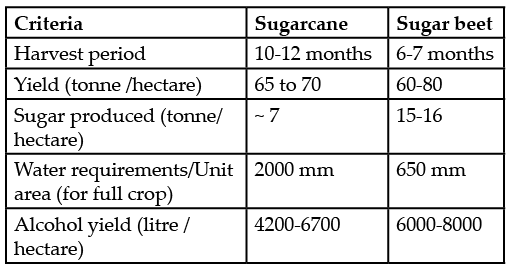
Sugar beet can be grown in black cotton soil. Since it is a salt tolerant crop, it can be grown in salty soil, where several other crops can not be grown. Sugar beet can also be grown in clay loam soil. Several regions in India are found to be suitable for sugar beet cultivation. The requirement of water for sugar beet cultivation is much lower than that of sugar cane cultivation and harvest time is much lower than sugarcane, as indicated by the following details.

Process for ethanol from Sugar beet

Sugar beet has dry matter and high sugar content and therefore, quicker fermentation is possible. The initial operations for ethanol processing are washing of sugar beet roots, so that all the dust and mud particles are removed. The beet roots are thinly sliced into round pieces, which are known as cossettes. This process helps in extracting out the sugar content from the roots. The cossettes are dipped in hot water for juice extraction, after which the juice is fortified with nutrients. The adjustment of pH to 4.5 is required for lesser microbial. Sterilization of juice is the next step after pH adjustment, which requires a pressure of 15 psi for specific time. On cooling of the juice, the fermentation process is initiated by addition of yeast for the production of ethanol. Commercially available yeasts help in the conversion of glucose (produced after enzymatic hydrolysis through invertase enzyme) to ethanol, under an environment where oxygen is deficit. Anaerobic fermentation is responsible for the production of ethanol from sugar beet roots.

Half hearted measures

In India, trials on sugar beet cultivation have been carried out in different geographical locations including Karnataka, Maharashtra, Tamil Nadu, Gujarat, Uttar Pradesh, Rajasthan, Haryana, Andhra Pradesh and Telangana. Growing of sugar beet was tried at Indian Institute of Sugarcane Research (IISR), Lucknow and at Padegaon (M.S.) in 1960’s.
In 1970, the work was initiated under All India Co-ordinated Research Project (AICRP) on sugar beet. On the basis of agronomic trials conducted at various locations in India, sugar beet cultivation was taken up in Sriganganagar of Rajasthan for sugar production and in Sundarbans of West Bengal for alcohol production. A few other organizations such as Rana Sugars Ltd., Shree Renuka Sugar, Samarth SSK Ltd., Vasantdada Sugar Institute have also carried out several trials.

Although there are many advantages in favour of the sugar beet crop over sugar cane viz. short duration, less water requirement and potential for intercropping, yet issues regarding availability of seed of indigenous varieties, harvesting techniques, post harvest management have to be optimised. Though, development efforts with regard to sugar beet cultivation have been taken up several years back, the progress has been disappointing, possibly due to half hearted measures of sugar units and research bodies.

Need for policy initiative

Government of India’s policy with regard to boosting ethanol production has been dynamic and proactive. However, it is surprising that the feasibility of producing ethanol from sugar beet has not been given importance and such projects have not been implemented so far on a commercial scale.

Obviously, the government’s focus on ethanol production from sugar beet has been inadequate, in spite of its national importance. Considering the urgent need to increase the production of ethanol and limited alternative options available for boosting ethanol production, need for the ethanol from sugar beet must be recognised by the policy planners and stakeholders.

This is the subject where maximum focus has to be there by the government of India, just as in the case of renewable energy projects, electric vehicles and hydrogen economy. Need for ethanol production from sugar beet is no less significant.

Sustainability: Chemical Industries Need More Stakeholder Collaboration

Abstract

Sustainable development has become crucially important globally for the sake of quality life for current and future generations while addressing the crises of climate change, pollution, loss of flora and fauna, etc. This article briefly discusses the importance of sustainability along with its evolution and global declarations made to address the same. The article briefly outlines some of the major areas of concern and the problems and solutions that advances in chemical processing can offer.

Introduction

The present times are marked by shifting global priorities at a pace not as evident as ever before. The rising energy costs and widespread discussions on environmental sustainability prevailed in 2019 which shifted after the outbreak of COVID-19 in 2020. As the pandemic eased after two years, the eruption of the Russia-Ukraine war in 2022 led to the prospects of the shortage of fertilizers and raised apprehensions about an upcoming food shortage. It also reinforced the necessity of attaining national self-reliance in the matter of critical inputs and products for energy and economic security. Now discussions have once again brought back climate change to centre stageandthe need to advance the earlier stipulated timeline for achieving carbon neutrality through an accelerated intervention in planning, innovation and cooperation. Amidst the ongoing war, heightened global inflation anddisruption of logistics, nations and businesses have prioritised their focus on renewable power, energy transition, decarbonization, digitization andgreen hydrogen in order to reduce the carbon intensity of existing operations and also sustain the business. India, with its contemporary socio-economic realities, can’t choose the path of the decarbonization agenda pursued by the developed West. Therefore, as the Prime Minister proclaimed at COP21, our efforts to become carbon neutral will be achieved through a systematic intervention covering all sectors of the economy for which it may need time span till 2070. The country’s manufacturing sector- of which chemical processing industries have a major share- has to substantially contribute and lead the targeted efforts towards achieving theabove environmental sustainability agenda and its action plan.

Sustainability Movement- a Brief History

The global sustainability movement, which is two decades old and which has gained currency with the World Summit on Sustainable Development (WSSD), Johannesburg in 2002 has impacted on almost all walks of life and transcended from its early focus on the reduction of environmental burden, achieving resource optimization, energy efficiency and waste elimination to a carbon-free development paradigm targeted to achieve the COP21 protocols by 2050 through a well defined progressive transition. On the industrial front, it started with the betterment of processes through innovation, development of new generation materials, catalysts and full-scale conversion, recycling and reutilisation of effluents, emissions and solid wastes. Hitherto developments have little impacted the basic tenets of agriculture, manufacturing and servicing which almost remained intact.
The new understanding is highly disruptive. With the set of programs at hand and scale of progress achieved so far, we may not meet the desired goals and extend the sustainable life of the planet earth. The new understanding is that a complete transformation is needed in several sectors of human activities especially in the industrial sector both in its manufacturing and end uses. This evolutionary understanding with regard to industry and business is well articulated in the following UN declarations.

Agenda 21 and the Rio Declaration on Environment and Development, 1992 provide the fundamental framework for policy discussion and action on matters related to industry and sustainable development. Although the role of business and industry, as a major group, has specifically addressed issues related to industry and economic development, consumption and production patterns, social development and environmental protection cut across the entirety of Agenda 21.

The UNDP Millennium Ecosystem Assessment (MEA), 2000, an international scientific assessment of the consequences of ecosystem changes for human well-being observed that “Significant reductions in net greenhouse gas emissions will require technological solutions that could include a mix of fuel switching (coal/oil to gas), increased power plant efficiency, renewables (biomass, solar, wind, run-of-the-river, and large hydropower, geothermal, and so on), and nuclear power. This portfolio would be complemented by more efficient use of energy in transportation, buildings, and industry sectors. In addition, technologies for carbon dioxide capture and sequestration pre-and post-combustion can add to the toolkit needed to address the substantial challenge of stabilizing greenhouse gas concentrations in the atmosphere. While these technologies exist, they need to be improved to make them economical and environmentally friendly”

The UNIDO Lima Declaration, ‘Towards inclusive and sustainable Industrial Development’, 2013 proposed that “industrialization is a driver of development. Industry increases productivity, and job creation and generates income, thereby contributing to poverty eradication and addressing other development goals, as well as providing opportunities for social inclusion, including gender equality, empowering women and girls and creating decent employment for the youth. As the industry develops, it drives an increase of value addition and enhances the application of science, technology and innovation, therefore encouraging greater investment in skills and education, and thus providing the resources to meet broader, inclusive and sustainable development objectives.” Inclusive and sustainable industrial development has been incorporated, together with resilient infrastructure and innovation, as Sustainable Development Goal 9 in the 2030 Agenda for Sustainable Development.

The Addis Ababa Action Agenda ‘International Conference on Financing Development’, 2015 which provides a new global framework for financing sustainable development by aligning all financial flows and policies with economic, social and environmental prioritiesfocus on “promoting inclusive and sustainable industrialization” and on “generating full and productive employment and decent work for all and promoting micro, small andmedium-sized enterprises.

The Global Environmental Outlook -6th edition, commissioned by UNDP in 2019, is a serious study across continents to arrive at a roadmap for achieving the United Nations Agenda 2030, in which hunger and poverty are consigned to history, and where biodiversity, oceans, land and freshwater are protected and restored to health. It’s clear that achieving this requires a transformation in human lifestyles and productive activities: our industry, agriculture, buildings, transport and the energy system which powers them.
The above conventions, studies and protocols have impacted the development of modern industries such that in every step they are encouraged to pursue greener pathways in their development processes. They also support the fight against climate change through applications such as renewable energy sources, zero-carbon processing technologies, electric and high-efficiency vehicles and building materials that reduce energy consumption.

Focus on Chemical Processing

This is very much evident in the case of chemical processing industries. Modern living is impossible without the services rendered by numerous chemical products and ingredients. As chemistry provides the building blocks for nearly 96 percent of all manufactured goods, it plays an integral role in reimagining the products, technologies, resources and systems that are capable of powering a circular, sustainable economy. The fundamentals of chemical processing are built around thermodynamics and chemical kinetics as cornerstones. Even with the advanced process technologies and latest version of equipment in each of the segments of chemical processing, we are not able to achieve a full-scale conversion of raw material into desired products leaving nothing. This inefficiency of engineering systems often reflects as waste and cause burden to the physical environment. In every step of its advancement, chemical engineers are reminded of these inherent inefficiencies and research and innovation arefocussed to minimize and eliminate the same. Modern designs of plant and equipment with increased reliability, new generation catalysts with better conversion efficiencies, advanced material of construction to withstand the harshness of the operating environment, a high order of resource optimization, predictive maintenance techniques, energy efficiency, automatic rigorous plant monitoring capabilities, safety and abnormal situation management, environment monitoring and emergency planning are all outputs of the above thought and action.

Rapid industrialization and urbanization are key drivers of environmental change affecting air, water, land and biota to varying degrees. Environmental issues related to industrialization have widespread linkages, it encompasses not only the manufacturing and energy sectors but also those that arise out of application of industrial products, be it in intensive agriculture, healthcare, education or entertainment, etc. Life Cycle Analysis is a useful tool to assess the potential social, economic and environmental consequences following a cradle to grave approach in using different industrial products and materials.
The primary energy sector which currently is undergoing a cosmic transformation from petroleum and other fossil resources to renewables and hydrogen is considered as a major advancement towards sustainability in the manufacturing sector which is already in the forefront of achieving a higher order of energy efficiency in its current operations.

Air quality

Damage to air quality around industrial installations is a major problem. Despite having several legislation and protocols and its stringent administration of several industrial locations around the world, the air is polluted. Policymakers will need to target multiple pollutants and sources to address these concerns, including new and emerging sources. Source reduction, elimination of emissions and complete absorption are the available solutions which could be diligently selected and applied.

Water use and pollution

Industrial water use leads to twin problems- water scarcity and pollution from effluents. These twin issues have a direct bearing on groundwater depletion, contamination of surface water and groundwater, nutrient pollution from intensive agriculture and aquaculture, and low concentration contaminants that often escape wastewater treatment and ambient monitoring programs. Here, policy options are needed at the national level to reduce the water intensity of manufacturing and for effecting complete recycling of effluents.

Biodiversity loss

Loss of biodiversity is another fall out of industrialization arising out of demand for resources from biodiverse regions, be it mining or mineral exploration through fracking etc. Much needs to be understood with regard to the impact on neighbouring biodiversity with the large-scale use of GM crops for better productivity and profits. The social and environmental impacts of these “enhanced” species and the need for new policy responses are to be examined in detail in advancing sustainability.

Electronic waste

Mountains of electronic waste accumulated particularly around urban locations has emerged as a major environmental issue needing attention at the global level. Apart from household sources, the industry is the major sources of these types of waste. Several countries have already banned the import of E-waste. Consumer trends that demand the latest electronic products, well before the usability of older products expire, pose a serious challenge here. Though the application of the 3Rs (reduce, reuse, recycle) may offer temporary relief, the need for technological solutions which include the recovery of precious material, metal and plastics have to turn out to become handy for future years. Moreover, the disposal of solar panels and batteries that have outlived their useful life, in abundant volumes, is becominganother major issue, for which even today we do not have benign solutions. International co-operation is needed to develop state-of-the-art treatment and disposal technologies, best management practices through research and innovation and formulate effective policies for containment of E-waste materials.

Plastics pollution

Plastics is a versatile industrial product having varied applications. A major concern is regarding pollution arising out of the production and use of plastic materials and the pervasive release of microplastics into marine and freshwater environments, inflicting toxicity to fish and other aquatic organisms and ultimatelyreaching to humans.There is widespread recognition that urgent action is required to reduce the leakage of plastics into the ocean, but there is no simple solution for the same. As an interim step we may have to explore the potential of replacing conventional plastics with alternative materials in certain applications, as part of a wider strategy of reducing marine plastic litter and microplastics. There is a clear need for environmental economists to work with agronomists, material scientists, environmental scientists and others to devise more realistic and reliable techniques for whole life cycle analysis assessment.

Bioremediation

Fertilizer and pesticide residues, discarded pharmaceuticals, antibiotics and personal care products that are being detected in the aquatic environments and drinking water, can have adverse impacts on biota and potentially on human health. The source of entry is from the manufacturing site as well as the user’s end. The excessive use of antibiotics in livestock animals and the potential transfer of antibiotic-resistant bacteria to humans is also coming up as a not-so-easy unsurmountable hurdle. Some of these pollutants bioaccumulate in the environment and ultimately reach man through various means. They are hazardous because of potential toxicity, mutagenicity, carcinogenicity, and genotoxicity. To rejuvenate nature, chemical remediation methods are currently available but there are usually expensive and might convert one toxic pollutant to another. Decontamination of soil and water from the presence of these materials through bioremediation methods using naturally occurring microorganisms to detoxify these pollutants to harmless products is the right approach in this regard. It requires a lot of R&D efforts to stabilize the process of remediation and achieve the desired decontamination.

Conclusion

Industrialisation has impacted the development of human civilization at least for the last four centuries. It has been instrumental in lifting millions of people out of poverty across the globe. But it has also damaged the ecosystems – air, water and land, natural resources and contributed to climate change. The wheel of development never stops. From the days of the primitive steam engines and spinning wheel, the transition to advanced manufacturing systems, technologies, materials and now-a-days to capabilities such as data analytics, digitization, to robots, artificial intelligence and blockchain technologies have not only revolutionized the production process but also brought forth multiple opportunities to minimize its environmental burden.

Today, the benefits of the modernization of industry are not readily available to all countries and citizens. The rich enterprises, with their investment potential, draw the advantages of mature technologies at the first instant. The vast inequality prevailing among the developing countries creates barriers to accessing the potential benefits of modernization, especially for the small- and medium-sized enterprises. In this respect international policy formulations with regard to freely sharing environment bettering technologies to developing and underdeveloped countries become relevant to the targeted achievement of the global agenda. In fact, such an inclusive effort needs equitable collaboration and support of all stakeholders – national governments, industry and business, research and innovation, technology developers and providers, and global institutions and frameworks for guidance and performance monitoring.

Restorative and Regenerative Circular Economy can Address the Environmental Problem from Plastics – Mark Vester, SABIC

[This Interview was published in the June 2022 issue of Chemical Industry Digest]

Plastics is a very versatile material with myriad advantages and benefits. However, its non-biodegradability and ubiquitous human practice of ‘throwaway’ has led to mammoth problem of plastics pollution on land to our waters to the seas and now with microplastics, even in the air.

To understand how this can be tackled Chemical Industry Digest had an interaction with Mark Vester, SABIC’s Global Leader for Circular Economy. He speaks of how circular polymers can mitigate this problem and how when combined with designing resins and products for circularity (along with end users) abinito this problem can be well addressed.

Chemical Industry Digest (CID): Plastics were considered as wonder materials for their range and versatility, which led to multifarious applications – and ever increasing – in every field of human activity. However, today from plastics wastes in landfills, oceans, on earth to everywhere else, we have a problem of epic proportions. Is it only a problem of human carelessness in disposals? Or is it that in the rush to commercialize new materials (like plastics) our scientific community overlooked the disastrous consequences to human beings and the environment?

Mark Vester (MV): The value that plastics bring to industry and humanity is tremendous. From serving as durable and hygienic packaging for food and medicines to being at the heart of consumer devices and transportation, plastics have – and will continue to play – an indispensable role in our lives.

There is no doubt that urgent steps are needed to address plastic pollution, a challenge compounded by the fact that recycling will not be enough and effective measures must be taken to ensure that plastics never end up in the landfills or our oceans but are instead reused and remade into valuable new products.

This shift to a circular economy, which is restorative and regenerative by design, helps maintain the value of plastics in the economy without impacting the natural environment. At SABIC, we are driving this model of production and consumption, which includes amongst other solutions, advanced recycling. This not only extends the lifecycle of products, but when the product reaches the end of its intended use, its materials can be kept within the circular economy for repeated use productively, creating further value.

CID: Is non-biodegradability the major challenge resulting in accumulation of plastics wastes? What are the developments related to biodegradable plastics? Can plastics be made greener? Are there any other major innovations on the horizon that can address the challenges of plastics wastes?

MV: Essentially, solution to the challenge of plastic wastes extends much beyond biodegradability of plastic. Therefore, it is safe to say that non-biodegradability is not the core issue. Recycling begins at the end of a product cycle therefore, shifting to the circular economy helps prevent waste and pollution. Several industries face difficulties in embracing the circular economy given the limited availability of recycled or renewable feedstocks. The growing demand for plastic cannot be met only through recycling or renewable feedstocks, which forces businesses to continue to use other resources, mainly fossil fuels. Yet, both recycling as well as renewable feedstocks can bring a substantial reduction in the footprint of plastics, which already in many applications have a footprint advantage over other materials.

Conventional plastic recycling is only suitable for a limited range of well-sorted plastic waste streams and has limitations in its application, thus, only less than 10 percent of the plastic waste is currently recycled, according to a recent report by Organisation for Economic Co-operation and Development. SABIC is helping to address the challenge through the development and launch of circular polymers, using advanced recycling processes to deal with used plastic that cannot be easily recycled with existing mechanical recycling processes.

The advantage of circular polymers, an innovation that can contribute to addressing the challenge of plastic waste, is that they have the same properties as the original material. They are high-quality, have excellent purity and can meet the stringent requirements for food contact packaging. They can help meet the demand of our customers for more sustainable products.

Our TRUCIRCLETM solutions play a significant part in closing the loop on used plastics and through this we provide manufacturers access to more sustainable materials, including mechanically recycled polymers, certified circular products, certified renewable products, products designed for recyclability and closed loop initiatives.

CID: As you are aware, manufacturing industries world over are under pressure due to problems of pollution, wastes, climate change etc. and consequent more and more stringent regulatory regimes to address such challenges in the shortest possible time frames. This has led to newer models of manufacturing being propagated – the most ‘idealistic’ being circular model of manufacturing or Cradle to Cradle (C2C) etc. What are the main elements of C2C? How practical it is for industries to adopt and transit from current linear manufacturing they practice? Are there more business opportunities industries can tap through C2C?

MV: We see the concept of Cradle to Cradle as complementary to our work on circularity. Transitioning from a linear to circular model requires, amongst other things, organizational commitment, which we demonstrate across our operations at SABIC.

For example, our certified circular polymers are produced using a pyrolysis oil feedstock from the recycling of used and mixed plastic. In this, plastic is heated at an elevated temperature in an oxygen-free environment, producing pyrolysis oil, which is further refined and upgraded for use as feedstock. This feedstock is then used to produces polymers that have identical properties to virgin fossil-based polymers, allowing plastics to be recycled repeatedly with no loss of properties or characteristics.

These finished circular products are supplied to our customers for a variety of applications, including certified food-contact packaging, personal and home care products, and healthcare – to name a few.

We are already using this alternative feedstock in our cracker in the Netherlands. SABIC and Plastic Energy are also building a new advanced recycling unit in the Netherlands to further increase the production of SABIC’s certified circular products from used plastics.

Another good example of how we are helping organizations re-use plastics effectively is our collaboration with UK retailer, Tesco. An entire supply chain has worked together to recycle plastic collected from Tesco customers into new food-grade packaging. To prove the closed loop concept, such collected flexible plastic material are converted into oil, through pyrolysis. This recycled oil was used by SABIC in the production process as an alternative to traditional fossil materials to make new plastic pellets that are as safe and effective as virgin plastic. The pellets are being used to make food packaging which meets all the performance requirements of packaged food suppliers.

CID: Can the plastics industry adopt C2C? Plastics are very recyclable material. So then what is the hitch in moving towards C2C? What should the industry be doing?

MV: The plastics industry is already heavily committed to driving a circular economy for plastics. In recent years, there has been an increasing demand to reduce plastic waste, stop the use of single-use plastics and take action to prevent plastic litter entering the environment.

Manufacturing circular plastics will help protect and enrich the environment and help further the circular economy approach. Manufacturers should also be given access to more sustainable materials so that they and the consumer can feel confident in products with plastic packaging, with the knowledge that the material can be recycled and repurposed.
Circular economy is the need of the hour since it ensures sustainable growth over time. Investing in C2C plastic and enabling the circular economy, we can drive the optimization of resources, reduce the consumption of raw materials, and recover waste by recycling the same.

Up to 80% of a product’s environmental impacts are determined at the design phase, so it is critical for manufacturers to work together with customers to design packaging solutions which can be recycled. This process should include a consideration towards reducing the complexity of materials and polymers used to create a specific product.

From an industry perspective, what is important is to demonstrate where plastics is the most appropriate material to be used and how it can be used responsibly.

CID: Industry has devised many different methods to address the challenges of wastes and pollution – from end of the pipe treatment to revisiting existing chemistries & products to optimize them, green chemistry etc. But as some environmental activists have opined these are only making the processes and products less bad – not good enough to address the challenges which are growing to epic proportions. What would you suggest: deploy a combination of all these or transit directly to circular manufacturing?

MV: Plastics have become the ubiquitous workhorse material of the modern economy – combining unrivalled functional properties with low cost. Their use has increased twentyfold in the past half-century and is expected to double again in the next 20 years. Today nearly everyone, everywhere, every day comes into contact with plastics. It has revolutionized our daily lives and several industrial sectors. It is widely present in our lives, from the beginning to the end, due to its practicality, convenience, and safety.

Despite the challenges in embracing the circular economy, organizations can adopt a circular business model in many ways. One way is to keep in mind the products in use – whether you are designing new products or packaging, think durability, recyclability, and re-use to keep components and their circularity in the economy.

Another way is to ensure use of tailored resins for the development of products that have improved recyclability characteristics and to produce plastics and polymers using renewable feedstock or feedstock recycling as well as decarbonization efforts in the value chain.

There is no one-size-fits-all approach to embracing circularity and it is the responsibility of organizations to explore diverse streams to achieve their desired goals.

Our state-of-the-art SABIC Technology Center (STC) in Bengaluru, India, is conducting innovative research into new platforms for future proofing innovative solutions for circular economy in general and across industries such as Construction, Clean Energy, Electrics and Electronics, Medical Devices, Transportation and more.

CID: To what extent can the suite of emerging digital technologies – Industry 4.0 – from IIoT to Machine Learning to AI etc. enable circular manufacturing?

MV: Of course, digital technologies play a significant role in pivoting to the circular economy. At SABIC, we are leveraging our resources and expertise to develop products that meet the needs of the circular economy and are investing heavily in digitalization and artificial intelligence (AI) solutions to support our overall value chain. More specifically we are investigating how for example blockchain can help accelerate the introduction of a transparent circular plastic value chain.

We were the first in the industry to offer a renewable and later circular polymer based on International Sustainability and Carbon Certification (ISCC) PLUS. We are collaborating with partners upstream and down to reinvent our way into a circular economy—and make sure used plastic never ends up in the environment, landfills, or in our oceans and instead is reused and remade into valuable new products.

India needs copper, but Sterlite Copper closed

0

Abstract

Copper is important to the economy of the country. Despite the need and demand for copper in the country and that the central government itself wants to promote the manufacture of copper in the country, Sterlite Copper in Tamil Nadu, which used to produce one-third of country’s copper requirements, has been forced to shut down due to various protests and pressures. Now Vedanta has put the Sterlite plant on sale. This is a pity. The author briefly describes the issues that led to the plant’s closure and what’s the future for Sterlite Copper.

It is reported in the media that NITI Aayog member V.K. Saraswat has pitched for providing a production linked incentive ( PLI) scheme to the copper sector,  stating that primary copper production is critical for India to be an export hub.

The above statement is surprising, since Sterlite Copper, a large copper unit has been forced to remain closed for over four years now in Tuticorin, Tamil Nadu and the subject is before the Supreme Court for decision regarding reopening the unit.

Indian Copper scenario :

There are three copper smelter units set up in India namely Hindalco at Dahej, Gujarat with installed capacity of 5 lakh tonne per annum, Sterlite Copper at Tuticorin, Tamil Nadu with installed capacity of 4 lakh tonne per annum and Hindustan Copper Ltd. with much smaller capacity.

Hindustan Copper Ltd produces copper metal from the ore produced at their captive mines. Sterlite Copper and Hindalco Industries Ltd have been producing copper metal from imported copper concentrates.

Sterlite Copper Unit:

Sterlite Copper unit which was set up over a decade back in Tamil Nadu was closed and re opened more than once due to environmental issues raised by some activists.

Sterlite Copper has consistently said that it has not violated any environmental norms. National Green Tribunal confirmed that if there was any environmental issue in Tuticorin region, it has not been due to Sterlite Copper, but for some other reasons. National Green Tribunal permitted the operation of Sterlite Copper.  However, due to violent agitation by the activists, the Sterlite Copper unit was ordered to be closed by Tamil Nadu Government  in May,2018.

While the unit has not been in operation for over four years now, a few investigation team including from Anna University have confirmed after detailed study that there have been no change in the environmental condition in Tuticorin region after the closure of Sterlite Copper unit. Obviously, this means that Sterlite Copper Unit has not been responsible for causing any environmental issue in the region.

When Serlite Copper was operating, it was meeting around 33% of India’s requirement of copper,  with annual copper demand of around 6,30 000 tonne per annum in India.

When Sterlite Copper was operating, India was exporting copper.  After the shutdown of production at Sterlite Copper, India is now importing copper and is now net importer of copper with huge outflow of foreign exchange.  In the global market, Chinese copper units gained considerably due to the stoppage of copper export from India.

What’s in future for Sterlite Copper?

It is now not clear as to what would be the future of Sterlite Copper plant in Tuticorin, since the matter is before the Supreme Court.

However, it appears that the motivated activists protesting against Sterlite Copper operation and the politicians belonging to the ruling party and their allies in Tamil Nadu appear to be determined not to permit the resumption of operation of Sterlite Copper.

Due to the closure of Sterlite Copper unit , around 2000 direct employees and around 7000 indirect employees such as workers employed by the contractors have lost their job. They have repeatedly appealed to the Government of Tamil Nadu to reopen Sterlite Copper unit.

A number of residents living in Tuticorin and surrounding areas have also appealed to Tamil Nadu government to reopen Sterlite Copper, as the continued closure is adversely impacting the economy in the region. Number of them confirmed that they have not been affected due to operation of Sterlite Copper.

Shift the Sterlite Copper  unit  out of Tamil Nadu

While the concern of the NITI  Aayog member about inadequate production of copper in the country is appropriate, what is the point in launching the PLI scheme for copper production when a large capacity copper unit has been forced to remain closed in Tamil Nadu?

Considering the fact that Sterlite Copper was operating well and was also exporting copper successfully around the world, it is necessary that this valuable project should not be allowed to go waste.

Under the circumstances, considering the ground reality that there is a motivated hate campaign against Sterlite Copper unit by some activists and the state government is not in favour of the project for whatever reasons, the Government of India should encourage the Vedanta Group to shift the Sterlite Copper unit out of Tamil Nadu.

While shifting this large copper plant from Tuticorin to another location would be an expensive affair, it would certainly be much less expensive and much less time-consuming than setting up a new copper smelter project elsewhere.

Tamil Nadu’s loss will be a gain for some other state and certainly it would be a gain for the country as a whole.

ChemIngineering – A Direct Approach

Sucking out carbon dioxide directly from the atmosphere for sequestration (DAC) is gaining recognition as an important weapon in our battle against climate change. While technologies are available, no large scale plants have been built till date. A lot needs to be done to improve their efficiency and lower the costs.

Direct Air Capture (DAC) is a technology in which carbon dioxide is directly captured from atmospheric air and either sequestered in geological structures or put to profitable use. Currently, a fledgling technology, DAC is expected to soar into epic proportions by middle of this century.

Current Status
Presently, there are only 19 DAC facilities operating across Europe, USA and Canada and account for a measly 10,000 tonnes of carbon dioxide annually. As per the projections of International Energy Agency (IEA), the world would need the DAC capacity to increase to 85 million tonnes per annum by 2030 and to 980 million tonnes per annum by 2050, if we have to meet our tryst with Net Zero pledges. The largest DAC facility is currently operating in Iceland to capture 4000 tonnes of carbon dioxide annually The first large scale DAC plant to capture one million tonnes of carbon dioxide per annum is under development in USA and expected to go on stream by middle of this decade. The Net Zero scenario requires construction of 32 such large scale plants each year from now to 2050.

Two Technologies
Two technologies are widely used for DAC. In liquid systems, carbon dioxide is removed from air by passing through a chemical solution, which is subsequently regenerated by applying heat. Solid systems use sorbent filters to bind the carbon dioxide. Canada-based Carbon Engineering uses potassium hydroxide solution to absorb the carbon dioxide from air that is sucked through large structures modelled on the lines of cooling towers and filled with structured packing. The carbon dioxide rich solution is next contacted with milk of lime (calcium hydroxide) to precipitate calcium carbonate and regenerate the alkali. The precipitated calcium carbonate is calcined to release pure carbon dioxide. The resulting calcium oxide is slaked to regenerate calcium hydroxide and continue the cycle. Regeneration processes are very energy intensive. Electrochemical regeneration routes have been proposed to lower the energy consumption, but they are capital intensive. Despite their widespread deployment in commercial processes for absorption of carbon dioxide from concentrated sources, amine solutions have not been successful in DAC, where the carbon dioxide concentration of 0.04% is 2-3 orders of magnitude lower than in flue gases. On the other hand, solid-supported amines have been receiving considerable attention for DAC application.

Solid Sorbent
Solid sorbents for DAC are based on two principles: Physiosorption and Chemisorption. In physiosorption, weak Van der Waals forces are established between carbon dioxide molecules and the surface of the sorbent. Sorbents widely studied include zeolites, activated carbons and Metal-Organic Frameworks (MOF). MOFs have a much higher specific surface area than the other two and are gathering significant traction among the research community. Chemisorption involves a chemical reaction between carbon dioxide and the sorbent surface. Amine-functionalised sorbents are typically used for chemisorption. The amine may be physically impregnated on a porous support or covalently bonded to the walls of the support. In another variant, the amine monomer is polymerised in situ to create a polyamine structure that is bonded to the support. A typical chemisorption sorbent is Polyethylenimine (PEI) on microporous silica support. 14 commercial DAC plants are currently in operation across Europe using the amine-functionalised sorbent of Switzerland-based Climeworks. Climeworks employs a combination of temperature and vacuum swing desorption to regenerate the sorbent.

The energy requirement of solid sorbent systems is not significantly different from that of liquid-based systems, but the quality of thermal energy differs greatly; liquid systems require thermal energy at much elevated temperature levels. Another significant advantage of solid sorbent plants is the high degree of modularity in their design.

Contactor Design
Moving large quantities of air and bringing it in contact with the carbon dioxide capturing media is central to all DAC technologies. Pressure drop per unit surface area is widely regarded as the key metric of efficiency in DAC technologies. Contactors with high specific area per unit volume will allow weaker strength of sorbent to effect the same amount of carbon dioxide capture. Different kinds of contactors have been studied for solid sorbent DAC systems – fixed bed, fluidised bed and moving bed. Large forced draft fans are used by all the technologies today to move the air through the contactors. However, some companies are developing passive contacting approaches that rely on wind or natural air flows instead of energy-guzzling fans. Ireland-based Carbon Collect has developed 10-meter-tall “Mechanical Trees” that can passively suck out carbon dioxide from the atmosphere. Infinitree and Heirloom are two other start-ups in this space that passively allow the sorbents to soak up the carbon dioxide from the atmosphere.

Other Technologies
While sorption-based technologies for DAC have made reasonable progress, several other technologies are in various phases of early development. These are based on cryodistillation, gas separation membranes and electrochemical devices. Cryodistillation exploits the differences in the condensing and desublimating properties of gases in a mixture. An Israeli start-up, aptly named “High Hopes”, has built prototypes of hi-tech balloons that will travel to stratospheric heights to harvest carbon dioxide in the form of dry ice. Existing commercially available membranes have not yielded encouraging results for DAC due to low permeability and poor selectivity. Simulation studies have shown that a 1000-fold increase in carbon dioxide concentration to 40% is possible using a multistage membrane process. The major advantage of electrochemical technology is coupling the process with a renewable source of power. MZT, a UK-based start-up has recently closed its seed financing round of $5 million for a DAC pilot facility that will be powered only by electricity.

Public Good
It is increasingly recognised that meeting the obligations set out in the Paris Agreement on climate change will not be physically possible without deploying large-scale techniques for removing carbon dioxide already in the atmosphere. DAC is important to offset emissions from difficult to decarbonise sectors like aviation and shipping. DAC technologies don’t come cheap. Depending on the choice of technology, DAC costs are currently in the range of $250 – $600 per tonne of carbon dioxide. In comparison, fixing carbon through reforestation costs less than $50 per tonne. But whereas DAC offers a permanent solution through geological sequestration, forests are vulnerable to climate change induced threats of wildfires and droughts. Further, the DAC costs are expected to drop significantly if adopted widely on scale. Late last year, the US Department of Energy launched its “Carbon Negative Shot” initiative – an all-hands-on-deck call for innovation in technologies and approaches to remove carbon dioxide from the atmosphere and durably store it at meaningful scales for less than $100 per tonne. Ultimately, DAC cannot be viewed through the prism of profit and has to be propped up for public good through policy support.

Readers’ responses may be sent to:
k.sahasranaman@gmail.com or
chemindigest@gmail.com

Chemical Industry Digest – May 2022

Chemingineering – A Direct Approach
– K Sahasranaman, Independent Consultant
A battle against climate change resulting in global warming is raging worldwide. The culprit is mainly carbon emissions. Direct Air Capture (DAC) – a process to capture carbon dioxide directly from the atmospheric air and either sequestered or put to profitable use is gaining momentum. This technology is the future says the author.

Phase Change Materials: Effective and New Age Materials for Thermal Energy Storage
– Nilesh Vijay Rane (ICT-Mumbai), Alka Kumari (IICT-Hyderabad), Aniruddha B. Pandit (ICT-Mumbai)
Phase Change Materials (PCMs) are helping thermal energy storage. PCMs are used in a number of applications ranging from healthcare, food to building materials. The article talks
about how PCMs help in energy saving and reducing the dependency on fossil fuels.

Preventing Unplanned Shutdowns during Cooling Water Header Ruptures – Line Stop Technique application in a Refinery
– Subramanya Prabhu, Dinesh M, Sudesh Kamath, Sudheer Pai, Mangalore Refinery and Petrochemicals Ltd
Sudden breakdowns or interruptions in a utility supply system has an overall cascading effect, ultimately resulting in unplanned shutdowns. The author, through a case study of repairs done at Mangalore Refinery and Petrochemicals explains how Line Stop/Flow Stop technique helped to plug utility leaks while keeping a refinery processing system up and running.

Procurement Challenges in the Chemical Industry and How Digitalization Can Help
– Jigyasa Kishore, Growth and Excellence
Procurement in the chemical industry sector is a very challenging task. The chemical industry not only needs chemicals, but also diverse types of equipment. The article
highlights how digital technology can address the challenges in procurement.

One Point Lesson
– CV Nageswara Rao, Penke Bhargav, Nakkilla Anjana Sai Adarsh, Chinta Shashank, Bogilli Venu Gopal, Gayatri Vidya
Parishad College of Engineering One Point Lesson (OPL) talks about safety, fundamental
knowledge and troubleshooting in any industrial process. OPL helps in understanding an operation effectively. It sharpens skills, enhances team performance, and above all divulges timely information.

Procurement Challenges in the Chemical Industry and How Digitalization Can Help

Abstract

As everyone knows chemical industry is one of the most complex industries. It handles thousands of diverse materials from benign to the most hazardous. The industry also needs apart from raw materials various kinds of equipment and accessories made of different materials in varying sizes.

All these make the procurement function in the chemical industry very challenging. This article outlines these issues and the potential of digitalization to address these challenges.

Introduction

The chemical industry today is a forerunner to the growth trends of a host of interdependent sectors in the manufacturing ecosystem. The role of the CPO in a critical sector like chemical goes beyond the apparent cost reductions and stability of material sourcing. The new-age CPO in the chemical industry needs to accept supply chain complexities, vendor consolidation, and innovations in packaging and distribution to tap the tremendous growth potential in the sector.

The opportunity in the chemical sector is red-hot, and India finds itself in an enviable position to cash in due to our geo-location advantage, tremendous demand from developed markets, and the global shift away from Chinese vendors amid policy change and lockdown unpredictabilities. According to a McKinsey report on the sector, the Indian chemical industry has outperformed global benchmarks regarding total return to shareholders (TRS). Since 2014, the compound annual growth rate (CAGR) for TRS in India has been 15%, double the global average, and remained steadfast even in the economically weak period of 2016-19.

Bridging the Divide: Challenges at the doorstep of chemical procurement leaders
The procurement supply chain in the chemical sector has a unique set of complexities compared to the industry average. This makes the life of procurement officers challenging, and simultaneously demands innovation and efficiency.

The ever-broadening scope of the supply chain

Chemical procurement leaders need to look at a host of ancillary products along with core production and raw materials. Due to the nature of chemicals and corrosion, there is a tremendous demand for replacing infrastructural elements, such as pipes, valves, and flanges. Chemical handling complexities create a need for specialized lab equipment, safe transportation, and storage options. This varied demand leads to a bloated supplier list and the need to manage multiple mini supply chains in tandem. Vendor consolidation and tracking are good tools for procurement officers to have.

The complexities of vendor management

With many specialized vendors, organizations will face challenges of timing, logistics costs, dependability and quality. Transportation of materials is a crucial challenge. Material and human safety, temperature control and safety of packaging are essential to smooth operations. The general tendency is to prioritize local vendors for high volume requirements; hence monitoring vendor performance and helping them overcome issues of credit and transportation become critical for large procurers. Real-time tracking and predictability of bottlenecks alleviate these procurement challenges.

Need for innovation and stability in packaging

As every chemical industry CPO will attest, spillage continues to be a significant concern for every industry player. Due to the hazardous nature of chemicals, storage and transportation is very complex and need specialized training to manage. While glass is the primary choice of storage due to its excellent properties, it is also brittle and prone to breakage. Other alternatives like plastics, metal drums and large volume containers are suitable for certain materials, making the packaging material’s choice very critical.

A shift in global procurement trends

India has evolved into an attractive investment destination for downstream chemical opportunities. Several global oil and gas manufacturers expect an increased focus on petrochemicals in India to enable specialty material production. With China’s tighter regulations and financing challenges, prominent Indian players should seize the initiative by increasing self-reliance and production capacities. India’s proximity to the Gulf region – the world’s primary supplier of petrochemical substances – puts us at a unique advantage in consolidating a larger global market share. Again, the CPO needs a robust end-to-end procurement platform to help navigate international policy and multi-vendor management.

A positive shift towards sustainability

End consumers are increasingly veering towards a positive brand image by compliance with sustainability guidelines in materials and distribution. Procurement chiefs have to navigate these demands by encouraging innovation in raw material sourcing and ensuring supplier compliance and new-age packaging solutions. Innovation requires agility as the nature of procurement could change based on supplier location and pricing considerations. Sustainability is the future and could soon become a higher prioritization parameter than even price.

The advent of digital transformation in the chemical industry

Though the chemical industry is no stranger to digitalization, the pandemic has accelerated the adoption of innovation-led technologies, including but not limited to remote operation centers, industry 4.0, robotics, and autonomous operations in warehouses and logistics. As per the 2020 survey of industry executives by EY, 66% of leaders in the chemical industry expect revolutionary and disruptive effects in digitalization to double and triple, respectively, within the next three years, leaving no business function behind.

Going back to the pre-pandemic model seems like a far-fetched thing now that greater cost-efficiencies are achieved through optimized supply chains and collaboration tools brought on by technology-enabled abilities and insights. A recent McKinsey survey of the European Chemical Industry showed that about 55% of buyers of petrochemical products would prefer to adopt digital channels if efficient and value-adding platforms were available. The share is even higher for specialty channels, with about 82% of customers willing to adopt digital platforms.

The development of a successful digital platform is not an overnight job. It needs a lot of consideration and understanding of the current customer demands along with an overarching digital strategy that focuses on culture, technology, talent, and business processes. Meticulous market research of customer metrics and the problems that need to be addressed also falls under this radar. Digitalization has tangible advantages for procurement supply chains:

  1. Vendor consolidation and management
  2. Catalog-based, AI/ML-based purchasing to get the best price
  3. Vendor quality monitoring and improving benchmarks of timeliness, loyalty and logistics efficiency
  4. Flexibility in vendor selection and a plan B approach to logistical breakdowns
  5. End-to-end dashboards for visibility and course corrections ensure a seamless customer experience.
  6. Access to data at all supply chain linkages ensures better communication and reporting for the benefit of all stakeholders.

How Indian companies tap the latent growth potential in the chemical industry and global focus on India can shape the economic outlook for our GDP. Procurement leaders need solutions to the most pressing challenges to unlock new revenue streams and insulate organizations from market fluctuations.

Advertisement

Newsletter

Subscribe to our FREE Newsletter & Stay Updated

Advertisement