Home Blog Page 491

Energy Transition Road Map For India Road Blocks & Options Before The Government

0

Abstract

If India has to reach net-zero emissions by 2070 – and if this is possible at all – considering the huge increased energy demand in the country by then, by shifting from fossil fuels to renewables, then the country has to exploit all possible non-fossil energy sources. It also needs to shift to highly energy efficient processes and systems in all our activities. The Government of India is expected to come up with an energy transition plan soon.

This article comprehensively covers the entire spectrum of energy use and choices before the country, juxtaposing the transitional options with renewables and the huge challenges involved.

Introduction

As Indian economy is targeting to grow to $5-trillion by 2025 and towards $10-trillion by 2030, steady increase in energy demand will take shape.

Government of India wants to draw up an energy transition roadmap for the oil and gas sector, that could prove to be a key step on India’s path to reach net-zero emissions by 2070.

Government of India has set up Energy Transition Advisory Committee, which has been asked to prepare plans for alternatives to hydrocarbons. The committee has until the middle of 2022 to recommend a roadmap for the energy transition.

There are a few alternate strategies that the government is trying to implement and such strategies need to be examined dispassionately and without an element of wishful hope.

Objective of Energy Transition Road Map

  • To avoid or significantly reduce the use and import of crude oil, natural gas and coal.
  • To achieve zero emission by 2070.

The Road Blocks

Excessive import dependence on crude oil and natural gas

India presently imports more than 230 million tonne of crude oil every year. Imports cover about 85 percent of India’s overall crude oil needs. More than 50% of natural gas requirements are met by import.

It appears that it is unlikely that the domestic production of crude oil and natural gas would be increased significantly in the foreseeable future.

On the other hand, it would take big efforts even to maintain the production of crude oil and natural gas at the present level, since the oil and gas wells are known to have short life and new discoveries are not happening adequately.

Actually, several gas exploration efforts in India have been blocked due to the protests from activists.

The above conditions imply that India would continue to depend upon the large scale of import of crude oil and natural gas for very long time to come, particularly since the increase in demand/import could be 6 to 7% per annum.

The increasing outflow of foreign exchange due to the import of crude oil and natural gas would be a matter of high concern.

World Oil Outlook 2021, flagship publication by Organisation of Petroleum Exporting Countries (OPEC), has projected that the crude oil demand in India is expected to reach around 11 million barrels per day by 2045, as compared to 4.9 million barrels per day in 2021.

As a matter of fact, in Parliament, the Petroleum Minister has clearly said that oil and gas would continue to meet the ‘baseload’ energy demand of India in “foreseeable future”

Continued focus on Coal Production

India is the large producer, consumer and importer of coal in the world. In India, coal fired power plants account for the majority of electricity generation. The projected requirement is 727 million tonne of coal for coal based power generation for 2022-23.

Despite efforts to diversify to the alternatives, such as renewable energies, coal would remain India’s major source of electricity.

Coal India, which produces 670 to 700 million tonne of coal per annum (around 80 percent of India’s coal requirement), aims to ramp up output to one billion tonne by 2024.
Obviously, there is no plan to do away with the use of coal at any time in future.

Methane emission in India

There is large amount of methane gas production / emission from livestock population in India. There is no way of collecting the methane gas from millions of cows and buffaloes in the country.

Methane emission also takes place from usage of natural gas as feedstock / fuel and during storage and transportation of natural gas.

The share of natural gas in India’s primary energy mix has risen to 6.7 percent last year from 6.3 percent previously. The government’s target is to raise the share of natural gas in energy mix to 15 percent by 2030.

India is now committing itself firmly to import natural gas for long time to come and several LNG terminals for import of natural gas are in operation and under construction.
Though it is interpreted that natural gas is “eco friendly feedstock / fuel”, this is not really so, since millions of tonne of methane emission from natural gas take place all over the world and in India also.

How can zero emission target be met without zero use of crude oil, coal and natural gas?

India has set a goal to achieve net zero carbon emissions by 2070.

If India were to have oil, natural gas and coal to meet the base load energy demand in foreseeable future, the vexed question is how can India achieve zero emission target in future? Even by the year 2070.

The Options

The options available for the government to implement a road map for energy transition are challenging.

Such options presently being planned/implemented include the following:

  • Massive production of electric vehicles
  • Blending of ethanol with petrol
  • Focus on increase in generation of renewable power
  • Greater focus on hydrogen generation and utilisation
  • Investment in nuclear power projects
  • Creation of energy storage facilities

Electric Vehicles Scenario

The International Energy Agency’s outlook for India, published recently, said that India’s current policies would see a huge expansion in the transport sector. An extra 25 million trucks are expected on the road by 2040 and more than 300 million vehicles will be added to India’s fleet by that time.

Government’s hope

By promoting the shift from internal combustion engine (ICE) vehicles to Electric Vehicle (EVs), Govt. of India not only hopes to significantly cut emissions and meet its international obligations but also reduce fuel import and improve the nation’s energy security.

Minister for transport has claimed that if electric vehicles were to expand to 40% in the two-wheeler and car segments and close to 100% for buses, India would be able to cut crude oil consumption by 156 million tonne per year, worth Rs.3.5 lakh crore. This could be considered as hypothetical statement, more based on hope than on ground realities.
There are around 9 lakh electric vehicles on Indian roads now.

In India with the third largest road network in the world, the total number of vehicles in fiscal year 2019 stood at 295.8 million. Share of electric vehicle in total number of vehicles will not be large in the foreseeable future.

Government’s target

Government wants to have EV sales accounting for 30% of private cars, 70% for commercial vehicles and 80% for two- and three-wheelers by 2030.

The government has announced some much-needed support measures to promote EVs., which include setting up of 2877 EV charging stations, battery swapping policy etc.

Matter of concern

One matter of concern about EV vehicles sector in India is that lithium ion battery cell is not produced in India, which is an essential component of electric vehicle. Further, several speciality chemicals /components used in lithium ion battery are not produced in India.

Data from Bloomberg NEF shows that the volume weighted average price of an EV lithium-ion battery (pack & cell) in the global market has come down for $684 per kwh in 2013 to about $132 per kwh as of 2021. Still, batteries and associated components constitute at least one third of the cost of an EV if not more and hence, ability to bring down this cost by any means, will help higher adoption.

It appears that with the rapid growth of EV vehicles, India will become one of the largest importers of lithium ion battery cells in future.

Putting the cart before the horse

Can someone argue that rapid promotion of EV vehicles without setting up facility for large scale of production of lithium ion battery could be similar to the act of putting the cart before the horse?

Petrol/ Diesel Vehicles will have to Continue

Further, the large promotion of EV vehicles will only help in meeting the growth in the future need for transportation to some extent, as increase in demand for transportation would continue at 6 to 7% per annum EVs cannot reduce the present consumption of crude oil and natural gas in India to any reasonable level.

It should be noted that in budget for 2022-23, barely had any mention of traditional (petrol/diesel-run) automotive industry, where demand, particularly in the two-wheeler segment, is at an all time high.

Does this imply that India will never be able to get rid of petrol/diesel driven vehicles in the foreseeable future?

Government Bet on Ethanol Blended Petrol

The government’s roadmap proposes a gradual rollout of ethanol-blended fuel to achieve E10 fuel supply by April 2022 and phased rollout of E20 from April 2023 to April 2025. Currently, 8.5 percent of ethanol is blended with petrol in India.

It is estimated that successful adoption of the E20 programme can save Rs. 30,000 crore per annum on oil imports.

Promotional efforts

The government has lowered Goods and Services Tax rate to 5 percent from 18 percent on ethanol meant for blending to promote the ethanol blending programme.

Government has approved 368 projects for setting up of new distilleries /expansion of existing distilleries, based on sugarcane juice, B heavy and C heavy molasses, maize, damaged food grains and rice.

It is likely that India will be able to achieve 20% ethanol blending with petrol, at least by 2030 if not earlier.

However this is unlikely to reduce the present level of use of petrol significantly, since the demand for petrol would steadily increase year after year at 6 to 7% per annum.

Petrol consumption will continue to increase

Considering 80% capacity utilisation, the production of ethanol by 2025 could be around 1200 crore litre, if total capacity of 1500 crore litre were to be built up by 2025.

Possible supply shortage of ethanol

With the production of 1200 crore litre by 2025, and if 1016 crore litre were to be used for blending with petrol (20% blend), then the country would face severe supply shortage of ethanol for other purposes including human consumption.

Stress On Renewable Energy

Govt. of India has expressed determination to promote renewable power to curb carbon emissions and promote energy security.

Existing capacity level of solar power is 49.35 GW. Wind power capacity is at around 40 GW and biomass power capacity is at around 10 GW. Small hydro segment account for around 5 GW Now, Government has raised the capacity target for renewable power to 500 GW by 2030, which is a very ambitious target.

Government is focussing largely on significantly increasing the capacity of solar power. However, India has “limited operational annual capacities” of around 2.5 GW for solar PV cells and 9 to 10 GW of solar modules. Clearly solar module capacity needs to be ramped up to meet the solar power target.

Import dependence

India has evolved in assembling modules, but it is in processing and producing silicon wafers that capacity is wanting.

Over two third of the solar cells requirements are presently imported from China, which, remains an area of concern.

Seasonal power

To increase the domestic production, Government has topped its five-year production-linked incentive scheme for making solar modules by a generous Rs. 19,500 crore grant.
However, it need to be kept in view that renewable power generation depend on seasonal factor.

Further, the capacity utilisation of renewable power sector such as solar and wind are only around 20%, as against around 60% for fossil fuel based thermal power plant.

Renewable power will not be adequate

While renewable power is an elegant way of eco friendly power generation, considering it’s low capacity utilisation and seasonal nature of output, it is unlikely that renewable power can significantly reduce the requirement of fossil fuel for power generation in the coming years.

This would particularly be so, since the requirement of power in India would steadily increase in tune with the overall economic and industrial growth in the country at 6 to 7% per annum.

Hope On Hydrogen

Hydrogen energy has huge development space from transportation to power generation to home application.

A complete hydrogen energy industrial chain, integrating manufacturing, R&D, storage, transportation, application and consumption is sought to be developed in several countries.
Just like several other countries, India is also hoping that hydrogen energy would enable India to relieve it from the dependence on fossil fuel and also help in achieving the reduction in the emission. India through its National Hydrogen Mission, have announced specific policy interventions to push for the widespread adoption of green hydrogen.
Hydrogen must be separated from other substances like water or fossil fuels. For example, industries like oil refining use large quantities of so-called grey hydrogen that is mostly made by separating hydrogen from natural gas. And that process generates greenhouse-gas emissions. In fact, less than 5 percent of the hydrogen produced today is emission-free.

Water electrolysis process

The issue with regard to green hydrogen by water electrolysis process is due to the fact that the production process is power intensive. Every kilogramme of green hydrogen production requires 48 kWh of power.

The production of massive quantity of green hydrogen to the required level in India would demand huge quantity of power requirement.

If such power requirement were to be met by renewable energy source, it would be a welcome proposition. However, this is unlikely to happen due to the low capacity utilisation and fluctuating renewable power generation due to seasonal factors and the fact that India would not have adequate renewable energy capacity to meet the large requirement of green hydrogen projects in a massive scale.

It would be counter productive to produce green hydrogen by water electrolysis, using thermal power generated by burning fossil fuel.

Another major challenge is cost of production of green hydrogen.

To bring down costs, the cost of the electrolyser which splits water has to be reduced. Possibly, scale of green hydrogen plant capacity can bring down the cost to some extent. Another challenge is the efficiency of the electrolysers–basically, how much electricity it consumes to produce a kg of hydrogen.

Government of India is taking proactive steps with plans to set up 5 GW of electolyser for green hydrogen production, in the first phase of the green hydrogen projects.

How much green hydrogen India needs?

The current consumption of hydrogen in India is about 5.6 million tonnes, but almost all of it comes from the ‘steam methane reforming’ process, which emits the greenhouse gas carbon dioxide.

So, today, if the country were to replace all the hydrogen in use with green hydrogen, the demand for green hydrogen would be around 5.6 million tonne per annum.

To produce this much, electrolyser capacity of more than 110 GW is required. Roughly, the production of one tonne per annum of green hydrogen requires 18 GW of electrolyser capacity, which in turn require 26 GW of solar power.

It is unrealistic to think that all the hydrogen in demand could be switched over to eco friendly green hydrogen.

There are several research initiatives under way around the world to produce green hydrogen with lesser cost of production and greater efficiency. But, all such efforts are still in the study stage and it is too early to predict about the commercial success and if so when.

Meanwhile, several announcements about green hydrogen projects have been made in India which make pleasant reading, even if they may be wishful thinking at the present stage due to various uncertainties.

Government of India need to be much more realistic in working out it’s targets for production of green hydrogen.

Innovative project using renewable energy and green hydrogen

A few innovative projects are coming up where renewable energy, green hydrogen and microgrids converge to complement each other.

NTPC Ltd is setting up one floating solar renewable energy powered fuel cell based 50 kW microgrid as a pilot at its 2,000 MW Simhadri thermal power plant near Visakhapatnam.
At Simhadri, NTPC has already set up a 25 MW floating solar project, and with the expertise of Bloom Energy, it is now developing a standalone fuel cell based microgrid with hydrogen production.

Hydrogen will be produced by the advanced 240 kW solid oxide electrolyser using the power generated by the floating solar project during the day. The hydrogen is then stored at high pressure for use by a 50kW solid oxide fuel cell.

The system would work in a standalone mode from 5 pm to 7 am. The project’s configuration has been designed in-house. The company currently has an installed capacity of over 67,907.5 MW.

This will be India’s first green hydrogen-based energy storage project and one of the world’s largest. It could be a precursor to large-scale hydrogen energy storage projects, and useful for studying and deploying multiple microgrids in various off- grid and strategic locations of the country.

Nuclear Power

India has at present 23 reactors with total capacity of 7,480 MW, including the 700 MW KAPP-3 that was linked to the grid in January 2021.

In addition, there is a plan to build a fleet of ten units of 700 MW of Pressurized Heavy Water Reactors), which would add another 7,000 MW. And then, 8,000 MW of nuclear power plants are at various stages of construction, including the four Kudankulam units and the 500 MW Prototype Fast Breeder Reactor.

The government expects the country to have 22,480 MW of nuclear power by 2031. Nuclear power projects is an excellent initiative as nuclear power is eco friendly and can operate at 100% capacity utilisation, unlike renewable energy projects.

However, considering the level of investments involved and protest against nuclear projects by vested interests, it is doubtful whether India would be able to step up nuclear power capacity to very high level.

It may be noted that in France, around 70% of the power requirement is met by nuclear power projects. Can this happen in India?

Energy Storage System

Energy storage system technology, including battery energy storage systems (BESS), pumped hydro energy storage (PHEs) or other technologies will be essential in order to integrate and store large volumes of renewable energy.

India aims to have 500 GW renewable power by 2030.

By 2030, India would need 38 GW four hour battery storage and 9 GW of thermal power balancing power projects as well as cost efficient and reliable integration of renewables.
India currently has just 20 MW of installed battery storage capacity with 1.7 GW of battery capacity in the pipeline.

To enhance domestic manufacturing of advanced chemical cell (ACC) battery storage, the Department of Heavy Industry, Government of India issued a notification for the performance linked incentive programme (PLI) National Programme on Advanced Chemical Cell (ACC) battery storage.

While significant efforts are being put forth, India has to go a long way to build up required level of energy storage capacity.

Other Options that should be Considered

There are other attractive options for renewable power generation based on algae crop and jatropha crop.

Unfortunately, today little attention is being paid to such feasible opportunities.

Algae biofuel

Algae crop takes sunlight and carbon dioxide as building blocks and makes long chains of oil that can be converted to biodiesel.

Algae can be cultivated in saline/brackish water/coastal seawater on non arable land and do not compete for resources with conventional agriculture.

Algae synthesize and accumulate large quantity of oil [20–50% dry cell weight (DCW)] and algae crop grows at high rates (e.g. 1 to 3 doublings per day).

Opportunities for India

The scope for investing in algae project is promising because algae can produce between 7,500 and 19,000 litres of fuel per acre, far more than any other renewable feedstock.
Additional economic value is possible through production of high value co-products during the production of biofuel that include ethanol, methane, hydrogen, nutraceuticals, animal feed and biofertilizers.

The use of algae biofuel would help drastically reduce GHG emissions from medium and heavy duty trucks, aircraft and ships.

The European Union Renewable Energy Directive, which sets targets for the proportion of renewables required to contribute to the energy market, is being amended to value the contribution of algae biofuels as four times their energy content.

This means that suppliers of biodiesel produced from algae will receive four times the amount of government support compared with growers of land-based oil crops.
A number of algae biofuel projects are successfully operating in developed countries.

Strategies

There is no doubt that algae projects provide excellent investment opportunities in Indian conditions, that should not be ignored and it has to be utilized in optimum manner.

Project capacity

Considering the availability of waste land / marshy land in India, it is feasible to set up algae farm of atleast one million acre in different parts of the country in the next few years.
Obviously, such algae farm has to be located in waste land in various location.

It would be appropriate to have individual algae farm of 1000 acre in each location. Unfortunately, India has not paid enough attention so far, to exploit the biofuel opportunity that algae industry can provide.

Several experts think that massive cultivation of algae in the country and production of biofuel from algae can relieve India from energy crisis situation to a considerable extent.

Jatropha Biofuel

When Atal Behari Vajpayee was the Prime Minister of India, there was huge claim that production of jatropha biofuel would be the ideal strategy to tackle the problem of impending energy crisis and reducing import dependence on fossil fuel.

The virtues of jatropha biofuel were highlighted in several forums and it became the talk of the day.

However, nobody talks about the jatropha biofuel at present and this project is declared to be uneconomic and unfeasible due to various reasons including low yield of oil.

Obviously, adequate research efforts have not been put forth in the country to improve the yield of oil from the jatropha seeds and recovery of oil.

The dream of jatropha biofuel has gone with the wind.

Likely Scenario in the Year 2030

Considering that the target set for year 2030 by Government of India for EVs, blending of ethanol with petrol etc. would be met, the likely scenario in 2030 is assessed as below:

Ethanol blending with petrol

Likely consumption of petrol by 2030 without considering ethanol blending with petrol and considering growth rate demand of 7% per annum – Around 49 million tonne.
Considering 20% ethanol blend with petrol, the requirement of petrol to be made available by utilising fossil fuel in 2030 – Around 39 million tonne.

Renewable energy

  • Likely total peak hour demand for power by 2030 – Around 320 GW.
  • Considering 500 GW of renewable power capacity by 2030 and considering average capacity utilisation of 20%, the renewable power available by 2030 would be 100 GW.
  • Balance peak hour demand to be met by fossil fuel in 2030 : 220 GW.

Electric vehicles

  • Number of vehicles on road (all types) by 2030 considering 7% growth rate per annum – Around 580 million
  • Considering 0.9 million electric vehicles (all types in 2021 and considering 25 to 30% growth per annum in the production of electric vehicles, the total number of electric vehicles in 2030 – Around 10 million
  • Number of vehicles on road excluding electric vehicles in 2030 to be run with fossil fuel would be still very large

Can India Achieve Zero Emission at Any Time?

Government of India is carefully examining the various available options for India to achieve zero emission by 2070, as committed by India during the recent Glasgow Meet.
However, the ground realities indicate that India is unlikely to achieve zero emission even by 2070.

India is a large importer of crude oil and natural gas and demand and import level is likely to increase steadily, as domestic production is likely to remain at near stagnant level.
India is now planning to increase the coal production to one billion tonne per annum. Obviously, crude oil, natural gas and coal would continue to meet the base load energy demand of India in foreseeable future.

Several alternate schemes to reduce the emission levels and reduce dependence on crude oil, coal and natural gas are being implemented such as promotion of electric vehicles, increase in production of renewable energy, development efforts towards hydrogen economy, promotion of nuclear power projects etc.

All such efforts would certainly lead to the replacement of crude oil, natural gas and coal to some extent.

However, demand for energy is likely to increase significantly in the country at 6 to 7% per annum and India would emerge as one of the large consumers of energy in the world in the coming years.

The efforts to promote alternate strategies such as electric vehicles etc. can offset only part of the likely increase in demand for energy, that is now being produced from fossil fuel.

While government of India is thinking forward, viewing the ground realities, one is not sure whether India’s energy transition strategies would be adequate enough to overcome the challenges in achieving zero emission.

Routine Testing of Balances and Scales

How much time do you spend thinking about the accuracy of your laboratory balance or industrial scale? Probably not much! However, over time the performance of weighing equipment can change due to environmental changes, wear and tear, or non-apparent damage.

Routine testing of balances or scales in-between scheduled calibrations helps to maintain accuracy by ensuring early detection of non-conformance with weighing process requirements so that corrective action can be taken in a timely manner.

If testing isn’t performed correctly or not done at all, it can lead to:

  • Undetected inaccurate weighing results because the device isn’t performing properly,
  • Inferior results or product quality, process and audit issues,
  • Repetition, product rework or recalls.

Routine testing by the user, along with periodically scheduled calibrations by a service technician, significantly reduces the risk of inaccurate weighing results.

How to Make Sure You Are Not Testing Too Often or Too Little?

A traditional approach with — often daily — routine testing at multiple points in the operating weighing range can take a great deal of time and effort and therefore staff resources, and may not even provide any meaningful metrological information.

Discover what is really essential for testing your laboratory balances or industrial scales and how to put routine testing into practice to ensure your weighing results are accurate each and every day.

Calibration, Adjustment and Routine Testing –
What’s the Difference?

Calibration, adjustment and routine testing are all vital to maintain weighing accuracy. Weighing instruments undergo a certain amount of wear and tear over time as a result of frequent usage. It’s essential therefore that any balance or scale is calibrated on a regular basis, and that adjustments or corrective actions are made when necessary.

The combination of calibration with preventive maintenance, routine testing and internal adjustment, (if applicable)

Ensures consistently accurate weighing results.

The Four Pillars of Routine Testing

To outline the details of routine testing of balances and scales, four pillars need to be considered.

Find out more on How to Ensure Accurate Weighing Results Every Day? Put Routine Balance Testing into Practice.

About METTLER TOLEDO

METTLER TOLEDO is a leading global manufacturer of precision instruments. The Company is the world’s largest manufacturer and marketer of weighing instruments for use in laboratory, industrial and food retailing applications. The Company also holds top-three market positions for several related analytical instruments and is a leading provider of automated chemistry systems used in drug and chemical compound discovery and development. In addition, the Company is the world’s largest manufacturer and marketer of metal detection systems used in production and packaging. Additional information about METTLER TOLEDO is available at www.mt.com.

Email us at – sales.sales@mt.com
Call us toll-free at – 1800 22 8884 & 1800 1028 460

How IIoT Solutions are Bringing a Revolution in the Chemical Industry

IIoT is successfully introducing a revolution in the chemical industry. With the right know-how, the Industrial Internet of Things (IIoT), an ecosystem of connected devices, can deliver significant efficiency improvements to production processes.

All you need to know on Safety Data Sheets

0

Any dangerous substance or mixture should have a Safety Data Sheet (SDS). SDSs are documents used by chemical manufacturers, importers, transporters, etc. They ensure that all the relevant information on the product is transmitted to the right person: dangers, impacts on health and environment. For instance, they tell the workers manipulating it what safety precautions to take, they also indicate what to do in case there is an accident, as well as how to dispose of the mixture or substance, by way of measures to take for transporting it or even how to extinguish a fire caused by the product.

In this white paper dedicated to SDSs and their uses around the world, you will learn how they came to be, what they are made up of, how to create and translate them, how to distribute them along your supply chain, what requirements should be observed, etc.

There is a lot to know on SDSs! They are a part of different regulations around the world (CLP Regulation and REACH in Europe, Hazcom in the United States, Simdut in Canada, and soon even India REACH). But even though requirements surrounding them have some common ground, there are some specificities you might want to know. Download this Free Whitepaper to learn everything you need!

Along with the regulatory requirements (various sections, languages to use, format, standards, responsibility, etc.), you will learn that your life can be made easier with the right software solution! Freemium, as well as premium solutions exist to automate the creation, translation and diffusion of your Safety Data Sheets, in just a few clicks!

About EcoMundo

EcoMundo supports the marketing of industrial products by allowing companies to manage their chemical risk with software solutions.

Our strength lies in the combination of: expertise in regulations linked to chemical substances (REACH, CLP, Biocides…) and IT experts at the forefront of technology for the continuous improvement of our software.

ECH – The Demand and the Way Forward

0

Abstract

ECH is an essential raw material for the production of epoxy resins, which, in turn, is used in various applications including corrosion protection coatings in industrial, automotive, and packaging. Beside protective coatings, epoxy resins are also used in the manufacture of composites, that have major applications in aerospace, wind turbine and automotive industries. In this brief overview, the prospects of manufacturing in India is highlighted mainly thru the sustainable glycerol route.

Introduction

As India navigates towards a $ 5 trillion economy, the role of manufacturing will take centre stage. Industry 4.0, ‘Atmanirbhar Bharat’, Make in India’ will lead the impetus to boost manufacturing.

The changing geo-political scenario, as countries aim to reduce their dependence on China for importing key chemicals and raw materials, has created opportunities for the Indian chemical sector to grow beyond boundaries.
ECH (Epichlorohydrin) is one of the important ingredients and building blocks for numerous industries including Paints & Coatings, Automobiles, Windmills, Construction materials, Pharmaceuticals, Adhesives, Water treatment chemicals, etc.

Market Status

In India, 80% of ECH goes into Epoxy Resin manufacturing, which further goes into industries such as Paints, Automotives, Construction materials, Windmills, Adhesives, Electronics and other industries that rely on Epoxy Resin and in turn ECH.

The remaining 20% of the ECH is consumed by the pharmaceuticals industry and for water treatment chemicals, demand for which is also expected to grow much faster.
As of today, India imports almost 100% of its ECH requirements from Southeast Asian countries and western countries, making it 100% reliant on imports. The demand for ECH in India has reached a sizeable level and further on the account of infrastructure spending by the government and consumption story of India demand for ECH is expected to grow much faster. India still needs to go a long way to create a sustainable ecosystem for ECH production and development.

Future Prospects

As per a new report by Grand View Research Inc, the global Epichlorohydrin market size is projected to reach USD 4.40 billion by 2030. In a more short term perspective, the consumption of ECH globally is forecasted to grow at an estimated rate of 4-5%.

In India, the demand for ECH is expected to grow at around 15% CAGR and currently, 100% of the demand is met through imports. The need of the hour is to meet this demand by Indian companies to reduce dependency on import and also save on foreign exchange reserves of the country. In FY2015, ECH demand was 34,000-tonnes, which increased by 94% to 65,000-tonnes in FY2019. Even though China is the largest ECH manufacturer globally, India is expected to grow in the coming years.

With the recent initiatives of the government, especially with ‘Atmanirbhar Bharat’, ‘Make in India’ etc. the government has provided a huge uptick for several industries including automotive, green energy, pharmaceuticals, paint, construction, speciality chemicals, electronics etc. The impetus and boost provided by these PLI schemes will lead to an increase in the number of projects and an increase in the demand for ECH, a common denominator for these industries. Also, governments in India and around the world are spending heavily on the infrastructure which is boosting demand for ECH, both in the domestic and global market. India will continue to be a net importer in the foreseeable future.

The narrative has changed tremendously with climate change, carbon- neutrality, ESG compliance and sustainability taking the lead part over the past years. Chemical companies have undergone transformation and change through innovative design, creation, processing, use, and disposal of substances to ensure their carbon-foot print has reduced considerably. In the ECH manufacturing space, the role of smart manufacturing has taken precedence.

Typically, there are two ways of manufacturing ECH i.e. high temperature chlorination process by propylene and glycerine process. Generally, companies use petroleum-based feedstock in ECH production, but lately, there has been a sharp surge in its production from glycerine in the world, which is bio-based and environmentally friendly. This process consumes less water and energy as compared to the propylene process.

To summarize, with growth in consumption and infra spending the demand for ECH is expected to grow much faster and manufacturing through the glycerol process will bring sustainability and a long way for it to grow.


Choosing what Color of Hydrogen to use – An Analysis to Demystify the Fuel of the Future

Abstract

Ever since concerns of global warming, climate change due to green house gases emissions have gripped the world, industries have been looking at ways and means to decarbonize, as carbon and its conversion to CO2 seems to be the major culprit. The prospects of transiting to a hydrogen economy is being widely discussed, provided the hydrogen is produced through renewable energy – in which case it is termed as green hydrogen. Since then colour wise, multiple colour nomenclatures of hydrogen have come up like grey, blue, even white, yellow, turquoise etc. This article explains those color coding of hydrogen and what kinds of hydrogen are economically feasible and viable in the current global economic scenario as well as technologically.

Introduction

In an effort to achieve global net zero emissions, clients worldwide have jumped the bandwagon and are considering Hydrogen as the fuel of the future. Hydrogen as fuel will contribute in a big way in leading the decarbonization charge. The variable and non-dispatchable nature of wind and solar energy is hindering them to be the immediate solution to this energy issue. Interestingly, the industry players use different color codes for hydrogen to distinguish between different technologies used to produce hydrogen gas.

Green hydrogen in simple terms is hydrogen that is produced via electrolysis. Electrolyzers use an electrochemical reaction to split water into hydrogen and oxygen. It is extremely environment friendly and effective as zero carbon dioxide is emitted during this process but may be limited by capacity.

Grey hydrogen is predominantly produced from natural gas using a process called steam reforming. It is the primary source of hydrogen in all refineries and petrochemical complexes. The CO2 thus generated, if removed via subsequent Carbon Capture (CC) techniques, can then term the hydrogen as blue. This method of blue hydrogen production doesn’t fully remove the greenhouse gases but with the use of carbon capture techniques, climate neutrality can be achieved. Existing steam reforming units are also planning to implement Carbon Capture techniques to improve their carbon footprint. This provides an opportunity for EPC players to support such endeavors.

Brown hydrogen is the one produced via the coal gasification techniques and the greenhouse gases emanating out of this process are still a major cause of concern. Brown and Grey hydrogen generated from fossil fuels contribute almost the entire amount of the total hydrogen produced worldwide, and any major EPC player can tap into this market to support clients and provide integrated solutions to eliminate or reduce the emission of greenhouse gases.

Another interesting color coding of H2 is Turquoise. This H2 is a byproduct of methane pyrolysis which generates carbon or coke instead of CO2. But typically,it is the hydrogen of least choice.

Other color definitions provided to hydrogen include yellow, as produced via electrolysis using solar power; white, as produced via naturally occurring geological hydrogen found in underground deposits and created through fracking; or even pink or purple, generated through electrolysis powered by nuclear energy. But there are no strategies to exploit them at present.

The big question is which color hydrogen is the fuel of the future. Studies suggest that most clients worldwide are opting for blue hydrogen. Large scale implementation of carbon capture techniques in existing facilities provide the opportunity for global EPC players to collaborate with clients worldwide.

Green Hydrogen

Green hydrogen as the name suggests is the hydrogen which is most environment friendly and with the minimum carbon footprint. Green hydrogen is produced by splitting water using electricity generated from low carbon sources. If the electricity comes from renewable sources such as wind, solar or hydro, then the hydrogen is effectively green.This is the cleanest form of hydrogen with zero emissions and results in a cleaner fuel. This is the cleanest form of hydrogen with zero emissions and results in a cleaner fuel.

Energy agencies worldwide suggest that this method of obtaining green hydrogen would save millions of tonnes of CO2 that are emitted annually when hydrogen is produced using fossil fuels. However, this hydrogen production has certain pros and cons associated with its generation. It’s a very usable product with respect to mobility aspects and is a highly sustainable fuel since it does not lead to emit polluting gases neither during combustion and nor during production. But the aspect about green production which makes it a fuel of lesser liking is that it requires more energy than other fuels and add to that the 24/7 availability. The other feature that goes against the choice of using green hydrogen is the economics. The costs involved to generate green hydrogen is highly skewed at present, almost thrice to the hydrogen generated via the conventional route. In a report published by an international agency a few years ago suggests that the cost of green hydrogen at $3 to $7.50 per kilo, compared to $0.90 to $3.20 for production using steam methane reformation. Important aspect to note is that reducing the cost of electrolyzers will be critical to reducing the price of green hydrogen, but that will take time and scale. Electrolyzer costs could fall by half by 2040, from around $840 per kilowatt of capacity today. Many European nations have jumped into the bandwagon and unveiled a national hydrogen strategy to develop green hydrogen in a big way and scale up for future.

Grey Hydrogen

Steam methane reforming (SMR) is the most common technique for producing grey hydrogen. Several types of fossil fuels can serve as an input in this process, with natural gas being the most common. This process yields carbon in addition to hydrogen. If this carbon is released into the atmosphere, the hydrogen produced is considered ‘grey hydrogen’. In the present global economic conditions, the grey hydrogen has one of the lowest overall fixed and variable costs of production and requires a smaller footprint. Feedstock, typically natural gas or other varied sources such as LPG or naphtha, may also be used as feed for the grey hydrogen generation process.

The production costs of grey hydrogen are estimated to be between $1/kg and $1.60/kg. This is currently the cheapest method to produce hydrogen. Currently, the CO2 resulting from the production of fuel-based hydrogen is mainly emitted into the atmosphere. Only a small part is captured and used in the production process of some types of fertilizers or sold commercially. Since the market for the commercial use of fossil-based CO2 is limited and will remain so, CO2 needs to be captured and stored in order to convert the grey hydrogen production to blue. The trade-off for grey versus blue hydrogen production is between CO2 emission costs and CCS (Carbon Capture and Sequestering) costs.

Blue Hydrogen

Blue hydrogen is the hydrogen generated using fossil fuels with carbon capture and storage. Blue hydrogen is produced when natural gas is split into hydrogen and CO2 predominantly by Steam Methane Reforming (SMR), but the CO2 is captured and then stored. As the greenhouse gases are captured, this mitigates the environmental impact on the planet. Blue hydrogen is often recognized as a low-carbon fuel for generating electricity and storing energy, powering cars, trucks and trains and heating buildings.

According to the International Energy Agency, 96% of hydrogen produced worldwide is made using fossil fuels – coal, oil and natural gas – in a process known as reforming. This involves combining fossil fuels with steam, and heating them to around 800°C. Eventually, you get carbon dioxide (CO2) and hydrogen. These gases are then separated. The CO2 is mostly emitted to the atmosphere where it contributes to global heating, and the hydrogen is extracted and used in everything from car engines to boilers, releasing water vapor.

The process of making blue hydrogen also requires a lot of energy. For every unit of heat in the natural gas at the start of the process, only 70-75% of that potential heat remains in the hydrogen product. In other words, if the hydrogen is used to heat a building, you would need to use at least 25% more natural gas to make blue hydrogen than if it was used directly for heat. And as reported by an international agency, methane – the primary component of natural gas and a byproduct of using it to produce blue hydrogen – is a much more potent global warming gas than CO2 over shorter timescales. On a 100-year basis, methane has a global warming potential 28-36 times greater than CO2, so one molecule of methane in the atmosphere has the same effect as around 30 molecules of CO2.

Absorption with aqueous amine solutions e.g., monoethanolamine (MEA), diethanolamine (DEA), etc. is conventionally used to capture CO2 at large scale. The low solvent cost and good trapping effect make it the most popular and developed carbon capture technology. This strategy has a wide range of applications and can be applied to capture CO2 from streams with low concentrations. However, it presents several disadvantages such as high-energy consumption required for regeneration, degradation in the presence of oxygenated compounds, loss of amines by evaporation, and corrosion. Alternatively, solid adsorbents are becoming popular aimed at improving the shortcomings of amine solutions. As such, the use of adsorbents has been proposed as an alternative for CO2 capture. Adsorbents can exhibit high affinity for selective CO2 adsorption under flue gas conditions. Solid adsorbents with amine functionality are promising materials for the capture of CO2 because of its lower heat capacity compared to liquid amine solutions. Stable performance for CO2 capture under humid conditions and regenerability of the adsorbent are critical to the realization of practical CO2 adsorbents.

There is also the option of the location of the carbon capture block in the hydrogen generation process flow schemes. There are two main locations from where the CO2 may be captured. (1) The high-pressure syngas stream upstream of the PSA (pre-PSA syngas); or (2) The reformer furnace flue gas stream. Each process has its own strengths and limitations, and hence the actual implementation of the carbon capture scheme would be determined by the existing SMR process flow scheme. The additional long-term challenge of carbon storage and disposal also would need to be addressed whenever CCS is applied.

Conclusion

In the present operating scenarios of refineries and petrochemical complexes, almost the entire amount of the hydrogen is produced via the steam methane reforming method. Although it poses a threat to the climate change issues with its high carbon footprint, the current economics is not allowing scale-up of green hydrogen and become an immediate replacement. Green hydrogen may seem the long-term solution for this issue, but for the immediate future, revamping the existing hydrogen plants producing grey hydrogen to generate blue hydrogen seems to be the potential path forward. Carbon capture techniques have been in place for a pretty long time, and with its established technology, it would provide a solution to mitigate this challenge. This allows all EPC players and clients to collaborate and select the CCS technology to be implemented in their facility for a greener future ahead for all of us.

Author :

Pranay Veer Singh, Process Specialist with
Fluor Daniel India Pvt Ltd, New Delhi has more
than 12 years of experience in petroleum refining,
petrochemicals & fertilizer projects. He holds
a Master’s degree in Chemical Engineering from
the Indian Institute of Technology, Kharagpur.
Debopam Chaudhuri, Senior Process Specialist with Fluor Daniel India Pvt Ltd, New Delhi has more than 20 years’ of experience in petroleum refining, petrochemicals, and upstream projects. He holds Bachelor’s degrees in Chemistry and Chemical Engineering from the University of Calcutta.

(The conclusions presented in this article are solely those of the authors and cannot be ascribed to Fluor Corporation and/or any of its subsidiaries.)

Decarbonizing of the Primary Chemicals Sector

Abstract

There is no doubt that decarbonization will be very challenging. But there is no escape from it and a strong start needs to be made from now. There are several decarbonization avenues available as explained in this comprehensive article. Some can be implemented in a short time while others would need fundamental changes from selection of feedstocks to the chemistries to the entire manufacturing chain requiring very long time frames. Very scientifically planned, well directed and smartly executed routes are possible, though some of it would be challenging. Transformation to a low carbon industry can be painful in the short term but it can result in significant medium and long term opportunities and benefits.

Introduction

Worldwide, production of primary chemicals emits about 1 billion tons of CO2 annually. If we include emissions from hydrogen production for ammonia, the total primary chemical industry emissions increase to about 1350 million tons of CO2, or about 2.5% of total annual global greenhouse emissions.

Adding emissions from upstream activities related to petrochemicals in oil & gas, downstream production of organic and inorganic chemicals, and emissions post-use disposal of chemical products, the total emissions from the global chemical industry is over 3 billion tons of CO2 per annum.

Compared to other prominent industries with similar emissions (textiles, for instance), the chemical industry has been under less scrutiny and pressure thus far on the decarbonization front.

But the scenario is changing fast. Globally, as well as in India, the key chemical industry stakeholders are beginning to take note.

Decarbonization challenges

This review and analyses will focus on decarbonization for the primary chemicals sector.
Of the total direct emissions from the primary petrochemicals industry, about 500 million tons can be attributed to ammonia production alone. Further, 210 million tons are from the production of ethylene, 125 million tons from methanol production, 110 million tons from the production of polypropylene, and about 40 million tons from the production of benzene/toluene/xylene (BTX). Hydrogen production from natural gas, used mainly as a feedstock for ammonia production, results in an additional 350 million tons of annual CO2 emissions.

Ammonia is produced using the Haber Bosch process. Ethylene and polypropylene are produced through cracking of fossil hydrocarbon feedstock. Methanol is produced from syngas which in turn is derived from natural gas. Most hydrogen is currently produced from natural gas through a steam reformation process.

A large portion of the CO2 emissions happen owing to the use of fossil sources for heat energy required for these thermochemical reactions. In addition to these energy related emissions, there are significant process CO2 emissions from the chemical reactions for hydrogen production – these happen owing not to fuel use for energy but from the thermochemical processes that produce hydrogen.

Heat is the dominant form of energy used in the chemical industry production setup, with electricity currently playing only a minor role. The heating infrastructure is configured for use of fossil fuels – mainly natural gas and oil. The processes for producing hydrogen, ammonia and the other basic chemicals are well established and their infrastructures highly invested into.
None of the above emissions is easy to abate.

Decarbonization roadmap 2020-2030 – dimensions

Given that significant changes need to be implemented at various points in their value chains for many industries, rapid decarbonization for many industries will take place only during the 2030-2050 period. This would be even more true for hard-to-abate industries such as petrochemicals.

However, a strong start needs to be made during the 2020-2030 period that can provide some modest short term successes but more importantly, build a robust platform for significant decarbonization post 2030.

What could be the roadmap for such a start? Analyses along the following dimensions could be useful to arrive at it.

●Decarbonization avenues – A comprehensive list of low carbon or zero carbon alternatives available for the industry
● Stakeholders – Key decarbonization stakeholders within and outside the industry
● Strategic intent – Tactical and long-term low carbon objectives

Decarbonization avenues

The following represent the decarbonization avenues available for the chemical industry.

● Energy & resource efficiency – The chemical industry has been continuously implementing efficiency and emissions control measures for many decades across its value chain. Even in the context of greenhouse gas emissions, the industry has made significant progress in reducing N2O emissions from adipic acid and nitric acid production. The new thrust on CO2 emissions reductions can provide new opportunities for the industry to become more energy and resource efficient. Significant potential for further improvements exists through the use of digital tools such as predictive analytics, advanced visualization tools, and AI-powered energy management applications. New technologies – such as those for low grade waste heat recovery – could be explored.

● Green hydrogen – Given that the current method of hydrogen production from fossil natural gas constitutes a significant portion of the total industry emissions (about 350 million tons per annum), zero carbon hydrogen will be valuable to its decarbonization efforts. Green hydrogen produced through water electrolysis powered by renewable energy will help in CO2 emission reductions in chemical and many other hard-to-abate industries. Given the added potential that green hydrogen has as an energy storage medium for electric transport, large-scale green hydrogen infrastructure is likely to be built worldwide during the next ten years, and this will significantly benefit the chemical industry’s decarbonization endeavours.

● Use of renewable sources for heating – Most heating in the chemicals industry uses fossil fuels, mainly natural gas and oil. Directly using renewable sources such as biomass could be difficult for these applications. Instead, replacing natural gas with a drop-in substitute such as renewable natural gas could ensure that the industry is able to abate heating related CO2 emissions quickly. Renewable natural gas is already being produced in many parts worldwide from biomass waste and organic waste such as food waste, though this sector is yet to prove that it can scale.

● Electrification of heating – About 40% of the industry emissions are from the use of energy for heating purposes. Electrification of heating for primary chemicals production could lead to significant CO2 emissions when the electricity is supplied from renewable sources such as solar or wind power. Possibilities are even being explored in which the reaction processes themselves are converted into an electrochemical process from the current thermochemical processes. Interestingly, while renewable electrification benefits chemical production, chemicals can also provide benefits to renewable electrification by offering a medium (through hydrogen or ammonia, for instance) to store their intermittent energy generation. Renewable electrification is thus quite an attractive avenue, but implementation will be challenging owing to significant R&D to make the whole process efficient and economical, the large capital investments to be made by the industry, and also the need for a large-scale electricity storage infrastructure for continuous use of solar or wind power, both of which are infirm.

● Recycling or reuse of products – Another avenue by which the industry can reduce emissions is to produce less in the first place, or produce from a non-virgin, semi-processed raw material that requires much less energy for production compared to that from virgin feedstock. The former can be achieved through reuse or repurposing of chemical based products (especially plastics) and the latter through effective recycling processes. This avenue has significant positive implications for long-term sustainability of the industry, but both recycling and reuse/repurposing have still not scaled significantly enough, though some regions (Germany, for instance) have done much better than others. Besides, the chemical companies in themselves do not have much control over recycling and reuse of the end products made downstream.

● Low carbon waste feedstock – These typically refer to the waste feedstock used to make chemicals or fuels. Unlike recycling, which restores the product to its original form or converts it to a related product, this avenue uses feedstock such as plastic waste and other organic waste to make oil through processes such as pyrolysis. This oil becomes a low carbon drop-in raw material feedstock for chemical production, in place of crude. For instance, Dow Chemical in 2021 partnered with Fuenix Ecogy Group in The Netherlands to supply pyrolysis oil feedstock made from recycled plastic waste. While this avenue appears more attractive compared to the intricate and tedious recycling process, challenges exist on dimensions such as logistics and co-opting the downstream producers.

● Bio-based alternatives – Bioplastics are an obvious example of fossil feedstock being replaced by a renewable feedstock embodying much less net carbon compared to synthetic plastics. While bioplastics still contribute only about 1% of total plastics production worldwide, their contribution is likely to be much larger in future given the significant environmental harm from conventional plastics. All the same, the first half of 2020-2030 (until about 2025) is likely to see only gradual growth in the use of bioplastics and other bio-based alternatives owing to the niggling performance issues and unfavourable economics.
● CO2 capture & utilization – If industries have to reduce CO2 emissions to the atmosphere much faster than what all of the above would permit, why cannot they explore capturing the emitted CO2, and subsequently either store it or utilize it to make other products? Such capture and/or utilization could be especially relevant for hard-to-abate industries. CO2 has been used on scale for urea production and for enhanced oil recovery, but it needs to be used in many other applications to make a real contribution to abatement. This is an exciting area of research and piloting currently, as it has the potential to provide abatement at scale as well as new business opportunities for many stakeholders (think CO2 based chemicals, fuels, concrete…). The 2020-2030 period will likely see significant investments in this field by many stakeholders, though large-scale commercialization might happen only post 2030.

Current status & potential for the decarbonization avenues

There hence exist a number of decarbonization avenues for the chemical industry. But each carries its own benefits and constraints. It is thus important for the industry to have better clarity on the status and decarbonization potential that each of these avenues presents.
To enable this, for each avenue, a brief summary is provided on current status and its likely impact on decarbonization for two periods: 2020-2030 and 2030-2050.

The key takeaway from the above summary is that the chemical industry has the opportunity to achieve moderate reductions for the present while they eye much higher reductions in future.

Decarbonization stakeholders

During the next three decades, almost every industry is likely to undergo dramatic transformations in their efforts towards low carbon value chains. Such a transformation will involve and engage many participants in each industry – from the top management all the way to the blue collar worker.

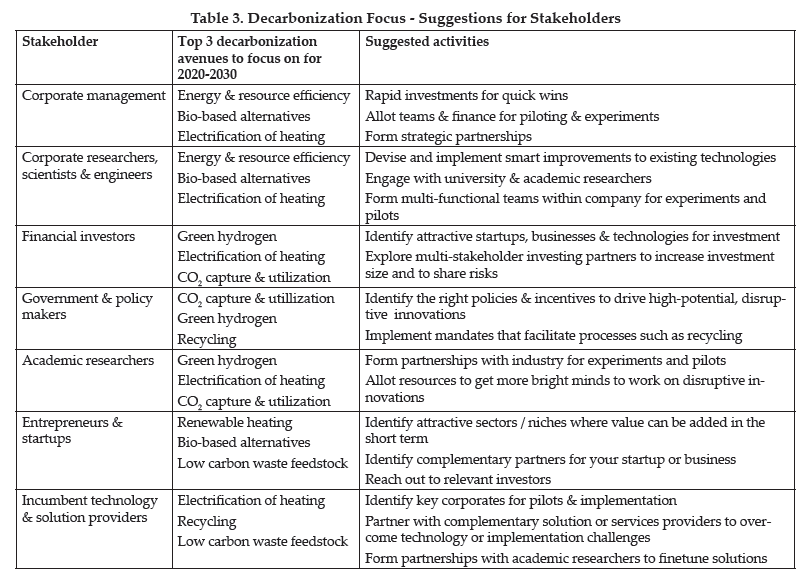
For the 2020-2030 period however, some stakeholders will be playing far more important and decisive roles for decarbonization efforts than most others. For an industry such as the chemicals sector, the key stakeholders for the 2020-2030 period are:

● Top management of medium and large chemical companies
● Corporate researchers, scientists & engineers
● Government & policy makers
● Financial investors
● Academic & university researchers
● Technology & solution vendors
● Entrepreneurs & startups

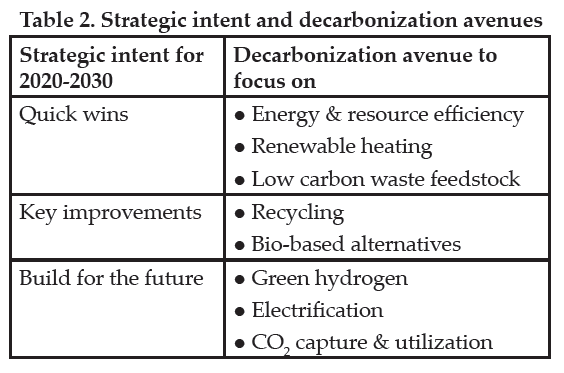
Strategic intent

We now have identified the main decarbonization avenues and the key industry stakeholders. How can the stakeholders strategize on these avenues for the 2020-2030 period?

One effective template would be to use strategic intents. Three such intents can be considered:

● Quick wins – These are decarbonization wins that the chemical industry can achieve in the short and medium term through smart process tweaks and intelligent use of digital technologies to drive efficiencies
● Key improvements – These are more difficult than the quick wins, and some of them may not be in the direct control of the industry. But with strategic investments and partnerships, the industry may be able to achieve moderate decarbonization by 2030 based on efforts with this strategic intent.
● Build for the future – These comprise strategies needed to support massive transformations – be they for technology, process or feedstock. The full benefits of these will be available only post 2030. The industry should however utilize the 2020-2030 period to experiment, learn and build capabilities and partnerships to benefit from these in future.

Acting on the decarbonization avenues

Given the nature, characteristics and potential of each of the decarbonization avenues, how can these be prioritized along strategic intent and for each stakeholder group?

Stakeholder groups and decarbonization avenues

Which of the decarbonization avenues should each stakeholder group focus on during the 2020-2030 period? The following, brief analysis could help.

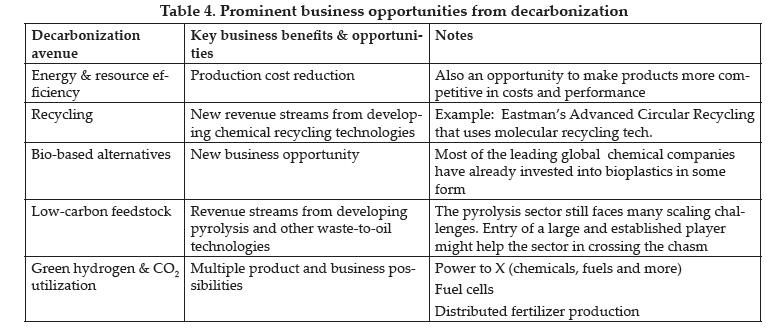
Decarbonization is a challenge…and also an opportunity

It is only natural for most industries to initially view decarbonization as something that is thrust upon them.

But as captains of many industries are realizing, while the transformation to a low carbon industry can be painful in the short term, approaching it with the right mindset could result in significant medium and long term opportunities and benefits.

Opportunities emerging from decarbonization is too large a topic to do justice in a short review such as this, but here are some interesting take-aways for chemical companies from decarbonization.

Advertisement

Newsletter

Subscribe to our FREE Newsletter & Stay Updated

Advertisement