1. Global Energy Transition – Thomas Mathew, Reliance Technology Group of Reliance Industries Ltd; Antony Francis, Gasification Techno-logy-Centre of Excellence, Reliance Industries Ltd
2. Chemical Industry: Navigating through Challenges of COVID-19 – Shohab Rais, Tata Chemicals Ltd
3. Chemical Business and the COVID-19 : Seeking New Paths for the Next Decade – Dr. R. Rajagopal, CEO, KnowGenix India
4. Top 5 Technologies Disrupting the Chemicals and Materials Industry – Anthony Schiavo, Lux Research
5. Deploying Industry 4.0 in the Chemical Industry – Dr. Valentijn de Leeuw, ARC Advisory Group.
6. Challenges Faced by Petrochemical Industry in India – Nitesh Ranjan, CARE Ratings
7. Is the Indian fertiliser industry set to change or will it continue to be in doldrums? – R G Rajan, Independent Consultant
8. New Drug Discovery Research in the Context of COVID-19 Vaccines Development – Dr. M D Nair, Consultant to the pharmaceutical industry in India
9. Interview – Emerging renewable energy sources and shift to electric transportation will usher in a new epoch
– Thomas Mathew, President, Reliance Technology group of Reliance Industries
10. How Green and Sustainable Chemistry Can Drive the Growth of Chemical Industry – Ashwin C. Shroff, Executive Chairman, Excel Industries Ltd
11. Prospects of Titanium and Zirconium in India
– Dr MP Sukumaran Nair, FIE, Director, Centre for Green Technology & Management, Cochin, India
12. Trends in Indian Homecare Industry
– Sanjay Trivedi, Chairman, Trivedi Group
13. Need to Build Production Capacity for Specialty Chemicals Used in Lithium-Ion Battery – N S Venkataraman, Founder & Director, Nandini Consultancy Centre.
14. Funding Options for the Chemical Industry – Shailesh Monani, Amit Agrawal, Arpit Singhvi, Chartered Accountants based in Mumbai.
February 2021
1. Bhopal Gas Tragedy – World’s Worst Industrial Disaster:
No Redressal and No Closure – Dunu Roy, Director, Hazards Centre, Delhi; N.D. Jayaprakash, Joint Secretary, Delhi Science Forum
2. Fault Tree Analysis – Safety Promoter & Defects Eliminator Primer
– S Raghava Chari, Industry Consultant
4. Transportation of Petroleum Products – A Comparison of Consequences on Accidental Release – Dr. U K Chakrabarty, Industrial Safety Expert & Trainer
5. Standalone Smart Control Valve – V. Murugappan, Dow Chemical International Pvt. Ltd.
6. Predictive Maintenance Takes on Operational Risk – Dr. Paige Marie Morse, Aspen Technology, Inc
7. Role of ‘Competency’ in Functional Safety – A Case Study – Shivendra Kapoor, Sr Manager, Functional Safety with Chola MS Risk Services, Mumbai
March 2021
1. Project Management: Involve Contractors Early – Shawn Buchanan, Brian Gallagher, Graycor Southern, Ga, USA.
2. Artificial Intelligence in the Chemical Industry – Pushkar Deo, Aker Solutions
3. Engineering Processes that are Environmentally Sound – Jochen Schaal, Michel Rosmolen, SoundPLAN GmbH
4. Interface Challenges in a Hydrogen Production Unit – Pranay Veer Singh, Venkata Sravan Kumar, Debopam Chaudhuri, Fluor New Delhi.
5. Processing Equipment Tips: Consider Modularization – Catalin Eftimie, Consultant based in Calgary, Canada.
6. Accelerate Business Outcomes with Industrial AI – Adi Pendyala, Aspen Technology, Inc
April 2021
1. Plant Decommissioning – How to decontaminate,
dismantle and decommission process plants – Abhisam Software
2. Solutions for the Caustic Soda-Chlorine Industry – Prabodh Kumar Maiti, thyssenkrupp Industrial Solutions (India) Pvt Ltd.
3. Why Pumps & other Shafts Fail? – S Raghava Chari, Industry Consultant
4. Indian specialty chemicals sector poised for double-digit
growth – Shohab Rais, Tata Chemicals Ltd
5. Out of the box – Solutions to Industrial Problems – S Raghava Chari, Industry Consultant
May 2021
1. Geopolitical Shifts Create Opportunities in the Indian
Chemical Industry – Tojo Eapen, Chandan Kumar, Veena Pandey, Stanton Chase
2. Using Continuous Helical Flow to Reduce Fouling – Dennis Long, Watlow
3. Hydrogen Economy – Peter Muller Baum, VDMA
4. Gas Based Economy: Role of Small LNG Units – Dr MP Sukumaran Nair, Centre for Green Technology and Management
5. A Sustainable Solution to Rising Fuel Prices – Dr Pramod Chaudhari, Praj Industries India
June 2021 – Sustainability Annual
1. CEO’s Forum – Getting to Action on Sustainability: Views of renowned global industry leaders and scientists – Chandrakant Nayak, CEO and Country President of Dow India; Dr Anjan Ray, Director, CSIR-Indian Institute of Petroleum, Dehradun; Ravi S Jalan, Managing Director, GHCL; Michael Carus, Managing Director, nova-Institute.
2. Circular Economy in India: Setting an Agenda for
Sustainable Growth – Dr R Rajagopal, CEO, KnowGenix India.
3. What “Sustainability” Means for Energy and Chemical
Companies – Peter Reynolds, ARC Advisory Group
4. Sustainability: The Next Big Opportunity for Green Chemicals – Richard Lobo, Tata Chemicals Ltd
5. Competitive Advantage Through Forceful Implementation of
Sustainable Measures – Dr. Jörg Straßburger, Go East Advisors
6. Hydrogen – Role in Global Energy Transition – Antony Francis, Reliance Industries
7. Biorefinery Concept – Dr. D. K. Tuli, Indian Oil Corporation
8. Industrial Sustainability: Responsible Stakeholder Collaboration
is Needed – Dr. MP Sukumaran Nair, FIE, Director, Centre for Green Technology & Management
9. Turning Off the Tap for Fossil Carbon: Future prospects for a global chemical and desired material sector based on renewable carbon
– Nova Institute, Germany
Biofertilizer Market is segmented By Type – Nitrogen-Fixing, Phosphate-Solubilizing, Potash-
Mobilizing, Others, By Application – Grains, Pulses & Oilseeds, Fruits & Vegetables, Others. Global Opportunity Analysis and Industry Forecast 2022 – 2028. It is published in Valuates Reports under the Chemicals Industry Category. The global Biofertilizer market size is estimated to be worth USD 2748.6 million in 2022 and is forecast to be a readjusted size of
USD 4459.5 million by 2028 with a CAGR of 8.4% during the review period. The increasing need to improve yields is expected to drive the growth of the biofertilizers market. Because
of the nitrogen and phosphorus they give to the soil, biofertilizers can boost production by up to 30%. Plants grow better during droughts when the soil texture and quality are improved. Biofertilizers aid in the development of stronger root systems and improved plant growth. Harmful organisms in the soil, such as fungi and nematodes, are also educed by biofertilizers.
The chemical industry is the third largest emitter of carbon dioxide after steel and cement and accounts for 6% of the global GHG emissions. Direct carbon dioxide emissions from primary chemical production were 920 million tonnes in 2020. The demand for chemicals and materials is estimated to quadruple by 2050 compared to 2010. This explosive growth in demand has to be aligned with the net-zero commitments of various nations. IEA estimates that emissions from primary chemical production must decline by 10% by 2030 in order to be on target for 1.8 degrees C warming. Renewable energy will be the key enabler for decarbonising the chemical industry. There are three broad strategies for decarbonising the chemical industry. First is to improve energy efficiency. This appears to have been almost fully exploited already and going forward is not expected to play a major role. Second strategy is to use renewable energy. The success of this hinges on the reliability and availability at low cost. Third approach is to capture the carbon dioxide generated and sequestrate it in a natural sink or better still use it as a feedstock.
LCET
World Economic Forum launched the Low-Carbon Emitting Technologies (LCET) initiative in 2019 with the mandate of accelerating GHG reduction in the chemical industry and its entire value chain. It is designed to foster collaborations and partnerships to collectively solve challenges faced by the industry on its path to carbon neutrality. The initiative now plans to shift from a knowledge sharing platform to an implementation vehicle in 2023. The LCET member companies will embark along two value chains that are the biggest GHG emitters in the chemical industry – ethylene production by steam cracking and ammonia production by steam reforming.
Ethylene
Ethylene, the basic building block for petrochemical industry, is produced by steam cracking of hydrocarbons at temperatures in excess of 850 degrees Celsius. The energy required for the process is generated by combustion of fossil fuel. For every tonne of ethylene produced, 1.5 tonne of carbon dioxide is released. 260 million tonnes of carbon dioxide is released during manufacture of ethylene globally, accounting for 0.8% of the total emissions. The race to make the process carbon-neutral is currently underway with three different consortia working on substituting fossil fuel with electricity.
Cracker of the Future
Six leading chemical companies – BASF, Borealis, BP, LyondellBasell, SABIC and Total – came together to establish “The Cracker of the Future Consortium” with the objective of transitioning from fossil fuel to renewable electricity. However, subsequently BASF and SABIC have left the consortium. In the first phase of the project, the consortium members identified various technologies available for electric heating, each with its own merits and limitations. After an early assessment, some five concepts were handpicked for further consideration and deep-dives. At the end of the first phase, BASF and SABIC decided to leave the consortium and launch an independent collaboration. They have been replaced by two other companies – Repsol and Versalis. The consortium’s collaborative work is being facilitated by Brightlands Chemelot Campus in Netherlands. Though the consortium has not announced any roadmap, the market buzz is that a prototype will be available for demonstration in 2023 and commercialisation could happen in 2026. The development costs have been bracketed in the range of 30-50 million Euros.
BASF-SABIC
Meanwhile, BASF and SABIC which quit the six company consortium citing conflict of interest have partnered with Linde to develop their own version of electric cracker. The partnership claims to have developed novel electrical heating concepts including key items of hardware. They are hopeful of setting up a demonstration plant in 2023 at the Ludwigshafen site of BASF where two steam crackers are already operating. Commercialisation is likely by 2027. The electricity for this will be sourced from a new 2 GW offshore windfarm that is in planning stage. When completed, this will power not only the ethylene cracker, but also electrify all the chemical processes that are currently using fossil fuels. The outcome and timeline is largely dependent on the extent of funding support available from EU and the German government.
Dow-Shell
The third e-cracking project is a joint venture between Dow and Shell. Announced in June 2020, this partnership has now joined hands with The Netherlands Organisation for Applied Scientific Research (TNO) and the Institute for Sustainable Process Technology (ISPT). The two new collaborators are expected to accelerate key milestones in the project. TNO brings to the table deep knowledge of high-temperature heat transfer. Multidisciplinary teams are pooling together their expertise in metallurgy, electrical design, Computational Fluid Dynamics and other areas. Though the project has blessings and financial backing from Netherlands government, a demonstration plant is unlikely before 2025.
RDR Technology
Coolbrook, a Finnish-Dutch start-up offers a radically different technology for production of ethylene. Borrowing ideas from space programme and using principles of Process Intensification, the technology uses a Roto Dynamic Reactor (RDR) to deliver the energy required for cracking in a novel way. The feedstock is introduced into the reactor where it is churned at very high speeds of up to 20000 rpm by a specially designed rotor. The supersonic speed creates shockwaves, raising the feedstock to cracking temperatures. Besides completely eliminating carbon dioxide, the technology claims many other advantages. The residence time is shorter than in traditional crackers resulting in 20% higher yields of ethylene. The overall specific energy consumption of the process is thus lower by as much as 30%. The propensity to coking is less, leading to higher on-stream time. The company is currently in the process of setting up a large scale pilot plant and plans to go commercial in 2025.
Electrochemical Route
An alternative approach to decarbonising ethylene production is by using carbon dioxide as feedstock. It is possible to electrochemically reduce carbon dioxide to ethylene using hydrogen ions generated from water at the anode. Copper-based catalysts have been used to promote the electrochemical reduction. Much work needs to be done to improve the activity and long-term stability of the catalyst. Brazilian petrochemical company, Braskem, is partnering with University of Illinois, Chicago to develop the electrochemical route and are optimistic about producing a prototype reactor soon.
Epilogue
The electrification of ethylene cracker is fraught with many technical challenges, but still appears ripe for an earlier resolution than the electrochemical route. Multiple e-cracker projects involving collaboration between industry giants augurs well for an early breakthrough. Innovative low-carbon technologies don’t come cheap for the chemical industry. They cannot easily substitute fossil fuel based technologies without an adequate regulatory framework. Governments should provide generous support through subsidies and incentives
Chemingineering – Decarbonising Chemical Industry – K Sahasranaman, Independent Consultant
All heavy CO2 emitters need to decarbonise and the heavy emitting processes are the most difficult to decarbonise. Taking the example of ethylene – responsible for the highest emission in the chemical industry – our columnist examines various strategies to decarbonise ethylene production.
Interview – Facing the challenges from covid and running a company
– Companies faced challenging situations during covid. Here, Dr Sangeeta Srivastava, Executive Director of Godavari Biorefineries speaks to Chemical Industry Digest on how her company faced this challenge, the steps they took and the procedures they put in place.
Thriving post-Covid: A Manager’s guide to building workforce resilient to pandemics and other crises – Anu John, Researcher at Cangelo, UK-based EdTech.
The sudden onslaught of covid caught the world off guard. Business and industry were badly affected. It took a heavy toll on people, on their minds. Mental health of the workforce became a crucial issue to address as an emergency. This article by a psychologist crisply outlines the steps that are needed to be taken by HR managers to tackle the mental health challenges faced, so that morale & productivity are not hit.
Decarbonize the Indian Chemicals Sector – Transit from fossil fuels to renewables and green hydrogen – Dr Ashish Lele, Director, CSIR-National Chemical Laboratory; Dr Anjan Ray, Director, CSIR-Indian Institute of Petroleum
It has to start with greening fossil fuels rather than doing away with it in one go, in the short term. Greener coal technologies should be explored while at the same time planning to transit to renewables. Other low hanging fruits like achieving higher energy efficiency
in manufacturing operations will also help reduce emissions. And ofcourse, green hydrogen is emerging as a potential option. But it is still work in progress.
Refining Industry – a Perspective for the Future – Antony Francis, VP, Reliance Industries – Gasification Technology-Centre of Excellence
Petroleum refining industry faces several challenges: from the necessity to be greener as
well as the impending emergence of electric transportation cutting off a huge need of transportation fuels from refining. The author addresses all these issues including how incorporation of new generation technologies like digitalization, blockchain etc and transiting to renewables can help refineries meet the challenges.
Choosing what Colour Hydrogen to Use – An analysis to demystify the fuel of the future – Pranay Veer Singh, Debopam Chaudhuri, Fluor Daniel India Pvt Ltd
Undoubtedly, hydrogen is going to be the fuel of the future, provided its made from renewable sources – in which case it’s termed green hydrogen. Since hydrogen is made
through many conventional routes and some of these routes can employ carbon capture, the hydrogen obtained in different ways are given color coding: green, grey, blue, white, yellow etc. Learn what these mean and which hydrogen emerges as a workable greener
alternative.
Decarbonizing of the Primary Chemicals Sector – Stakeholder actionables for 2020-30 – Narasimhan Santhanam, Co-founder & Director of Clixoo
Though decarbonising is going to be challenging and would entail additional investments,
there is no escape from doing it as globally, countries have all agreed on a time schedule for net-zero. There are many avenues for decarbonising – some in the short term and some on long term horizons – and if done smartly can result in opportunities and benefits too.
Steel Industry: the Decarbonization Imperative – Dr MP Sukumaran Nair, FIE, Director, Centre for Green Technology & Management
As every other industry, steel making too, need to be decarbonized as it has a high incidence of green house gases emissions. And the use of steel is fundamental to the economic growth of any country. Obviously, the process of steel making has to change – process wise, as well as in the use of green fuels like green hydrogen. This article studies the conventional processes of manufacture and the new greener ones coming up.
Industrial Cybersecurity Today – Sid Snitkin, VP, Cybersecurity Services, ARC Advisory Group
The flipside of widespread digitalisation, interconnected devices and plantwide internet-led connections, cloud storage etc are the threats from hackers, competitors, countries wanting to steal or damage strategic assets and even from terrorists. Cybersecurity is therefore crucial today and this article charts the IT/ OT cybersecurity convergence required to face security challenges.
Manage Facilities More Efficiently Through the Industrial Internet of Things – Anagha Dalal, Mandar Rangnekar, Oil, Gas & Chemicals division, Burns & McDonnell India
Industrial Internet of Things is transforming the operations of companies in unprecedented
ways. Devices, gadgets and machines are becoming smarter and smarter. They are also getting connected within the plant and the plants are getting connected across various geographies. This bestows tremendous benefits as the article conveys.
India’s Emergence in Specialty Chemicals in a Post-pandemic World – Ajay Joshi, Sr Consultant, Frost & Sullivan.
The covid pandemic seriously disturbed global supply chains and led the world to rethinking
on China as a monopoly supplier. This can afford opportunities to India to improve its growth of the specialty chemicals industry, as India has proven advantages of higher knowledge base, R&D and process chemistry skills. Provided of course, we leverage these advantages and tap the emerging opportunities.
Differential Scanning Calorimetry (DSC) is frequently used to measure the enthalpy and rate of chemical reactions. These measurements are important for identification, designing processes and assessing potential hazards in chemical synthesis and decomposition reactions as well as for thermodynamic and kinetic calculations. Whether a product is thermally unstable or represents a potential explosion hazard (thermal runaway) must be determined at a very early stage of process design.
Introduction
Assessing the potential hazards for chemical reactions is crucial. An important concern is the potential danger that could arise through an uncontrolled temperature increase while handling, transporting and storage of materials. The risk of a thermal runaway and an explosion is significant if
The reaction enthalpy is large and exothermic,
The rate of increase of temperature is high or even self-accelerating,
Gaseous products or vapors produced,whether through decomposition or evaporation
The reactor system cannot withstand high pressure and/or high temperatures,
Subsequent complications such as fires or environmental pollution caused.
In such risk analyses, the determination of the reaction enthalpy or a decomposition enthalpy is often the starting point for further investigations. The focus is naturally on high risks.
Past experience shown that all chemicals and reactions must be investigated, not just those that are thought to be potentially dangerous. A rapid screening method is very desirable in view of the fact that the large number of tests have to be perform. DSC has proven to be an ideal technique for providing the necessary information at an early stage of the chemical product development. The DSC results help one to assess the risks with regard to thermal stability as shown schematically in Figure 1.
Figure 1: Risk assessment using DSC measurements, starting point for further tests on the thermal behavior of a process.
DSC measures reaction enthalpy (Δhr) and specific heat capacity (Cp). These two quantities can be used to estimate the highest temperature, ΔTad, that could reach in of a thermal runaway: ΔTad=Δhr/Cp
If the adiabatic temperature increase is more than50 K, the situation is potentially dangerous. If the increase is 200 K, the situation becomes extremely dangerous. The boundaries of course depend on the particular circumstances. In fact,the rate of production of heat is just as important as the reaction enthalpy itself.If the heat exchange with the surrounding is inadequate, dangerous adiabatic behavior may occur. This is particularly critical with fast reactions.
Example 1: The adiabatic course of a reaction can be calculated using data from a dynamic DSC experiment. Kinetic evaluation of one or more DSC measurements allows reaction behavior to be predict with regard to time and temperature using nth order kinetics.
The time to maximum reaction rate (TMR) can also be determined with relatively simple calculations. For example in case of decomposition of Benzoyl Peroxide, as shown in Figure 2a, the thermogram shows a dynamic DSC measurement of the thermally induced decomposition reaction at a heating rate of10 K/min. The measurement curve shows that the reaction begins at about 80 °C. It takes place over a temperature range of 80 K and generates an exothermic enthalpy of reaction of 1365 J/g. Assuming a constant specific heat capacity of 2 J/(g K), the adiabatic temperature increase, ΔTad, is calculated to be 682.5 °C – a value that is so high that the material would completely decompose.
Figure 2(a) Dynamic DSC Measurement of the decomposition of benzoyl peroxide dissolved in dibutyl phthalate. (b) Variation of adiabatic TMR and the starting temperature, To.
The graph in Figure 2(b)shows the relationship between TMR and the process temperature, T0. For situations with temperatures above 36.5 °C, the process can be consider as inherently unsafe. It is therefore not acceptable in a production environment and needs changes or are design.
Example 2: The conversion of a reaction can be describe as a function of temperature and time with the aid of just a few DSC measurements followed by evaluation using Model Free Kinetic (MFK). The results allow predictions to make about the long-term behavior (e.g. storage conditions) or short-term behavior (explosions) of substances.
For example, in order to assure safety in chemical plants, a thorough understanding of the thermal hazard of materials like the potential explosive 2-Nitrophenol is essential.
For safety investigations dynamic DSC measurements at four different heating rates were perform. These are displayed in the top left quadrant of the Figure 3. The advanced model free kinetics software calculates the conversion (top right) and displays the activation energy as a function of the reaction conversion (conversion plot, bottom right).
Figure 3:Kinetic evaluation and prediction of reaction using Model Free Kinetics (MFK)
Model-free kinetics assumes that the activation energy does not remain constant during a reaction but changes. The conversion-dependent activation energy can now be used to make predictions, for example for the conversion of a reaction at a particular temperature as a function of time. This is done on the bottom left for three different temperatures between 100 and 150 °C.
The predictions should be checked by performing a real measurement under the appropriate conditions.
Conclusion
Mettler Toledo DSC measurement along with STARe software tools provides best solution for safety analysis. The risk of a reaction runaway can, in principle estimated from DSC measurements of the adiabatic temperature increase, ΔTad, and the Time to Maximum Rate (TMR) using nth order kinetics. Advanced model free kinetics allows the prediction of the reaction course at almost any temperature.
For more information:
Visit: www.mt.com/ta-safety
www.mt.com/ta
Email: sales.mtin@mt.com
Toll-free: 1800 22 8884 and 1800 1028 460
Ever since concerns of global warming, climate change due to green house gases emissions have gripped the world, industries have been looking at ways and means to decarbonize, as carbon and its conversion to CO2 seems to be the major culprit. The prospects of transiting to a hydrogen economy is being widely discussed, provided the hydrogen is produced through renewable energy – in which case it is termed as green hydrogen. Since then colour wise, multiple colour nomenclatures of hydrogen have come up like grey, blue, even white, yellow, turquoise etc. This article explains those color coding of hydrogen and what kinds of hydrogen are economically feasible and viable in the current global economic scenario as well as technologically.
Introduction
In an effort to achieve global net zero emissions, clients worldwide have jumped the bandwagon and are considering Hydrogen as the fuel of the future. Hydrogen as fuel will contribute in a big way in leading the decarbonization charge. The variable and non-dispatchable nature of wind and solar energy is hindering them to be the immediate solution to this energy issue. Interestingly, the industry players use different color codes for hydrogen to distinguish between different technologies used to produce hydrogen gas.
Green hydrogen in simple terms is hydrogen that is produced via electrolysis. Electrolyzers use an electrochemical reaction to split water into hydrogen and oxygen. It is extremely environment friendly and effective as zero carbon dioxide is emitted during this process but may be limited by capacity.
Grey hydrogen is predominantly produced from natural gas using a process called steam reforming. It is the primary source of hydrogen in all refineries and petrochemical complexes. The CO2 thus generated, if removed via subsequent Carbon Capture (CC) techniques, can then term the hydrogen as blue. This method of blue hydrogen production doesn’t fully remove the greenhouse gases but with the use of carbon capture techniques, climate neutrality can be achieved. Existing steam reforming units are also planning to implement Carbon Capture techniques to improve their carbon footprint. This provides an opportunity for EPC players to support such endeavors.
Brown hydrogen is the one produced via the coal gasification techniques and the greenhouse gases emanating out of this process are still a major cause of concern. Brown and Grey hydrogen generated from fossil fuels contribute almost the entire amount of the total hydrogen produced worldwide, and any major EPC player can tap into this market to support clients and provide integrated solutions to eliminate or reduce the emission of greenhouse gases.
Another interesting color coding of H2 is Turquoise. This H2 is a byproduct of methane pyrolysis which generates carbon or coke instead of CO2. But typically,it is the hydrogen of least choice.
Other color definitions provided to hydrogen include yellow, as produced via electrolysis using solar power; white, as produced via naturally occurring geological hydrogen found in underground deposits and created through fracking; or even pink or purple, generated through electrolysis powered by nuclear energy. But there are no strategies to exploit them at present.
The big question is which color hydrogen is the fuel of the future. Studies suggest that most clients worldwide are opting for blue hydrogen. Large scale implementation of carbon capture techniques in existing facilities provide the opportunity for global EPC players to collaborate with clients worldwide.
Green Hydrogen
Green hydrogen as the name suggests is the hydrogen which is most environment friendly and with the minimum carbon footprint. Green hydrogen is produced by splitting water using electricity generated from low carbon sources. If the electricity comes from renewable sources such as wind, solar or hydro, then the hydrogen is effectively green.This is the cleanest form of hydrogen with zero emissions and results in a cleaner fuel. This is the cleanest form of hydrogen with zero emissions and results in a cleaner fuel.
Energy agencies worldwide suggest that this method of obtaining green hydrogen would save millions of tonnes of CO2 that are emitted annually when hydrogen is produced using fossil fuels. However, this hydrogen production has certain pros and cons associated with its generation. It’s a very usable product with respect to mobility aspects and is a highly sustainable fuel since it does not lead to emit polluting gases neither during combustion and nor during production. But the aspect about green production which makes it a fuel of lesser liking is that it requires more energy than other fuels and add to that the 24/7 availability. The other feature that goes against the choice of using green hydrogen is the economics. The costs involved to generate green hydrogen is highly skewed at present, almost thrice to the hydrogen generated via the conventional route. In a report published by an international agency a few years ago suggests that the cost of green hydrogen at $3 to $7.50 per kilo, compared to $0.90 to $3.20 for production using steam methane reformation. Important aspect to note is that reducing the cost of electrolyzers will be critical to reducing the price of green hydrogen, but that will take time and scale. Electrolyzer costs could fall by half by 2040, from around $840 per kilowatt of capacity today. Many European nations have jumped into the bandwagon and unveiled a national hydrogen strategy to develop green hydrogen in a big way and scale up for future.
Grey Hydrogen
Steam methane reforming (SMR) is the most common technique for producing grey hydrogen. Several types of fossil fuels can serve as an input in this process, with natural gas being the most common. This process yields carbon in addition to hydrogen. If this carbon is released into the atmosphere, the hydrogen produced is considered ‘grey hydrogen’. In the present global economic conditions, the grey hydrogen has one of the lowest overall fixed and variable costs of production and requires a smaller footprint. Feedstock, typically natural gas or other varied sources such as LPG or naphtha, may also be used as feed for the grey hydrogen generation process.
The production costs of grey hydrogen are estimated to be between $1/kg and $1.60/kg. This is currently the cheapest method to produce hydrogen. Currently, the CO2 resulting from the production of fuel-based hydrogen is mainly emitted into the atmosphere. Only a small part is captured and used in the production process of some types of fertilizers or sold commercially. Since the market for the commercial use of fossil-based CO2 is limited and will remain so, CO2 needs to be captured and stored in order to convert the grey hydrogen production to blue. The trade-off for grey versus blue hydrogen production is between CO2 emission costs and CCS (Carbon Capture and Sequestering) costs.
Blue Hydrogen
Blue hydrogen is the hydrogen generated using fossil fuels with carbon capture and storage. Blue hydrogen is produced when natural gas is split into hydrogen and CO2 predominantly by Steam Methane Reforming (SMR), but the CO2 is captured and then stored. As the greenhouse gases are captured, this mitigates the environmental impact on the planet. Blue hydrogen is often recognized as a low-carbon fuel for generating electricity and storing energy, powering cars, trucks and trains and heating buildings.
According to the International Energy Agency, 96% of hydrogen produced worldwide is made using fossil fuels – coal, oil and natural gas – in a process known as reforming. This involves combining fossil fuels with steam, and heating them to around 800°C. Eventually, you get carbon dioxide (CO2) and hydrogen. These gases are then separated. The CO2 is mostly emitted to the atmosphere where it contributes to global heating, and the hydrogen is extracted and used in everything from car engines to boilers, releasing water vapor.
The process of making blue hydrogen also requires a lot of energy. For every unit of heat in the natural gas at the start of the process, only 70-75% of that potential heat remains in the hydrogen product. In other words, if the hydrogen is used to heat a building, you would need to use at least 25% more natural gas to make blue hydrogen than if it was used directly for heat. And as reported by an international agency, methane – the primary component of natural gas and a byproduct of using it to produce blue hydrogen – is a much more potent global warming gas than CO2 over shorter timescales. On a 100-year basis, methane has a global warming potential 28-36 times greater than CO2, so one molecule of methane in the atmosphere has the same effect as around 30 molecules of CO2.
Absorption with aqueous amine solutions e.g., monoethanolamine (MEA), diethanolamine (DEA), etc. is conventionally used to capture CO2 at large scale. The low solvent cost and good trapping effect make it the most popular and developed carbon capture technology. This strategy has a wide range of applications and can be applied to capture CO2 from streams with low concentrations. However, it presents several disadvantages such as high-energy consumption required for regeneration, degradation in the presence of oxygenated compounds, loss of amines by evaporation, and corrosion. Alternatively, solid adsorbents are becoming popular aimed at improving the shortcomings of amine solutions. As such, the use of adsorbents has been proposed as an alternative for CO2 capture. Adsorbents can exhibit high affinity for selective CO2 adsorption under flue gas conditions. Solid adsorbents with amine functionality are promising materials for the capture of CO2 because of its lower heat capacity compared to liquid amine solutions. Stable performance for CO2 capture under humid conditions and regenerability of the adsorbent are critical to the realization of practical CO2 adsorbents.
There is also the option of the location of the carbon capture block in the hydrogen generation process flow schemes. There are two main locations from where the CO2 may be captured. (1) The high-pressure syngas stream upstream of the PSA (pre-PSA syngas); or (2) The reformer furnace flue gas stream. Each process has its own strengths and limitations, and hence the actual implementation of the carbon capture scheme would be determined by the existing SMR process flow scheme. The additional long-term challenge of carbon storage and disposal also would need to be addressed whenever CCS is applied.
Conclusion
In the present operating scenarios of refineries and petrochemical complexes, almost the entire amount of the hydrogen is produced via the steam methane reforming method. Although it poses a threat to the climate change issues with its high carbon footprint, the current economics is not allowing scale-up of green hydrogen and become an immediate replacement. Green hydrogen may seem the long-term solution for this issue, but for the immediate future, revamping the existing hydrogen plants producing grey hydrogen to generate blue hydrogen seems to be the potential path forward. Carbon capture techniques have been in place for a pretty long time, and with its established technology, it would provide a solution to mitigate this challenge. This allows all EPC players and clients to collaborate and select the CCS technology to be implemented in their facility for a greener future ahead for all of us.
(The conclusions presented in this article are solely those of the authors and cannot be ascribed to Fluor Corporation and/or any of its subsidiaries.)
Investment in the Industrial Internet of Things (IIoT) can provide the means to correlate supply and demand with plant capabilities at various locations. Additionally, it can improve inventory planning, optimize the scheduling of field services and enable a quick response to upcoming market opportunities.
Introduction
Information technology (IT) has changed the way organizations function, with large numbers of smart gadgets continuously connected to the internet. These gadgets constitute what is known as the Internet of Things (IoT), and when extended to manufacturing and production, this is known as Industrial Internet of Things, or IIoT. The things in the IIoT are intelligent machines that share data using advanced communication technologies for more reliable, efficient and safe operation of plants. Most of the devices are connected to the network to allow continuous monitoring and control. IIoT has the potential to unleash benefits by providing information that can be used for increasing plant availability, resulting in operating the plant near the threshold design parameters and minimizing downtime. While technology is no longer a constraint, the means of implementing it for use in the industry can be challenging.
The IIoT is a trending topic in the process and automation industry. This technology has the potential to help the industry tap into capacity and capabilities that exist in plants but historically have gone unutilized. This paper focuses on the fundamentals, implementation and challenges of IIoT. IIoT usually refers to interconnected sensors, instruments and other devices in an industrial setting. This connectivity enables remote access and monitoring, and it facilitates data acquisition, collection, exchange and analysis from different sources. This has enormous potential for improving productivity and efficiency. IIoT solutions are characterized by their low cost and fast implementation.
For example, a supplier needs to publish new functionalities on the human-machine interface (HMI) for a client. However, when a machine is delivered and the client uses it for daily operations, it might require extra functionality to simplify the job further. An expansion of the control panel with a new function, such as an on/off switch or a percentage counter for the pump, can easily be fixed by the programmer. But the HMI software needs to be updated and tested to launch this new functionality. HMI software updates can easily be applied remotely via secure network access. Using a virtual network connection (VNC), HMI functionality in the IIoT platform or on a mobile device can be viewed and tested.
IIoT can also be useful in predicting maintenance and analyzing which part will need to be replaced. Sometimes it is easy to predict when a machine requires maintenance, for example, when the degradation rate for a machine is identified based on production hours or runtime. In these scenarios, it makes sense to implement predictive maintenance by using the variables (counters) of the programmable logic controller (PLC) software and logging this data to the cloud. Vendors can access the data, analyze the machine behavior and alert the client. Clients can also visualize the machine’s performance on the dashboard and get an email reminder when maintenance is due.
On-site machine maintenance visits are more effective when the technician is aware of the faults before reaching the site. The right spare parts can be identified in advance by analyzing potential problems using remote access and the online diagnostics tool of the device’s web server.
IoT Versus IIoT
IoT applications are deployed on devices in a range of industries, including agriculture, healthcare and consumer goods, as well as for municipalities. IoT devices include smart appliances, fitness bands and other applications that alert users in emergency situations when something goes amiss.
IIoT applications, on the other hand, connect machines and devices in industries such as oil and gas, utilities and manufacturing. System failures and downtime in IIoT deployments can result in high-risk or even life-threatening situations. IIoT applications are also more focused on improving efficiency and health and safety, versus the user-centric nature of IoT applications.
OT, IT and IIoT in Process-Driven Industries
The connection of all process parameters in a plant’s control system forms the backbone of operational technology (OT). Implementing OT capabilities on Ethernet, local area network (LAN) or wide area network (WAN) to share plant information for further optimization formalizes the concept of IT for the industry.
IIoT is a combination of OT and IT, bringing the process parameter information to a common platform to share relevant data with systems in real time. In process-driven industries, these inputs vary from the data of known tagged plant devices to information from untagged sensors that is available but remains unutilized. The innovations in hardware and their connectivity with communication networks in recent decades have made this a reality. The signal transmission from sensors has migrated from conventional 4-20 milliampere (mA) current signals to digital signals such as highway addressable remote transducer (HART), foundation fieldbus and wireless. These signals not only share details of process parameters but also provide diagnostic information about the sensor. Bringing this valuable information onto the network provides better insight into these individual components and improves the overall health of the plant.
Figure 1: Essentials of IIoT. Source: https://www.ixon.cloud/knowledge-hub/7-practicalapplications-of-iiot-in-industrial-automation.
With smart devices in place, critical processes can share ample information with the control systems on an open platform. A structured approach to scrutinize and analyze this data is required to gain real insight. IIoT predominantly shares plant data with original equipment manufacturers and analysis vendors on a secured network to get their opinions. The data is analyzed either locally or remotely to extract meaningful and actionable information for field operations.
Basic Architecture of IIoT
OT network: This network comprises field sensors integrated with the control system data highway. Supervisory control is implemented via operator stations on the data highway.
IT network: This consists of the enterprise network automatically collecting information from various plants and facilities and making it available on an open platform for further analysis.
Cloud: Industrial data is stored on the cloud and securely shared with third parties. This provides a standardized platform, allowing third parties to develop tools and applications independently. Smartphone apps connecting to the cloud can enable operators to read alerts, analyze data and take corrective action instantaneously.
Service provider network: This allows third parties to interpret and analyze data, deriving actionable information for the end user.
Figure 2: Basic Architecture of IIoT.
Evolution of Control Systems
IIoT is primarily an extension of the existing digital plant network (OT and IT). Data is sent to third-party specialists for analysis, providing valuable information for predictive control instead of reactive control. In other words, IIoT is an evolution of a distributed control system that allows for a higher degree of automation by using cloud computing to refine and optimize the process controls.
IIoT is transformational — changing the way industrial companies operate day to day. Examples could include enabling predictive analytics to detect corrosion inside a refinery pipe, providing real-time production data to uncover additional capacity in a plant, or accelerating new product development by feeding operations and service data back into the product design cycle. IIoT and the software solutions powered by it drive powerful business outcomes.
By combining machine-to-machine communication with industrial big data analytics, IIoT is driving unprecedented levels of efficiency, productivity and performance. And as a result, industrial companies are experiencing transformative operational and financial benefits.
The Need for IIoT
When major plant equipment breaks down, significant productivity is lost. The conventional way to address this is to have scheduled maintenance. However, what if the equipment malfunctions before this? It will lead to productivity loss. On the other hand, what if the equipment does not require maintenance? Then the time and efforts involved could be used for more productive work. This would assist in reducing downtime and saving money.
Process-driven industries already have a form of predictive maintenance, driven by integrated smart devices connected to the control system. However, the data required to adjust the predictive maintenance with machine behavior and assess the necessity of maintenance can be acquired with IIoT.
When the enterprise network observes repetitive faults in a similar process across various plants, IIoT shares that information with the service provider. The service provider can then work with the end user to perform a root cause analysis for critical faults, upgrade its own system and share lessons learned with the end user, thus enabling continual improvement. The shorter response time for similar issues and lower maintenance cycles improves plant operability.
Imagine if control of an offshore oil and gas platform gets completely digitized. Multiple providers have developed solutions to digitize operation of an oil and gas platform by making a digital twin. It consists of two main components: a process twin and a plant twin.
The process twin is a digital replica of the process and automation system that enables testing of the process and control, safety logic and operating procedures. The plant twin is a smart 3D model that provides access to equipment, carrying out real-time operations and maintenance by operating robotic arms on the platform from remote control rooms.
This digitization can reduce capital and operating expenses, shorten project development cycles, minimize interfacing risk and decrease offshore labor requirements. Accordingly, the digitization can bring down production costs significantly.
Relevant IoT Standards
Standard development organizations like the International Organization for Standardization (ISO) and International Electrotechnical Commission (IEC) have published their first editions of some standards to set the ground rules for data integration and its safety. These include:
ISO/IEC 20924: IoT — Vocabulary: This standard provides a definition of IoT along with a set of terms and definitions. This document is a terminology foundation for the IoT. ISO/IEC 30141: IoT — Reference Architecture (IoT RA): This document specifies a general IoT reference architecture in terms of defining system characteristics, a conceptual model (CM), a reference model (RM) and architecture views. The reference architecture includes:
• The generic characteristics of IoT systems.
• The CM, describing the key concepts characterizing an IoT system.
• The RM, providing the overall structure of the elements of the architecture.
• A set of reference architecture views, describing the architecture from several perspectives.
In short, the IoT RA provides guidance to the architect developing an IoT system and aims to give a better understanding of IoT systems to the stakeholders of such systems, including device manufacturers, application developers, customers and users.
Challenges in Implementing IIoT
The manufacturing industry will have to overcome several challenges before IIoT systems are widely adopted. These include building up the standards around IIoT, high investment, connectivity, cybersecurity, data analysis and workforce adoption of a new set of skills.
Standardization
Industries need standards to allow smart devices, machines and other assets to interact with each other in predictable fashion. This goes beyond the normal communication protocols and involves generation of standard semantics and operating procedures, which will allow smart devices to discover and interact with each other.
High Investment
The upfront cost of updating from older products to IIoT-enabled products is very high. Among the main purposes of IIoT is to improve manufacturing efficiencies — and reduce the maintenance and financial losses attributed to equipment failures — through better asset management and productivity gains. Along with product development, support of resources specializing in IIoT is critical.
Connectivity
One of the main requirements for adopting IIoT is having reliable and strong data networks. Studies show that in 85% of factories worldwide, machines are not connected or are unable to collect or provide data and transmit it back. One of the main reasons is legacy devices have long life spans, do not support data-driven tools and offer few connectivity options. Also, because high-speed internet still is not consistently available everywhere, connectivity remains a significant challenge even where newer devices are implemented.
Cybersecurity
Bringing industrial data onto an open communication platform makes it more susceptible to cyberattacks.
The process plant networks, also known as supervisory networks, are primarily designed for integrated functionality and safe performance within the plant hierarchy. This design is based on the control system vendor’s proprietary software, which may require special skill sets. This supervisory network is generally set up using the enterprise network. When this is moved to the cloud, plant data is exposed to an external network, thus making critical information more vulnerable.
The IEC 62443 standard covers cybersecurity through the following sections:
• Section 1 – General: Defines concepts and models.
• Section 2 – Policies: Defines security management and patch management.
• Section 3 – System: Defines security technology and risk assessment.
• Section 4 – Component: Defines product development and technical security requirements.
The risk of cyberattacks can be mitigated by implementing the following:
• Network security parameters: Use of firewalls confirms isolation between the plant network and external network, as well as between third-party systems within the plant.
• Hardware locks: Integration of user ID and password into dedicated workstations limits access to authorized operators only.
• Account management: Planned, regular changes of user IDs and passwords for better security.
• Updates: Regular security updates in the form of patches keep systems armed against attacks by new viruses.
• Backup: An efficient backup and recovery plan allows operators to revert the system to a healthy state.
• Audits: Consistent security audits detect any unwanted events and assist in proactively mitigating issues.
Data Analysis
A main method for implementing IIoT solutions in manufacturing is to expand manufacturing facilities with tools for data acquisition, analysis and visualization. The sensory and control equipment connected to a SCADA system generates large amount of raw data, which needs to be analyzed to gain insights.
Analyzing this large amount of data is important to gain efficiencies. In many organizations, this valuable data is not collected or stored in a structured and efficient manner. So, it is important for organizations to hire data analysts with the required skills.
Workforce Adoption
The skill sets required to design and operate an IIoT-based system are very different from those needed to run a traditional automation system. A significant amount of retraining will be required for existing operators and maintenance staff to manage such systems.
Conclusion
The evolving concept of IIoT is creating a new turning point for many industries. Consider oil and gas, for example: The possibilities of analyzing captured data and utilizing the findings will benefit upstream (well site exploration and production), midstream (transportation pipelines) and downstream (onshore processing) sectors. Plants equipped with smart devices can obtain the maximum advantage from their existing digital infrastructure.
Investments in IIoT are expected to provide the means to correlate supply and demand with plant capabilities at various locations, improve inventory planning, optimize the scheduling of field services, and enable a quick response to upcoming market opportunities.
Technology suppliers, engineering contractors and end users all have roles to play in understanding the concept of IIoT. Even though implementation of IIoT will be driven by the end user, it is critical that any detailed engineering contractor has sufficient knowledge to execute the engineering design in accordance with the facility requirements.
Some of the key tasks in implementing IIoT will include finalizing the concept, designing architecture, employing open integration protocols, defining methods to consolidate data, mining data, assigning measures to mitigate risks, and identifying the flow of work across the organization.
The IIoT can bring about a steep change in operational activities and business strategies. However, security and maintaining the privacy of industrial networks are prime concerns and will continue to remain so. Unless regulatory standards are put in place and the means to minimize security breaches are established, industries will be challenged to gain all the possible advantages from IIoT.
Abstract With widespread digitalisation of industry and business, plant wide internet interconnectedness across geographies, external cloud and so on, cybersecurity has become crucially important, and all the more so, in a highly knowledge and know-how based chemical industry. Cyber attacks could come from anywhere: from competitor rivals to countries wanting to steal know how or damage to even from terrorists.
This article is therefore very timely and covers in detail the various challenges involved in cybersecurity management. The article is based on key insights shared by cybersecurity experts from a range of industrial companies.
Introduction
Today, most industrial companies have two separate cybersecurity programs. Cybersecurity professionals in the CIO’s organization ensure the security of corporate data, IT assets, networks, and business applications. Technical personnel in operations and engineering take care of the security of OT networks and assets.
Differences in IT and OT technologies, goals, and environments justified the development of separate security programs. However, today’s siloed programs are leaving many plants especially in the chemical and oil and gas industries at risk of a serious cyber incident. OT cybersecurity programs often lack the resources, expertise, and supporting technology to maintain defenses, manage attacks, and secure the new technologies being deployed in operating facilities. CISO efforts to manage security are also being hampered by the lack of OT system visibility and access.
The situation is likely to get worse unless companies act. The industrial cyber threat environment is already becoming more challenging with ransomware, sophisticated attacks like Solar Winds, and the explosion of digital transformation programs. These developments demand proper maintained, end-to-end security of all corporate activities and rapid detection and response to all anomalous events. While most industrial IT security programs have the cyber professionals and advanced security solutions to deal with these new challenges, many OT security programs are still struggling to achieve yesterday’s requirements.
IT/OT cybersecurity convergence offers a cost-effective way to address current and future OT security challenges. IT cyber professionals can fill critical resource and expertise gaps in OT security programs. Common cybersecurity processes can eliminate security gaps between IT and OT systems. Use of similar technologies can enhance visibility and incident response effectiveness.
While convergence offers many benefits, experience shows that combining IT and OT programs can be challenging. Successful convergence efforts have clear convergence goals and proven approaches for addressing critical issues like cultural differences and OT reluctance to use conventional IT security practices and technologies. This article presents some of the lessons learned by leading companies that are already on cybersecurity convergence journeys, with a special slant on the chemical and oil and gas sectors.
The Different Goals of IT and OT Teams
Industrial cybersecurity teams face an awesome set of responsibilities and challenges. IT security teams, which are often part of the CIO’s organization, are responsible for managing the security of a wide range of information processing technologies, including workstations, servers, networks, printers, websites, cloud applications, and mobile devices. This includes ensuring the confidentiality of all corporate information and the continuous availability of critical business systems and applications.
OT security teams are commonly assigned to specific facilities and commonly report to plant managers or corporate engineering managers. These people are responsible for ensuring the availability and integrity of control systems, SCADA systems, and a diverse collection of cyber physical systems like robots, packaging systems, etc. Managers expect them to prevent any cyber incidents that might impact safety, product quality, environmental compliance, or operational continuity.
While IT and OT security teams may collaborate on security of interfaces, decisions about OT security within facilities are generally made and funded locally, based on each site’s risk appetite, capabilities, and preferences. IT cybersecurity programs are generally more advanced than those in OT.
The picture is quite different for industrial OT cybersecurity programs. While many sites recognize the need for OT cybersecurity, they rarely invest in more than the basic passive defensive technologies recommended by industry groups. Many also neglect the need to invest in people and solutions to maintain these defenses.
Converging Security Processes
Ransomware and sophisticated attacks have clearly raised top management concern about cyber-attacks. They expect that IT/OT cybersecurity convergence efforts will provide them the visibility and confidence they need to be sure that all cyber risks are being properly managed across all systems and assets. Consistent security metrics, policies, and processes are essential for this goal.
Fig 1. ARC Cybersecurity Model Shows Current State of Industrial Cybersecurity
A common cybersecurity framework provides the foundation for driving consistency across IT and OT cybersecurity efforts. It enables people with significantly different backgrounds to agree on key security issues and the actions needed to address them. An effective framework is comprehensive yet abstract enough to avoid specific implementation details and conflicts about specific security practices and technologies.
Many companies have adopted the NIST Cybersecurity Framework as the overall framework for IT/OT cybersecurity convergence. The completeness of this framework and its general acceptance ensure that all issues are addressed. This framework also provides guidance to specific IT and OT practices, in standards like IEC-62443, NIST 800-XX, and ISO 27000, that can help companies meet the requirements. Some companies have also used the CIS 20 to guide discussions. OT security teams will likely have concerns about the use of IT technologies and practices in OT. But these can be alleviated by ensuring that they are involved in these decisions and can ensure that critical OT constraints are properly considered and respected.
Regardless of the formal reporting structure, converged IT/OT cybersecurity programs generally have a single person who is responsible for cybersecurity. Most often this is the CISO, or the CIO when the CISO is part of the IT organization. This person establishes security policies, monitors compliance, and prepares periodic cybersecurity reports for top management. They may also be charged with setting specific security objectives, managing third-party security agreements, and developing recommendations for new cybersecurity people, processes, and technologies.
Setting an Appropriate Convergence Goal
Many industrial organizations have launched IT/OT cybersecurity convergence programs, but the goals vary significantly. Some want to maintain separate IT and OT cybersecurity programs but improve collaboration in securing system interfaces. Others want to integrate efforts in key areas, like DMZs, where OT uses conventional IT technologies and can support common IT security products and practices. Still others are targeting a complete reorganization of people, processes, and technologies to create a unified corporate cybersecurity program.
Fig 2. A Common Strategy for Converged IT and OT Cybersecurity Teams
These differences reflect the tremendous variations that exist in industrial facilities and digital transformation goals. Some companies have critical operations where a cyber incident could have devastating impacts. Others have simple operations that can tolerate minor OT system disruptions. Some facilities can reap tremendous value from new technologies and OT connectivity, while others see little or no benefits. And many industrial cybersecurity teams need to deal with facilities in all of these categories.
Recognizing the benefits of different convergence goals is essential for establishing rational site-specific programs. Building a converged IT/OT cybersecurity program will ultimately involve some changes to security people, processes, and technologies. The willingness of operational managers to support these changes depends upon the costs and benefits that will be generated.
Fig 3. Convergence Goals Should Match the Needs of Individual Sites
Regardless of a program’s goals, there are certain guidelines that should be considered in every IT/OT cybersecurity convergence program:
IT and OT cybersecurity are equally important. Industrial companies need to protect information, people, and operating assets throughout the corporation to ensure business continuity.
Convergence is more than just transferring OT security to IT security teams. Conventional IT technologies and practices may work in certain OT system areas, but others will always require people with unique expertise, familiarity, and local access.
Convergence pace will vary across sites, so convergence plans must anticipate support for sites at different stages of their convergence
Fig 4. Characteristics of Different Cybersecurity Convergence Goals
Convergence is Primarily a People Problem
ARC research consistently shows that people represent the biggest challenge for IT/OT cybersecurity convergence programs. Much of this is due to the cultural differences between people who work in office and plant environments. IT and OT security people also have different skills, perspectives on the challenges and approaches to security management.
Building trust between IT and OT personnel is essential but challenging. Successful efforts foster trust through collaborative involvement of both groups in the development of security metrics, standards, policies, and processes. This facilitates effective teamwork through common terminology, shared understanding of risks, and recognition of individual strengths. It also helps to focus everyone’s attention on the issues that represent the highest risks to the organization.
Gaining support from operations and engineering managers is equally important. This requires successful interactions that demonstrate IT respect for plant performance goals. Many companies find that plant engineers are happy to offload responsibility for cybersecurity tasks like patching, once they are confident that cybersecurity professionals won’t create problems for normal system operation.
Retaining cybersecurity resources is another issue that needs to be addressed when planning convergence programs. The general shortage of cybersecurity experts makes it hard to replace these critical people. Managers need to ensure that employees find assignments rewarding and create opportunities for advancement along well-defined career paths. Framing cybersecurity as a separate profession with cross-training opportunities can help in this regard.
Attention must also be given to the role that third parties can play in satisfying resource requirements. This can enable companies to offload some tasks and ensure that permanent employees have the necessary time to focus on critical issues like vulnerability and threat management. Many industrial companies rely upon third parties for security assessments, penetration tests, audits, workshops, and table-top exercises.
End User Perspectives on IT/OT Cybersecurity Convergence
At the ARC Industry 2021 Forum, users from the chemical and oil and gas sectors discussed the people and process challenges of IT/OT cybersecurity convergence. They highlighted the need to move away from the “them vs. us” approach. What works best is combining efforts, talking to each other, and replicating best practices. As systems evolve, it is important to have a cross-fertilization of ideas, experiences, and skillsets to arrive at a single solution – this is the winning way. The entire session can be watched here.
In a second IT/OT cybersecurity convergence session, another set of users discussed the technology challenges. Consensus was that convergence of technologies across IT and OT boundaries gives better outcomes. Securing OT systems and getting the basics right is not easy, they opined. So, instead of reinventing the wheel, proven solutions/techniques can be taken from the IT world and tweaked to suit OT needs. The session can be viewed here.
Recommendations
Many industrial companies are working to converge cybersecurity efforts across business areas and technology domains. Reasons vary but they all see convergence as a way to address a variety of OT cybersecurity challenges including lack of resources, more sophisticated attacks, and digital transformation. ARC research suggests that these benefits can be achieved if companies set appropriate convergence goals and take steps to avoid the major obstacles that can derail their efforts.
ARC has been researching IT/OT cybersecurity convergence for many years and this topic has been the focus of numerous cybersecurity workshops at ARC Forums. The information in this report summarized some of the key insights shared by cybersecurity leaders from a range of industrial companies who have been involved in these discussions. While every company has unique challenges, they will still face similar challenges as they strive to change cybersecurity status quo. Our hope is that this report will help you overcome those challenges.
Based on this and related research, ARC recommends the following actions for owner-operators and other technology users:
Set realistic goals for your cybersecurity convergence efforts and plan to achieve that goal incrementally using the goals we described as collaboration, integration, and unification. The benefits achieved at each step will garner the support you will need to continue the journey.
Adopt an overall cybersecurity framework to build your team, identify next steps, and focus your efforts to converge people, processes, and technologies.
Address people, processes, and technology challenges in that order.
Consider establishing cybersecurity as a specific discipline within your company. This can ease human resource issues if you choose to develop a single cybersecurity organization.
Be realistic in your expectations – change takes time. Recognize that every improvement is a step to your ultimate goal of safe and secure operations.
m
All this and more will be discussed at the 26th Annual ARC Industry Forum from February 14-17, 2022 (physical event, Orlando) and March 7-10, 2022 (online).
During the lockdowns last year in their various incarnations, whether first covid wave or second wave and its lifting thereafter, partial or otherwise, too many accidents have taken place in the chemical and allied industries, bringing into question the very existence of chemical plants and their operation. That number is around 100. What went wrong? The word ‘Chemical’ is taboo for the public. Chemicals can be very simple molecules requiring only a few steps for synthesis and plant operations or they could be complex structures needing many steps leading to waste of materials and energy at each stage. Hazard is present at each stage. Even a slight variation in the geometrical, conformational or stereo properties can make a chemical toxic or non-toxic. Can dyes, surfactants and other intermediates be made safe through design or redesign looking at the sectors where they are used? Remember, the chemical industry is very diverse, producing thousands of substances which are used by other industries and that are present in countless consumer products. No man-made product can be made without the use of chemicals. The chemical industry makes products with many beneficial uses, but they can also have negative impacts on human health and the environment. By their nature, the manufacture, storage, and transport of chemicals have the potential for accidents to happen. Chemicals can be toxic, and they may react, often violently and explosively during transport, storage, or reaction. The impacts of chemical accidents can be deadly. Public faith has eroded due to the negative coverage in media, notwithstanding the fact that chemical and allied industries including refineries, petrochemicals, pharmaceuticals, polymers, agrochemicals, intermediates, etc. are essential and an important segment of the economy. They are not optional; they will contribute very significantly to hon’ble P.M.’s dream of USD 5 trillion economy, the China factor notwithstanding.
Defining Accidents
So, what is an accident or incident? To describe health and safety in workplaces, incidents and accidents are extremely common and often these two terms are interchanged. In most cases they indicate the level of destruction or damage that results from a workplace occurrence. Accident is an unexpected event which results in serious injury or illness of an employee and may also result in property damage. A “near-miss”covers a narrowly averted accident whereas Incident means an instance of something happening, an unexpected event or occurrence that doesn’t result in serious injury or illness but may result in property damage. All of them are associated with unexpectedness. All industries face all these realities.
Accidents are part and parcel of modern civilization, if we step out of our homes, in our workplaces, no matter what job we do or how we travel, something unexpected can happen. The frequency and severity of such accidents are the real causes to worry about. So, what lessons has the industry learnt to avoid accidents? Can the plants be operated safely? Can the Chemical Industry be as safe as the Nuclear Industry or beyond? As an educator and researcher, I would like the readers to ponder on what follows.
Risk in Polymerization
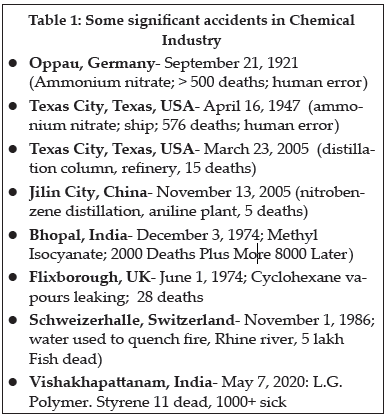
Accidents can happen due to many factors and the most talked about term in the industry is ‘Runaway’ situation: uncontrolled temperature rise leading to untoward consequence as has been the case with many major accidents over the years. (Table 1). The Vizag accident on May 7, 2020, due to styrene leak in the vapour form (not the gas as the ‘breaking news- TV channels’ said) brought to my attention, how polymerizations could lead to runaway: initiation, propagation and termination. What triggers an incident, what propagates it and how to terminate it. The objective of Loss Prevention is: Minimize the probability that the accident begins or maximize the probability that the sequence terminates benignly if it does start, or minimize the consequence if it terminates malignantly.
You might have studied it in polymerizations: initiation, propagation, and termination as part of reaction mechanism. You will be surprised to know that polymerizations lead the cases of accidents in industry, followed by nitration, sulfonation, hydrolysis, salt formation, hydrolysis, halogenation, Friedel Crafts alkylation, amination, diazotization, oxidation, esterification and hydrogenation, which normally would be thought to be more dangerous! This has been given by the great author Trevor Kletz, with whom I had the honour of sharing the office for a year in the Loughborough University (of Technology, then) during 1980-81 when I was a young Leverhulme Fellow. He worked for the ICI, UK, now defunct. He is used to write his books and would discuss it with Professor Frank Lees and Dr Pete Andow from the same University, who are equally well known on process safety and risk management. Frank Lees’ books on Loss Prevention are legendary. So what is process Safety.
What is System Safety Process?
A systematic approach to process improvement requires proactively searching for opportunities to improve the process at every step, not simply identifying deficiencies after an undesired event. The steps in the system safety process are depicted graphically in Fig 1.
So, if you are in the business of manufacturing: “Expect the unexpected” and anticipate that accidents can happen even in the most ‘benign’ plant due to human error. Most accidents are due to human error. Some of the pertinent questions to be asked are:
• The specific type of incident/accident was not anticipated by the design engineers or system while designing or operating the plant, and for which, of course, there was no emergency plan for prevention and containment with no loss or minimum loss of life, plant and/or business. Loss of prestige of the manufacturer is disastrous for business.
• Was the Incident/Accident either due to failure of equipment or human error?
• Human error or overfamiliarity is the majority cause of accidents (>95%)
• What was the inherent process hazard analyzed and steps were taken into account?
• Was accident due to less attention to safety to save money or due to short-cut in the SOP?
• Were natural causes due to flood, earthquake, tsunami, etc. considered, due to the geography?
• What about the molecular group or hazardous properties of all chemicals and materials on the site, and not just in process? Were all these likely causes of accident considered while designing or operating the plant?
• What about the hazard and risk due to the neighbouring plant and processes in the same zone?
• Was process simulation for hazard identification, analysis and risk management done during start-up or commissioning or actual operation?
• Who trains the new personnel on past accidents in the same plant? Is it hidden from new recruitment causing more danger to both parties?
Risk can emanate from anywhere
Many accidents are started by the plants in the vicinity or processes of which no knowledge is shared due to trade secrecy. The adage should be ‘Keep an eye on your neighour.’ Recent events in Indian industry are a testimony to this fact. In Chemical Process Industry everything, including the Material, Machine or Man, has a potential to cause incident or accident, unfortunately in that order. If it is a chemical in process or storage or transported as gas, liquid, or solid form, it has a potential to cause disastrous consequence. The chemical on site which is not part of the process can cause severe damage if its properties are not considered. The management must know all their chemicals, solvents and personnel who are running the plants and deal with them daily. As the proverb goes familiarity can breed contempt. Training of personnel from time to time, including the security at the site who have to deal with the emergency, is very crucial.
Risk is typically defined as ‘hazard x exposure’ or ‘consequence x probability’. Making the probability zero or exposure zero would be the most ideal solution. The normal definition of hazard is inadequate when we consider accidents which have taken place over the years. Hazard is not restricted to physical hazards such as explosiveness, flammability, and corrodibility, but certainly also includes acute and chronic toxicity, carcinogenicity, and ecological toxicity. Hazard must include global threats such as global warming, stratospheric ozone depletion, resource depletion and bioaccumulation, and persistent chemicals. Intrinsically hazardous properties of chemicals constitute those issues that can be addressed through the proper design or redesign of chemistry and chemicals. So much so we can define ‘Safer Chemicals’ to reduce pollution and risk at source. The advances in molecular toxicology and the relationship between chemical structure and important property exploited for industrial application are the basic tools. Synthesis using Catalysis, Renewable Resources, Atom Economy and Solventless Conditions will be the hallmark of plants in the future.
Inherently Safe
In fact, industry must move from Current Chemicals to Inherently Safer Chemicals to Inherently Safer Plants by adopting the following strategies:
• Designing a new molecule that is safe
• Redesigning an existing molecule to make it safe
• Increasing user safety.
• Increasing transportation safety by training the drivers and attendants on duty. Not to extend the duty more than 3 hours at stretch and change the driver or take rest for some time. The same driver should not have more than 7 hours duty in a day.
• But how do we manufacture a given chemical, inherently safe or otherwise?
• What is the limit of our “smartness” in tailor-making a molecule or product?
• What about the currently manufactured Chemicals & the plants?
If the industries develop, design, operate and control a chemical process such that the consequence is reduced because of different chemistry, chemicals, conditions or simplicity, wouldn’t the safety of the plant be improved? Is this not better than layers of protection?
This leads to the concept of ‘Inherently Chemical Safer Plants’. The Inherent Safety Structure which is part of the conceptual process synthesis structure consists of three parts: Hazard Identification, Hazard Evaluation, and Inherent Safety Evolution. Chemical business has an inherent hazard which should be mitigated by designing and operating plants safely.
Safer Design
If we could design a process with fewer hazards, then the process would be simplified, and the safeguards reduced.
This is the essence of inherently safer design—to eliminate hazards rather than to provide complex safeguard hierarchies around the hazards.
An inherently safer plant (Fig 2) uses the elimination of hazards to prevent accidents rather than depending on control systems, interlocks, redundancy, special management systems, complex operating instructions, or elaborate procedures. Inherently safer plants are tolerant of errors; are generally cost-effective; and are simpler, easier to operate, and more reliable.
If the industries develop, design, operate and control a chemical process such that the consequence is reduced because of different chemistry, chemicals, conditions or simplicity, wouldn’t the safety of the plant be improved? Is this not better than layers of protection?
Four Categories of Chemical Safety Process Strategies
1. Inherent
2. Passive
3. Active
4. Procedural
I will discuss them one by one:
1. Inherent
This approach to chemical plant safety involves the elimination or significant decrease of hazards within the plant, by applying changes in process conditions, chemistries, and technologies used throughout the process, making sure that these cannot be easily changed or bypassed without changing the process or the plant design itself. Inherent safety can be brought into the plant, for instance, by the substitution of a flammable solvent by water is an excellent case of an inherent safety strategy: by switching one for the other, the potential of fire is eliminated, exposure to toxic vapors, and possible contamination of wastewater in one simple step are avoided.
2. Passive
A strategy that typically revolves around process and equipment design features, passive chemical safety strategies reduce the frequency or consequence of hazardous events taking place. For example, building blast walls around process equipment can prevent explosions from causing uncontrollable damage to surrounding areas and workers; also, using equipment with higher pressure rating than their processes typically demand can ensure that dangerous spikes in pressure are controlled naturally.
3. Active
These strategies require an active response, typically from engineering controls or human operators. Unlike inherent or passive safety strategies, these mostly occur once the event is taking place, and are a safeguard for the plant, its workers, and its surroundings before disasters can occur. Some examples include sprinklers and similar fire suppression systems, pressure relief devices, purging systems, flares, and feed interlocks, which close valves and shut off pumps to prevent overflows.
4. Procedural
The final strategy is not actually an engineering control, but instead an administrative control: operating procedures, safety rules and responses, safe work practices, and training are all included in procedural chemical safety strategies. An excellent example involves the training and responses expected of operators within a plant’s control room, who must always be prepared to take action when abnormally high temperatures or significant change in operational pressure take place.
The four engineering concepts in a nutshell are abbreviated as M, S, M, S which are explained in figure 3.
Safety Culture and Way Forward:
In an industrial zone or cluster of industries, it should be mandatory for all factories to let the neighbours know what chemicals and materials they use and process, without disclosing the trade secrets. Remember there is no secret about an accident. For instance, the maximum operating conditions and preparedness for accident prevention and propagation must be known to authorities. This will help the nearby sites to be ready with emergency plans should there be an accident or fire or catastrophe.
All degree programmes in Chemical & Biological Sciences, Engineering & Technology must teach compulsorily Chemical Process Safety and Risk Management Courses and have in-plant training of 6 months. Those who work in chemical and allied industries must undergo a course on Process Safety and Risk Management. Refresher courses must be conducted. Industry must facilitate such training for their own benefit. On the Board of Directors, a Director for Innovation and Process Safety must be appointed under whose guidance a team works at each manufacturing site.
There is a need of more Centres of Excellence for Research & Innovation on Process Safety and Risk Management in some leading Institutes.
A National Chemical Safety Board ought to be established by GoI, directly reporting to the PMO like the OPCW to investigate all accidents and create a database and give guidelines to the industry. It is NOT disaster management board. This Board must be independent from the Pollution Control Boards and must have experts who can help in critically analyzing all accidents in the past across the globe and giving guidance at the time of accident propagation. The requirements of the Chemical Industry are totally different and Industries Associations must pursue this matter in their own interest because the Atma Nirbhar Bharat (Self Reliant India) will give them an opportunity to make new chemicals and materials including polymers. The China factor must be exploited to be part of the UDS 5 trillion.
And last but not the least, public awareness programmes must be conducted from time to time by industries or their associations, for the benefit of colonies and communities nearby which can be directly affected, should there by an accident.
We use cookies on our website to give you the most relevant experience by remembering your preferences and repeat visits. By clicking “Accept All”, you consent to the use of ALL the cookies. However, you may visit "Cookie Settings" to provide a controlled consent.
This website uses cookies to improve your experience while you navigate through the website. Out of these, the cookies that are categorized as necessary are stored on your browser as they are essential for the working of basic functionalities of the website. We also use third-party cookies that help us analyze and understand how you use this website. These cookies will be stored in your browser only with your consent. You also have the option to opt-out of these cookies. But opting out of some of these cookies may affect your browsing experience.
Necessary cookies are absolutely essential for the website to function properly. This category only includes cookies that ensures basic functionalities and security features of the website. These cookies do not store any personal information.
Any cookies that may not be particularly necessary for the website to function and is used specifically to collect user personal data via analytics, ads, other embedded contents are termed as non-necessary cookies. It is mandatory to procure user consent prior to running these cookies on your website.



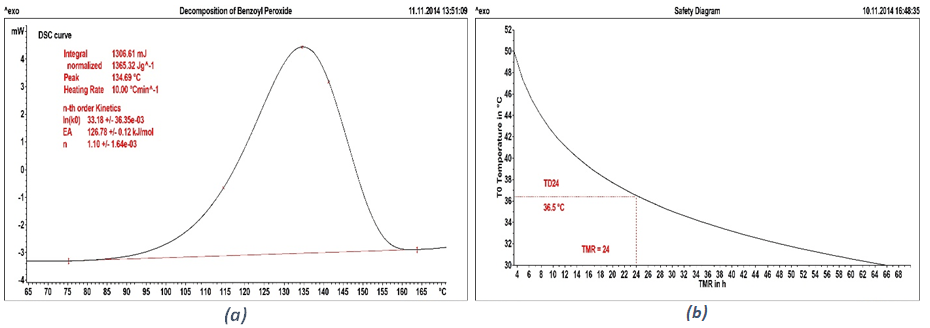
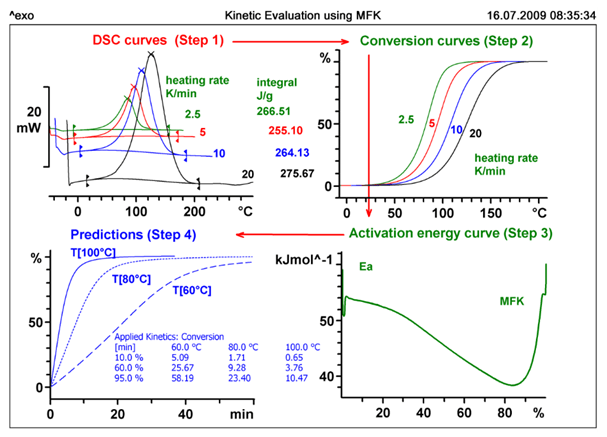


 Introduction