





















The Solar Energy Corporation of India Limited (SECI), a ‘Navratna’ PSU under the Ministry of New and Renewable Energy (MNRE), has issued a tender for the offtake of green ammonia—targeting decarbonization of India’s fertilizer industry. Issued on June 7, 2024, under the Strategic Interventions for Green Hydrogen Transition (SIGHT) Scheme – Mode 2A, Tranche I, the tender invites bids for the production and supply of 724,000 tons of green ammonia annually to thirteen fertilizer plants across the country. The final date for bid submission is June 26, 2025.
Securing Market Stability Through Long-Term Agreements
To encourage large-scale participation, SECI will act as the aggregator of demand and enter into long-term offtake agreements, offering a ten-year contract window. This approach ensures market certainty and revenue stability for green ammonia producers, paving the way for greater private sector investment in low-carbon technologies.
Replacing Fossil Fuels with Renewable Solutions
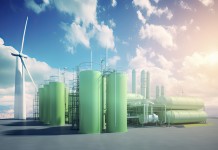
Traditionally, ammonia—an essential input for urea and other nitrogen-based fertilizers—is produced using fossil fuels, generating significant greenhouse gas emissions. SECI’s green ammonia tender replaces this process with a renewable-energy-based alternative. It utilizes green hydrogen to produce low-emission ammonia and fosters sustainable, domestic fertilizer manufacturing.
Financial Incentives to Boost Participation
The government is offering substantial financial support under the National Green Hydrogen Mission. This aims to make the green ammonia supply chain commercially viable. Production Linked Incentives (PLIs) are set at ₹8.82/kg, ₹7.06/kg, and ₹5.30/kg for the first three years, respectively—totalling ₹1,533.4 crore in financial backing. In addition, a Payment Security Mechanism (PSM) will protect suppliers from payment delays, further de-risking participation and enhancing bankability.
Transparent Pricing Through e-Reverse Auction
The bidding process will follow SECI’s proven e-reverse auction format. This approach ensures transparent, competitive price discovery and fosters a level playing field among industry players.
Reducing Imports, Emissions, and Trade Deficit
India consumes nearly 17–19 million tons of ammonia each year, and the fertilizer sector drives over half of the nation’s hydrogen demand. However, producers currently derive most of this hydrogen from imported natural gas. SECI’s initiative aims to significantly reduce this dependency. It also seeks to mitigate exposure to volatile global gas markets and help shrink the national trade deficit.
Cleaner Hydrogen, Lower Emissions
As reported by orissadiary.com, green hydrogen offers a substantial environmental advantage. It generates less than 2 kg of CO₂ per kilogram of hydrogen produced, compared to nearly 12 kg of CO₂ from conventional grey hydrogen. This shift not only supports India’s decarbonization goals but also reinforces the country’s leadership in clean energy innovation.