


























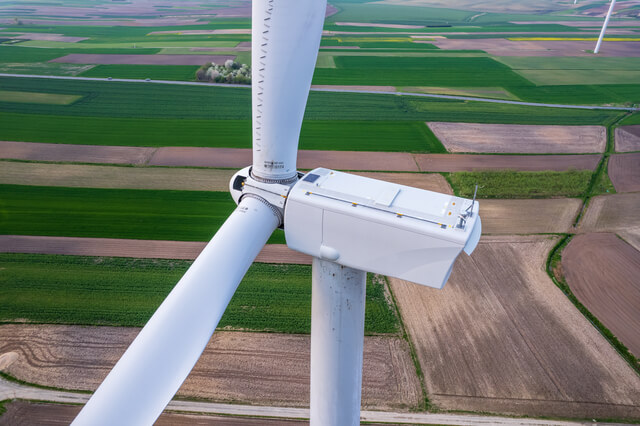
The Ministry of New and Renewable Energy (MNRE) has amended its Approved List of Models and Manufacturers (ALMM) for wind turbine components, a move that is expected to strengthen India’s domestic wind energy ecosystem while narrowing the cost advantage held by Chinese manufacturers, according to a recent report by Crisil Ratings.
New Local Sourcing Mandate for Critical Components
Effective July 31, the MNRE revised the inclusion and update procedures for wind turbine models in the ALMM (Wind). The amendment now mandates original equipment manufacturers (OEMs) to source five critical wind turbine components from approved domestic suppliers. These include:
*Blades
*Towers
*Gearboxes
*Generators
*Special bearings
These components collectively account for 65–70% of the total cost of a wind turbine.
Data Localisation Now a Requirement
The policy also introduces data localisation requirements, obligating OEMs to host wind turbine data and control systems within India via domestic data centres, servers, and R&D facilities. This aligns with the government’s broader goals of strengthening cybersecurity and data sovereignty.
Crisil: Policy to Reduce Chinese OEMs’ Cost Advantage
According to Crisil Ratings, which evaluated companies accounting for 85–90% of India’s wind OEM order books, the policy revision could significantly impact the cost dynamics between Indian and Chinese players.
“Chinese players have expanded their market share from just 10% in FY19 to 40–45% in FY25, largely due to their access to low-cost imported components,” said Ankit Hakhu, Director at Crisil Ratings. However, if the approved list prioritizes Indian component manufacturers, Chinese OEMs operating in India would be required to localise sourcing, thereby diminishing their 10–15% cost advantage and limiting their pricing flexibility.
Domestic Manufacturers to Benefit from Policy Shift
Industry stakeholders view the amendment as a strategic boost for Indian OEMs, which already hold a 40–45% market share and primarily source these components domestically. In contrast, Chinese OEMs import a larger share of their components, a practice the new framework may soon restrict. Indian manufacturers currently possess adequate but underutilised capacity for all five mandated components. The new regulation aims to improve capacity utilisation and reduce the sector’s reliance on imports.
Echoes of Solar Sector Reforms
The amendment mirrors earlier steps taken in the solar energy sector, where the MNRE implemented ALMM requirements for solar modules in April 2024 to encourage local manufacturing. The wind sector reform follows a similar philosophy under the Atmanirbhar Bharat (Self-Reliant India) initiative.
Implementation Scope and Industry Outlook
The revised rules will apply to all wind turbine models seeking enlistment in the ALMM (Wind), including new and existing models, with limited exceptions. The MNRE is expected to release a certified list of component suppliers shortly, a development that will be closely watched by industry stakeholders. Industry projections indicate that capacity utilisation for Indian wind OEMs could rise to 50–55% in the near term, up from 30–35% in FY25, driven by strong order pipelines and policy support.
Strengthening Domestic Resilience
The policy amendment is not just about industrial competitiveness. It also aims to fortify India’s wind sector against global supply chain disruptions and geopolitical uncertainties. As reported by knnindia.co.in, by promoting domestic sourcing and securing critical infrastructure data, the MNRE is pushing for a more resilient and self-reliant wind energy ecosystem.