


















As industries face growing regulatory pressure to control per- and polyfluoroalkyl substances (PFAS), LANXESS demonstrated the effectiveness of its selective ion exchange resin, Lewatit MDS TP 108, in removing even the most difficult short- and ultrashort-chain PFAS from industrial wastewater.
A large-scale field trial conducted at Chemours Netherlands B.V. in Dordrecht confirmed the resin’s exceptional performance. During the wastewater treatment process, the system removed more than 99% of all fluorinated organic compounds, highlighting its capability to address one of the most persistent environmental challenges facing industry today.
Tackling the Challenge of “Forever Chemicals”
PFAS are widely known as “forever chemicals” because they degrade extremely slowly in the environment. Over time, these substances can accumulate in water bodies, soil, wildlife, and humans, raising significant environmental and health concerns.
Among them, short- and ultrashort-chain PFAS containing two to seven carbon atoms present a particularly difficult treatment challenge. Conventional treatment technologies, including activated carbon filters and standard ion exchange resins, often struggle to capture these compounds effectively. Their poor adsorption characteristics and weak binding behaviour, especially in the presence of competing anions, reduce removal efficiency in many wastewater treatment systems.
Lewatit MDS TP 108: Engineered for Superior PFAS Removal
To address the challenge, LANXESS introduced Lewatit MDS TP 108 (Mono Dispers Small) in 2024. The monodisperse selective resin was specifically developed for wastewater streams contaminated with short-chain PFAS. Unlike conventional ion exchange resins, Lewatit MDS TP 108 features resin beads that are approximately one-third smaller in diameter. This design significantly increases the available surface area and exchange capacity, resulting in longer operating life and improved treatment efficiency. The resin’s enhanced exchange kinetics enable it to maintain high performance even under elevated flow rates, making it well suited for demanding industrial applications.
Three-Stage Treatment Process at Chemours
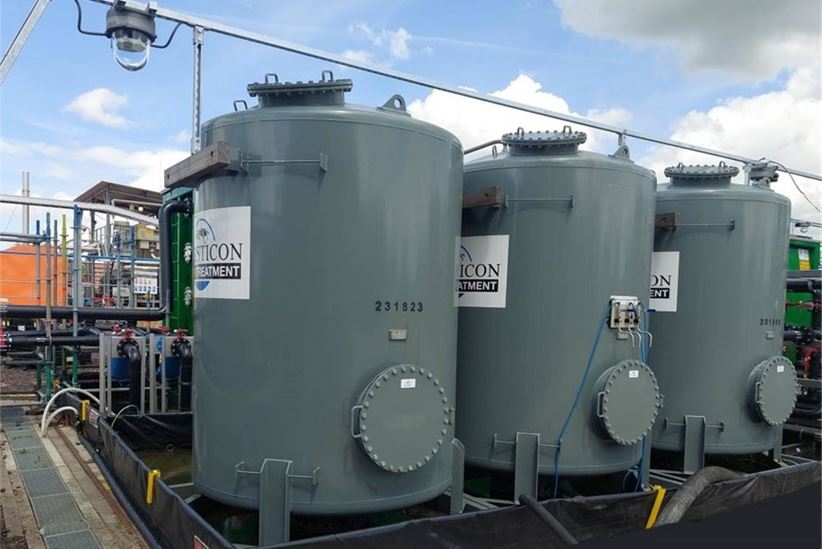
At the Chemours facility, wastewater treatment is carried out through a carefully designed three-stage purification process. In the first stage, reverse osmosis separates the wastewater into a PFAS-depleted permeate stream and a concentrated PFAS-rich fraction. Next, activated carbon filters remove the long-chain PFAS compounds from the concentrate. This step is essential because long-chain PFAS would otherwise occupy the active sites of the selective resin, reducing its ability to capture short-chain compounds. Finally, the treated concentrate passes through a cascade of three Lewatit MDS TP 108 vessels consisting of one primary treatment filter and two polishing filters. This final stage effectively removes short-chain PFAS compounds containing two and three carbon atoms, achieving extremely high purification levels.
Proven Industrial Performance
Björn Dinges, Application Technology Manager at LANXESS, stated, “Our tailored ion exchange resins have bound more than 99% of all fluorinated organic compounds from the wastewater. After use, the resins are incinerated at high temperatures to ensure complete destruction of the captured PFAS.” The successful field implementation demonstrates that selective ion exchange technology can provide a reliable and scalable solution for industrial PFAS management.
Partnership Enables Sustainable Compliance
The complete water treatment system was designed and supplied by Logisticon Water Treatment B.V., Netherlands. The engineering company developed the plant and established specialized operating procedures for all treatment subsystems. Following a multi-month trial period, the facility entered regular operation at the Chemours site in mid-2025. Since then, it has played a crucial role in reducing process emissions of fluorinated organic compounds while helping the company meet increasingly stringent environmental regulations. As per the press release, as regulatory scrutiny of PFAS continues to intensify worldwide, advanced technologies such as Lewatit MDS TP 108 are expected to become increasingly important in helping industries achieve sustainable wastewater management and environmental compliance.